

Samsung Electronics' MX (Mobile Experience) business unit recorded its first quarterly loss since launch due to cost pressures from a sharp rise in memory prices. Although sales increased thanks to strong performance of the Galaxy S26 series, the company could not avoid deteriorating profitability. Samsung Electronics is now launching two key strategies for the second half of the year: 'expansion of flagship (premium) models' and 'operational efficiency,' aiming to grow market share and restore profitability.
Daniel Araujo, Executive Vice President of the MX business unit, stated on the 30th during the second-quarter earnings conference call that "due to memory supply shortages, smartphone sales have declined primarily in price-sensitive mass-market product lines; however, rising ASP (average selling price) and an increased share of flagship models have driven growth in overall market size."
The MX business unit reported second-quarter revenue of 32.3 trillion won. In contrast, operating losses for the MX and Network businesses turned into a deficit of 700 billion won. While sales volume and revenue both rose due to strong performance of the Galaxy S26 series and A series, profitability deteriorated significantly amid rising component prices, including memory chips.
The company forecasts that smartphone shipment volumes will continue to decline in the second half of the year due to ongoing memory price increases and macroeconomic uncertainty. However, with premium demand remaining robust thanks to the spread of AI features and innovations in form factors, overall market revenue size and ASP are expected to maintain their growth trajectory.
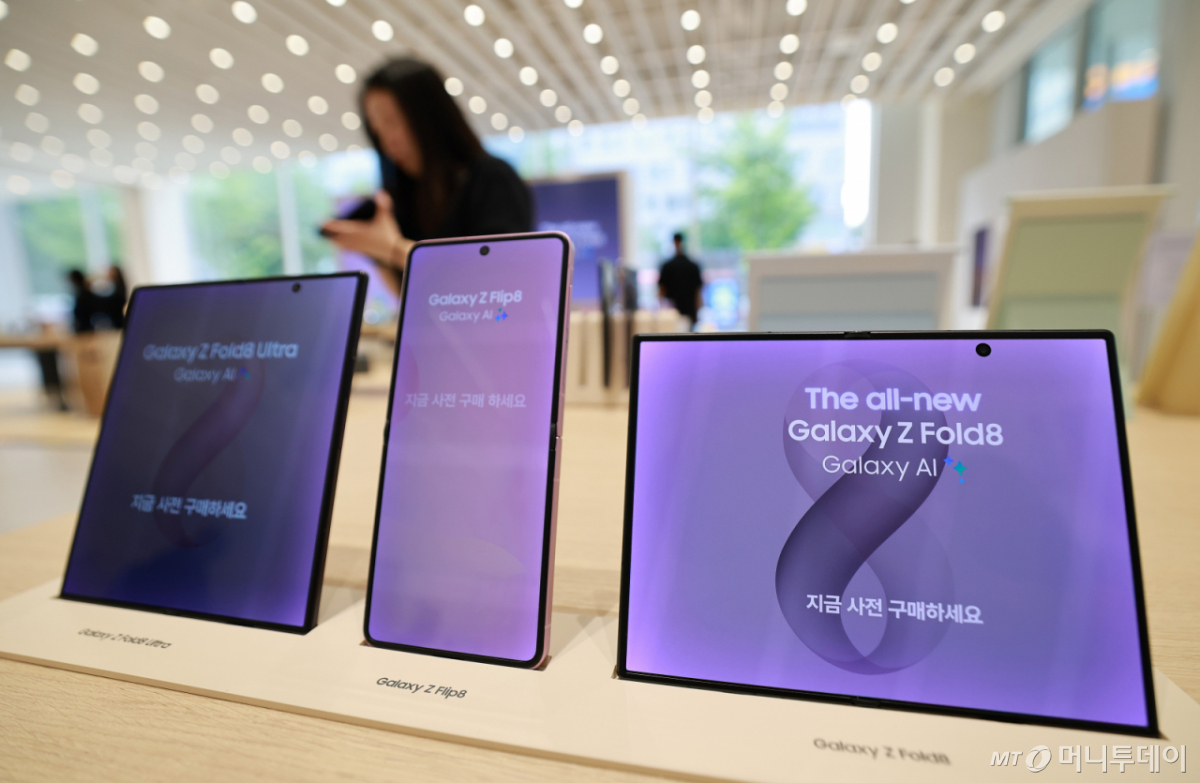
Samsung Electronics' first strategy is 'expansion centered on flagship models.' The plan involves increasing the sales share of high-value-added products such as the Galaxy S26 Ultra and Galaxy Z8 series to drive market share growth. By launching the Galaxy S26 FE, the company aims to sustain flagship sales momentum, while also enhancing competitiveness in mid-range product lines by expanding core AI feature integration into the A series. Additionally, Samsung seeks to expand sales volume by actively capturing market gaps left by competitors unable to adequately respond to memory supply shortages.
The second strategy is 'operational efficiency.' The plan aims to minimize cost pressures and defend against profitability declines by optimizing product mix and distribution channel operations. Alongside improving its business structure, Samsung Electronics is building a foundation to respond agilely to market changes. Furthermore, the company plans to launch an AI-based new form factor called 'Intelligent Eyewear' within this year, contributing to the expansion of the AI ecosystem.

 in TECH
