

Apple announced that the annual transaction volume of its App Store in Korea exceeded 38 trillion won last year, more than doubling within five years.
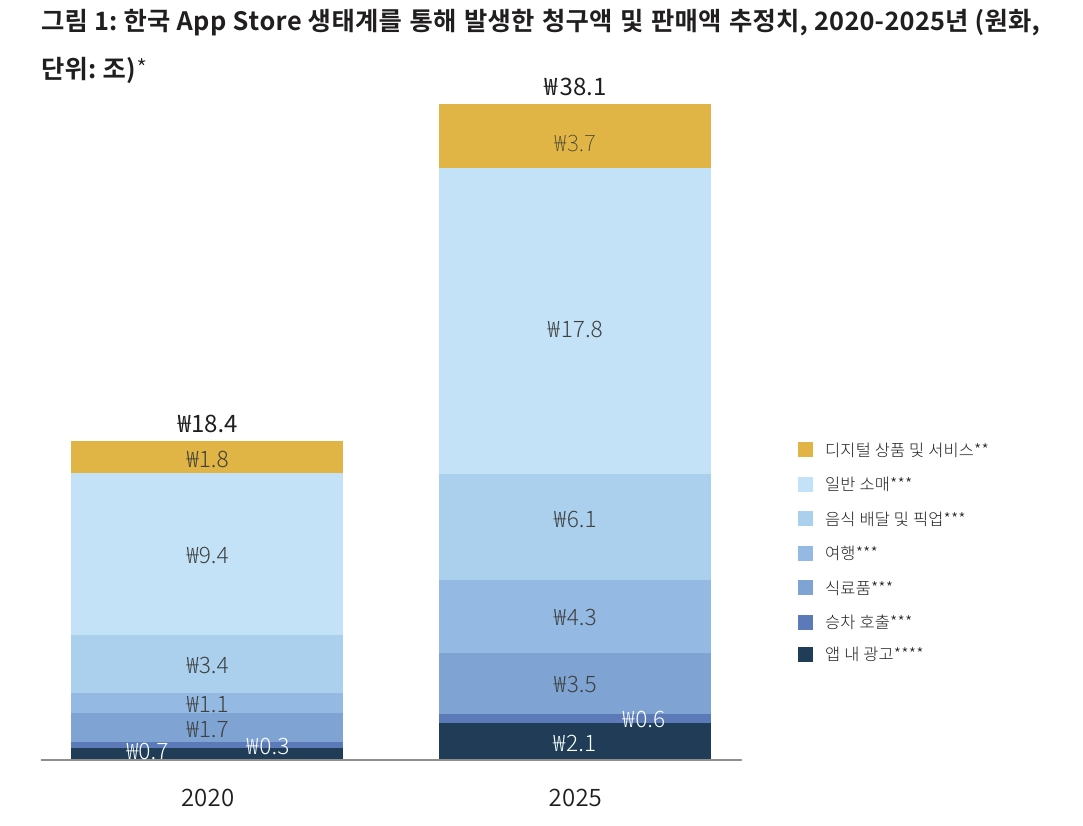
On the 6th, Apple released research findings on the Korean App Store ecosystem conducted by Dr. Juliet Caminard of Seoul National University Lim Jae-hyeon (Prof.) and Analysis Group. According to the report, the domestic transaction volume (billing plus sales) of the Apple App Store in 2025 reached 38.1 trillion won ($26.8 billion), more than doubling compared to 2020, confirming the rapid growth of Korea's commerce apps and digital services market.
Notably, regarding the controversial App Store fees, Apple stated that "fees were not applied to 90% of the transaction volume." Apple charges a 30% fee on paid app sales and in-app purchase revenue for digital content, services, and subscriptions. However, it does not charge fees for purchases made through commerce apps such as travel, groceries, and general retail, nor for in-app advertising or external payment digital services. Thus, no fees were applied to 90% of the total transaction volume. While Apple did not disclose the exact fee amount collected, it is estimated that 30% of the 10th% annual transaction volume (3.8 trillion won) amounts to approximately 1.14 trillion won in fees.
Analysis suggests this was also influenced by the fact that 95% of the domestic App Store ecosystem consists of small developers. Apple classifies developers as "small" if they have fewer than 1 million app downloads per year and generate less than 1.5 billion won in revenue, operating a "Small Business Program" for them with a reduced fee rate of 15%. Apple also reported that their sales increased by 85% compared to 2020.
Breaking down the Korean App Store transaction volume by category: physical goods and services purchases accounted for 32.3 trillion won (85% of the total), digital products and services such as games totaled 3.7 trillion won (10%), and in-app advertising was estimated at 2.1 trillion won (6%).
User metrics also remained robust. As of 2025, the average weekly visitors to the Korean App Store approached 12 million, and annual app downloads by domestic iOS users exceeded 670 million.
Apple praised Korean developers for achieving remarkable results overseas through its App Store. Surveys show that 76% of domestic developers generate revenue outside Korea, with an average presence in 30 countries. In particular, 85% of game downloads occurred in overseas markets.
As a success story of small developers on the Apple App Store, Apple highlighted HAEGIN, developer of the social game "Play Together." The game surpassed 230 million cumulative downloads within five years, with over 90% of users reportedly starting to play naturally through the App Store. Other success stories include the 3D drawing and modeling app Feather and WEILO.
Apple emphasized its contribution to the growth of small developers in Korea. It noted that the "Small Business Program," which reduced fee rates over the past five years, and the "Apple Developer Academy" in collaboration with POSTECH achieved remarkable results. More than 1,000 participants have graduated from the academy, launching over 400 apps.
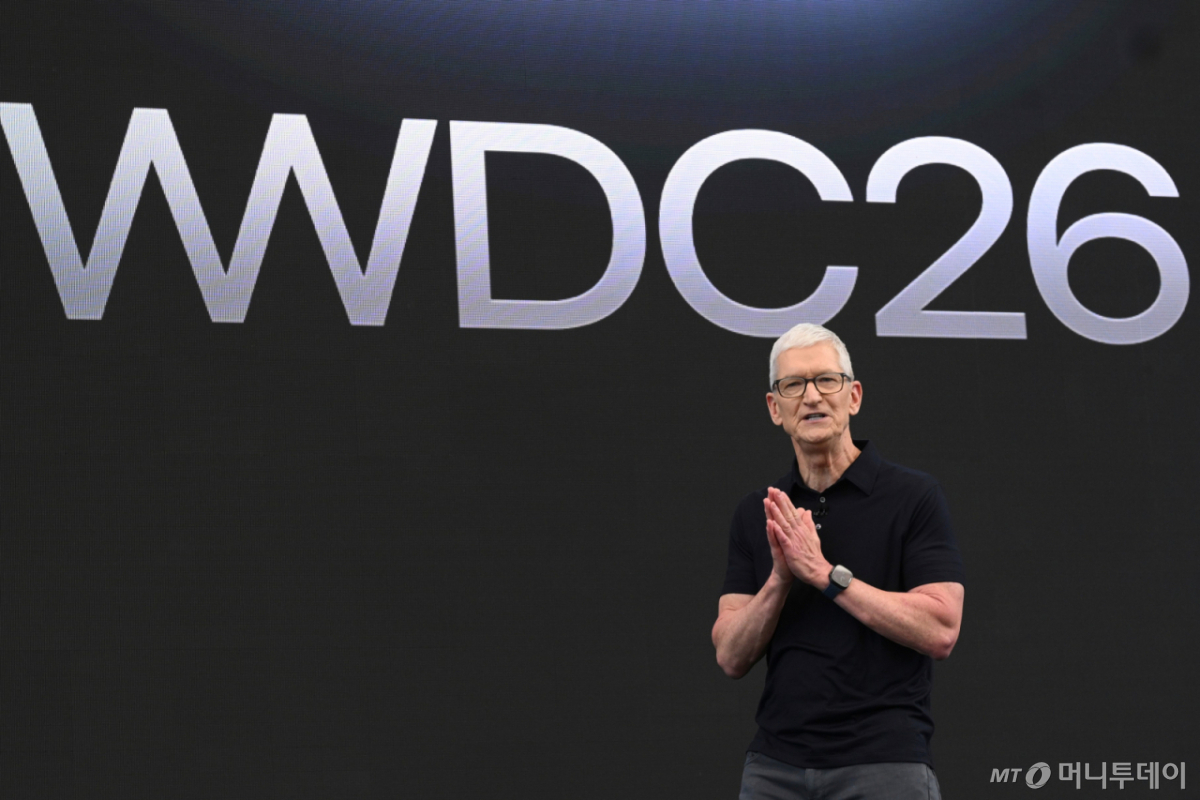
Tim Cook, Apple CEO, stated, "The Korean developer community consists of dynamic entrepreneurs, creators, and companies," adding, "Apple will continue to support them in creating the best outcomes through the App Store and the Apple ecosystem."

 in TECH

