

│"We considered the AI infrastructure business but determined it is not an area where Kakao holds a competitive edge. Kakao's success formula lies in B2C (business-to-consumer) services that permeate daily life."│
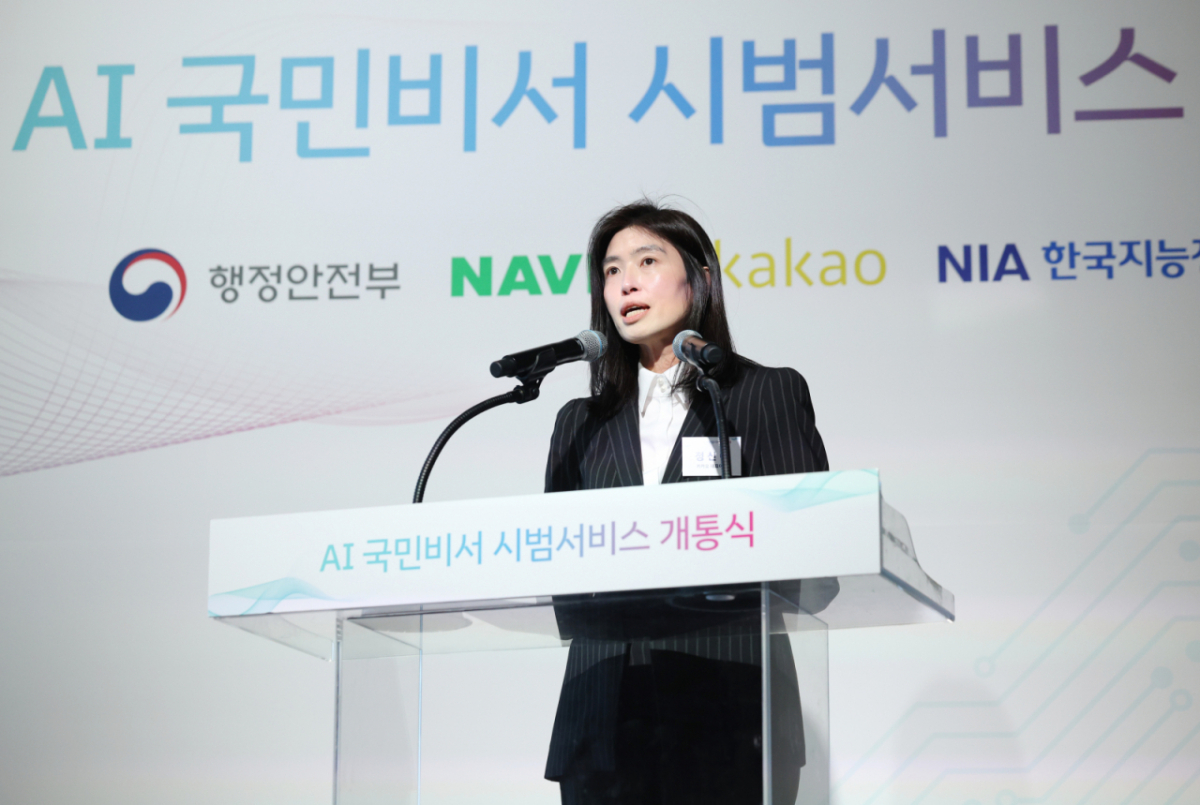
Jung Shin-a, CEO of Kakao, made these remarks during the Q2 earnings conference call on the 6th, expressing her determination to develop a national AI service following 'KakaoTalk'. Jeong (CEO) stated, "We will focus on creating B2C AI that integrates into daily life, from model development to service delivery."
Kakao evaluated the profitability of its AI infrastructure business, including AI data centers (DC) and GPU (graphics processing unit) cloud services, but concluded that ROI (return on investment) remains uncertain. Jeong (CEO) explained, "AI infrastructure requires massive upfront investments and continuous facility spending. Recently, rapid hardware upgrades in GPUs and AI servers, coupled with aggressive supply expansion, make it difficult to guarantee high profitability over the long term due to potential supply-demand imbalances."
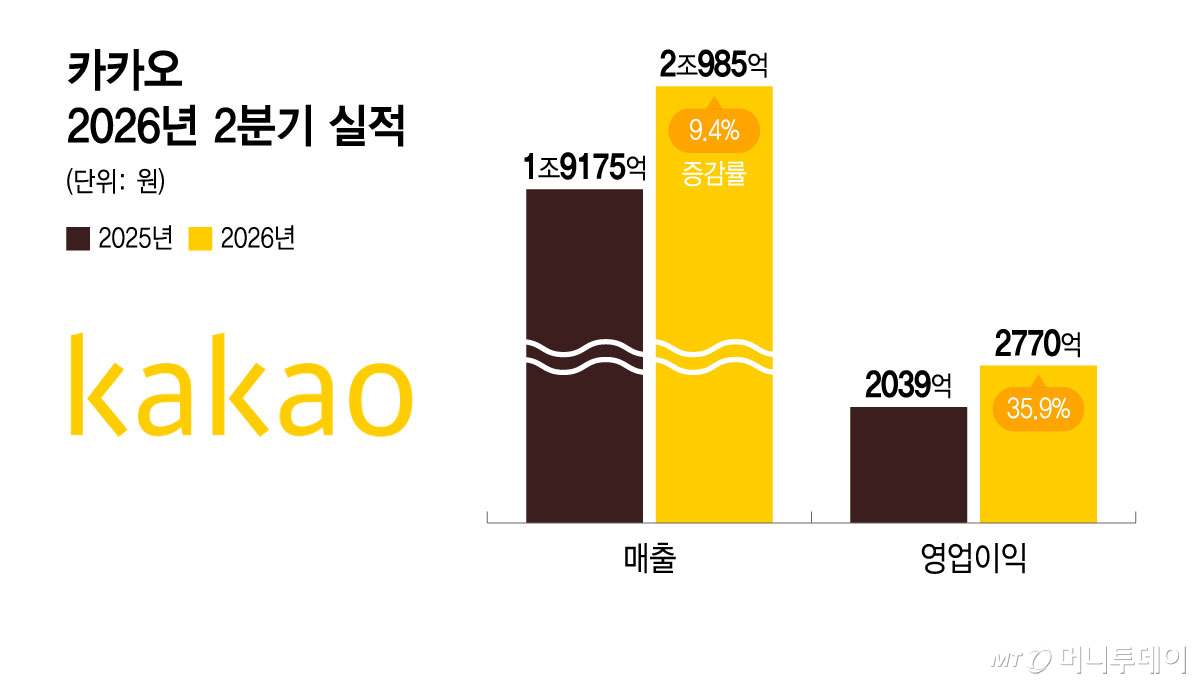
Rather than chasing competitors' AI DC 'gold rush,' Kakao is pursuing a strategy that leverages its unique strengths. The company's Q2 results this year, which recorded the highest quarterly revenue and operating profit in its history, validate this strategic direction. Kakao reported consolidated revenue of 2 trillion 985 billion won and an operating profit of 277 billion won for the quarter, representing increases of 9.4% and 35.9%, respectively, compared to the same period last year. Although Kakao Games was divested as a non-core asset, the platform segment—comprising Tokbiz, commerce, and other platforms (mobility, payment)—generated revenue of 1 trillion 230.3 billion won, up 17% year-on-year, significantly contributing to overall growth.
Kakao has proposed 'vertical partnerships' as an alternative strategy. The plan involves connecting various partner companies with agentic AI to deliver differentiated experiences. The first partner is Coupang Eats. Kakao will initiate 'A2A' (Agent-to-Agent) collaboration by integrating Coupang Eats into 'Kanana in KakaoTalk.' This enables the on-device AI model within chat rooms to understand users' ordering intentions based on conversation context and recommend optimal menus tailored to their preferences. Users can complete orders and payments through Coupang Eats without leaving the chat room.
Addressing concerns that partnership development has been slower than previously announced, Jeong (CEO) responded, "Kakao's agentic AI operates in areas not yet globally validated, such as conversation-context-based recommendations, authentication, ordering, and payment flows, rather than simple external API connections. However, once this collaboration demonstrates improvements in transaction volume and user growth, we expect the pace of onboarding subsequent partners to accelerate."
Already launched AI agent services are performing well. 'ChatGPT for Kakao' has accumulated 13 million registered users as of Q2. The average number of outgoing messages per user per day exceeds six, and average daily session time is approaching eight minutes, indicating rising engagement. Among users who provided feedback on the 'Send First' and response features, 80% and 90%, respectively, gave positive evaluations for Kanana in KakaoTalk. User retention rates, initially around 70%, have now approached 80%.
Kakao aims to increase monthly active users (MAU) of AI services within KakaoTalk to 10 million by year-end. Once a solid user base is established, the company expects AI-related revenue to become visible starting next year. Jeong (CEO) stated, "Our goal is to expand the proportion of AI-related revenue within Tokbiz to double digits by 2028, when AI advertising revenue begins to generate significant income."

 in TECH

