

A policy discussion is underway at the National Assembly to advance next-generation communication networks such as 5G SA (standalone mode) and 6G in line with the AI (artificial intelligence) era, and to activate investment in AIDC (AI data centers). The initiative aims to restructure relevant regulations by recognizing communication networks and data centers as core AI infrastructure, given the rapid spread of services requiring large volumes of data, such as generative AI and autonomous driving.
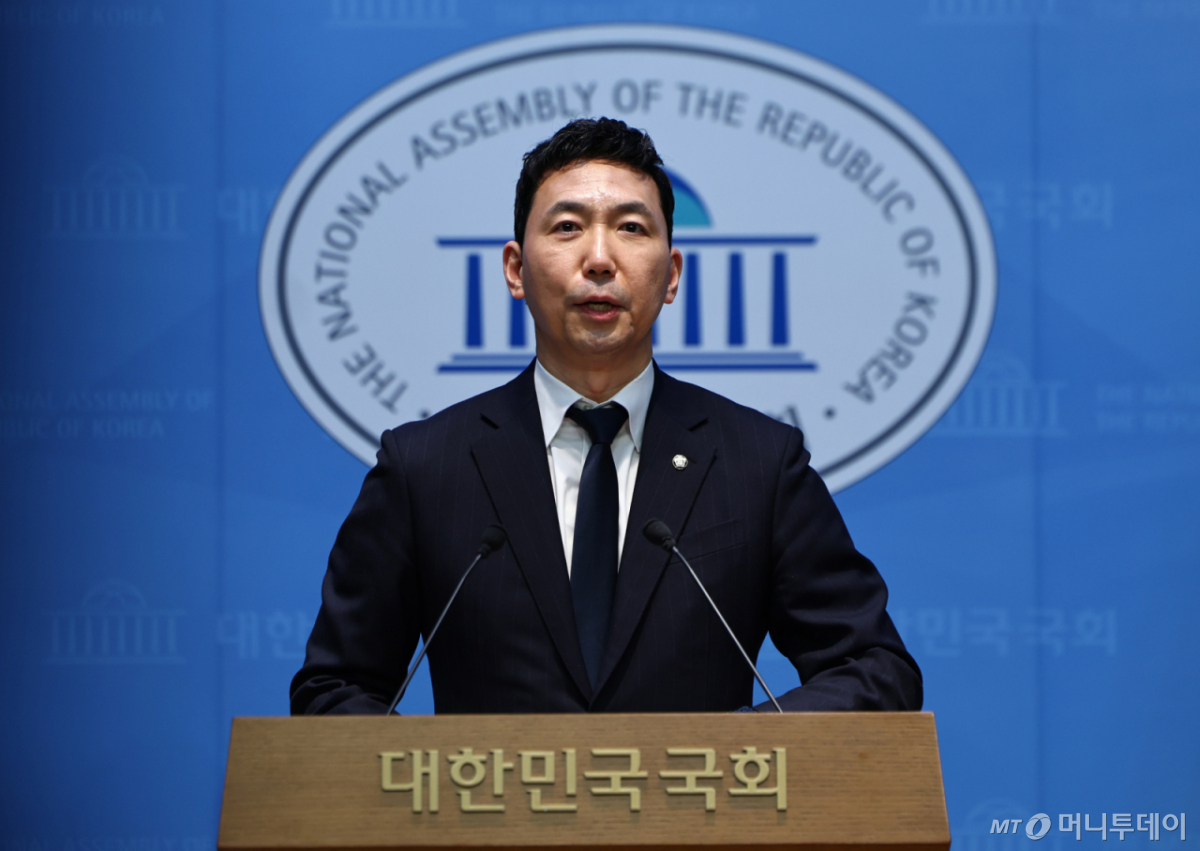
Lee Jeong-heon, a member of the Democratic Party of Korea, announced on the 27th that he will hold a policy seminar titled "Strategies for Advancing Networks in the AI Era" at 10:00 a.m. on September 2 in Room 3 of the National Assembly Members' Conference Hall.
The role required of networks is changing rapidly due to the spread of AI. As services that exchange vast amounts of data in real time—such as generative AI, autonomous driving, and smart factories—increase, infrastructure capable of stably transmitting and processing large-scale data has become more important than simply having fast communication networks. Data transmission volume is projected to increase by up to five times from 2025 levels by 2031.
However, critics point out that relevant regulations and policies remain focused on existing communication networks and facility investments. Although large-scale investment plans for AIDC are emerging in Korea, actual construction phases face constraints such as permits, power supply, and infrastructure development. To support the government's "Three Major AI Powerhouse" strategy, an integrated infrastructure policy covering both networks and data centers is necessary.
This seminar will review key policy issues ranging from advancing next-generation networks like 5G SA and 6G to activating AIDC investments. Discussions will also cover ways to improve regulations and systems so that AI infrastructure investments can lead to new services and public benefits.
Presentations will be delivered by Lee Kyung-won, a professor at Dongguk University, and Mo Jeong-hoon, a professor at Yonsei University. Son Hyuk-min, a professor at Gachon University, will serve as chairperson. Participants in the discussion include Hong Sa-chan, section chief of Communication Policy Planning at the Ministry of Science and ICT; Jang Ki-cheol, section chief of AI Data Promotion at the Ministry of Science and ICT; Roh Jin-hong, an attorney at Sejong Law Firm; and representatives from SK Telecom (Shin Sang-min Jeong Chaek-gae-bal (Head)), KT (Seo Eun-il, communication policy officer), and LG Uplus (Lee Ah-young, external strategy officer).
Lee (Rep.) stated, "For the Republic of Korea to leapfrog into one of the world's top three AI powerhouses, networks and data centers that connect AI models and advanced semiconductors to industry and daily life must grow together." He added, "Having built world-class network competitiveness from 2G through 5G, we now need a new strategy to carry this strength into the AI era as a competitive advantage."
He further emphasized, "Preparing world-class services that citizens and industries can genuinely experience in the upcoming 6G era is of utmost importance. We will ensure that insights from the field and expert proposals raised at this seminar translate into actual legislation and policy."

 in TECH
