

Intel is partnering with Daime Research, a spin-off company from KAIST (Korea Advanced Institute of Science and Technology), to advance the commercialization of "dark factories," where artificial intelligence autonomously operates the entire plant. This approach goes beyond automating individual robots by integrating control over production equipment and logistics robots, combining Intel's computing technology with domestic companies' robot operation software.
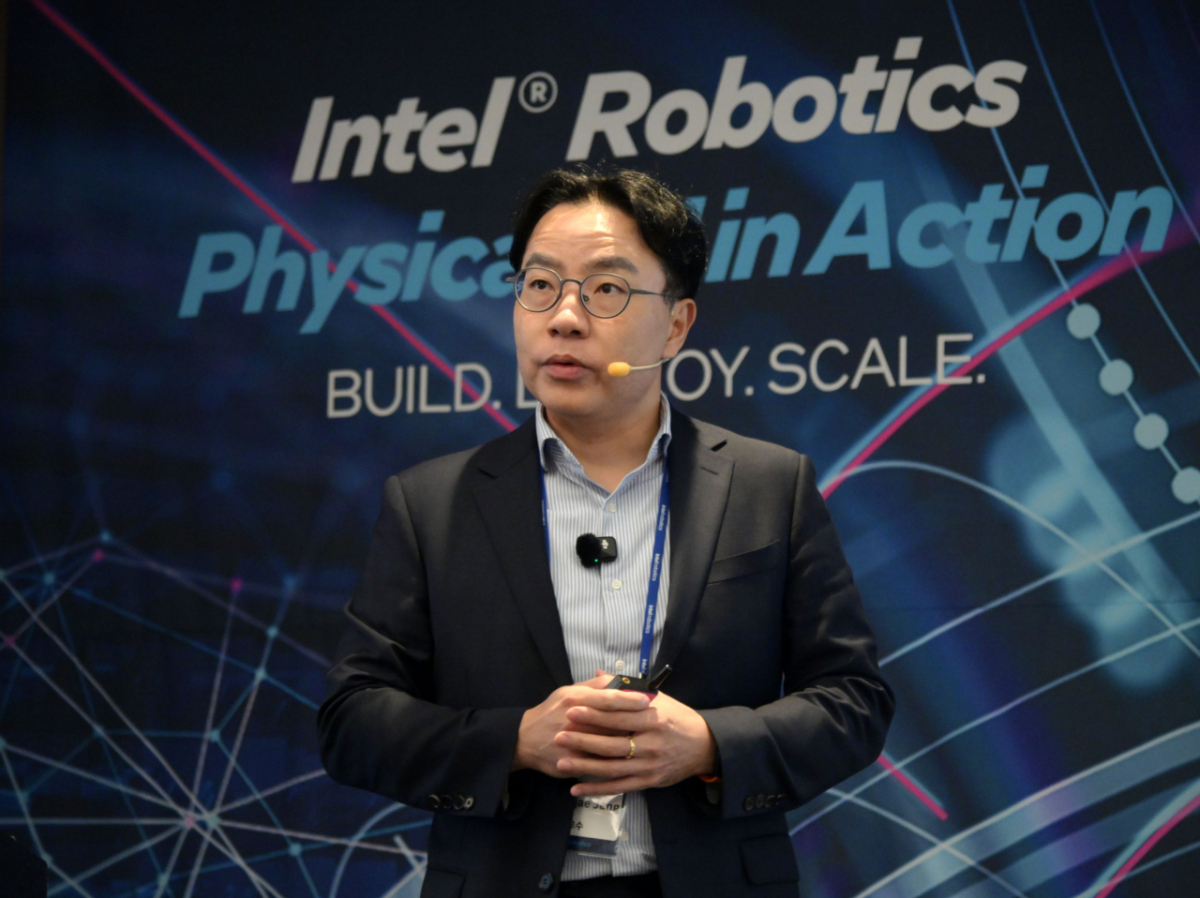
Jang Young-jae, professor at KAIST and CEO of Daime Research, stated at the "Intel Robotics Workshop," which began on the 14th at the JW Marriott Hotel in Seocho-gu, Seoul, with opening remarks by Kim Hyeon-jun, Vice President of Intel Korea, that this is a scenario being considered in collaboration with actual global semiconductor companies, and that they plan to build such systems and proceed with constructing real factories in the near future.
Daime Research said, "When people hear 'physical AI,' many think of humanoid robots or individual autonomous robots, but there are numerous robots inside a factory, and an orchestration system is needed for them to work together," adding, "We view the factory itself as one giant robot."
In a concept demo video released that day, when abnormal vibration was detected in a semiconductor etching equipment, AI analyzed maintenance manuals and other data to assess the possibility of component wear. The video then introduced the process of sending robots to inspect the equipment's status and performing tasks such as transporting parts and adjusting production schedules.
Daime Research's core technology is "Kairosbus," a commercialized version of the robot integrated control platform "Kairos" developed at KAIST. It consists of "xMS," which integrates and manages different robots; "xSim," which simulates factory operations; and AI agents that analyze production situations and support decision-making.
Daime Research explained, "It will take time and considerable effort for humanoid robots to develop and be commercialized," but noted, "However, there is a market right now, and one of the things customers want is a dark factory where numerous robots are integrated and controlled by AI."
Intel provides computing platforms to realize such autonomous factories. CPUs (Central Processing Units) are primarily used for robot integrated control, work schedule management, movement path design, and large-scale simulations. GPUs (Graphics Processing Units) and NPUs (Neural Processing Units) are used for video analysis and running AI models.
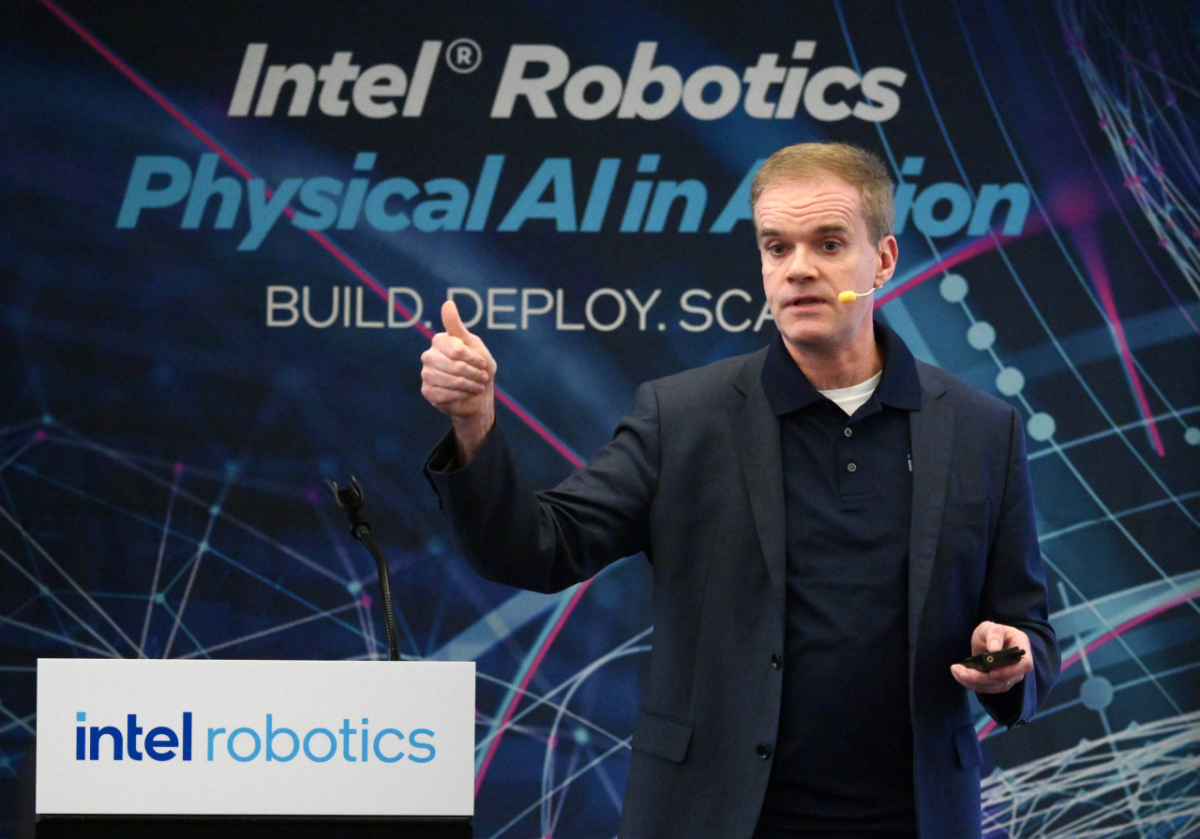
John Healey, Vice President of the Industrial and Robotics Division within Intel's Client and Physical AI Group, stated, "We must ensure that AI, which looks impressive in demonstrations, operates predictably every time in real-world environments," emphasizing the need to secure cost-effectiveness, safety, and flexibility for robot commercialization. He added, "I do not think this market can be supported as a single closed technical system," stating that diverse industrial requirements must be addressed through an open hardware and software ecosystem.
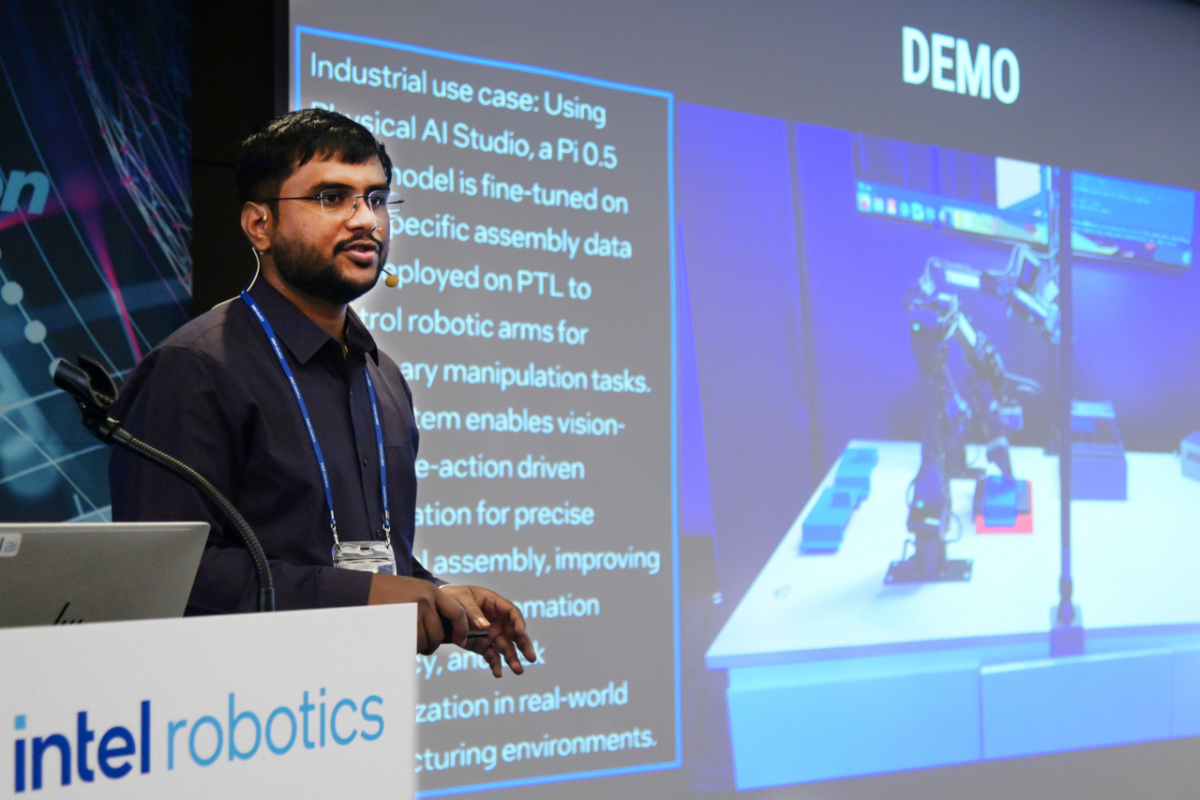
Intel also introduced hardware and software optimization technologies to support the open ecosystem. Jiban Takare, Intel Optimization and Technical Support Architect, explained that AI models can be relearned within minutes even if production items change. He added that distributing AI models across GPUs and NPUs can reduce issues where robots' visual recognition capabilities are degraded due to a lack of computing resources.

 in TECH


