

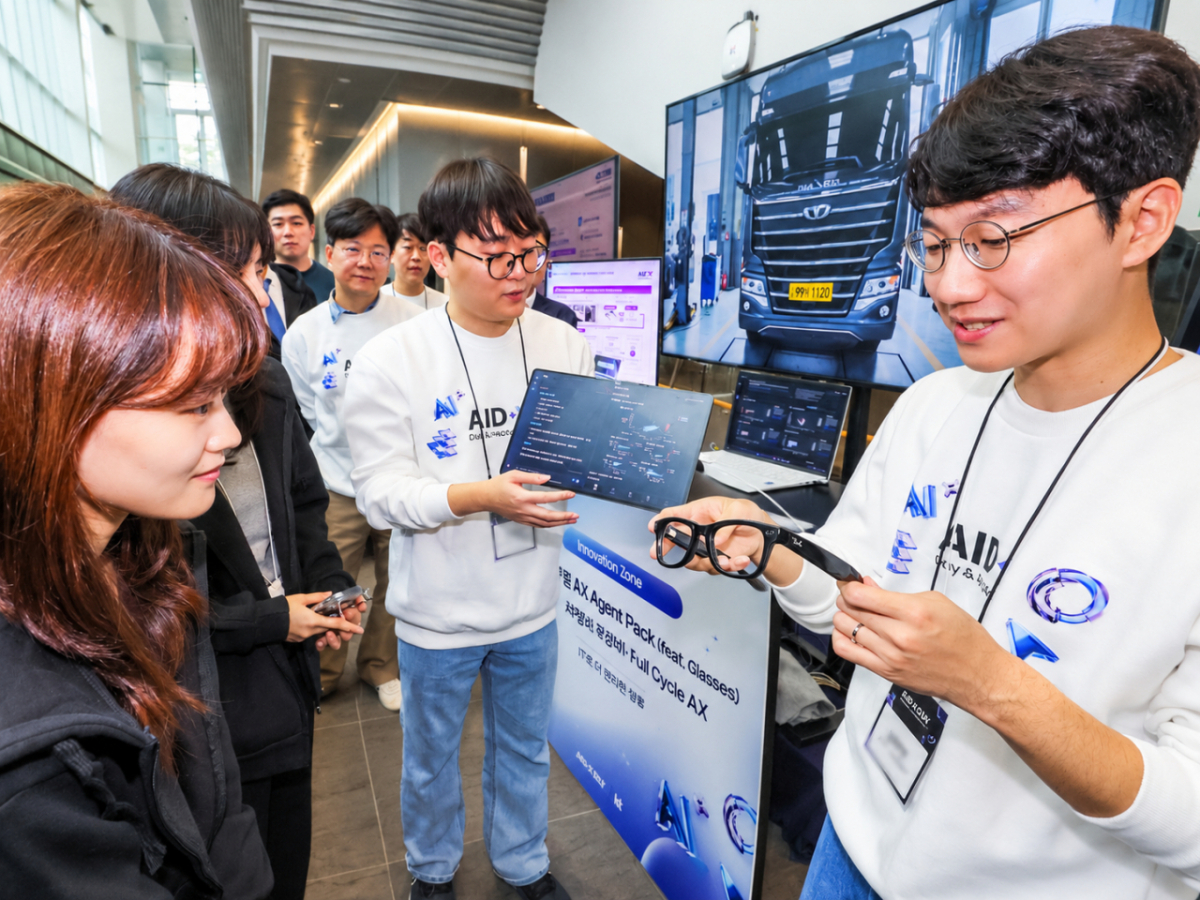
When a mechanic recognized a vehicle's license plate using smart glasses, abnormal signs and inspection items for the vehicle appeared on the screen. The AI had retrieved pre-analyzed vehicle sensor data to indicate the parts requiring maintenance.
A KT representative explained while demonstrating the vehicle maintenance and warranty AI service at the "2026 AID-X Day" held on the 15th at the KT Pangyo Building in Seongnam, Gyeonggi Province: "Instead of a car coming in and someone saying 'there is something wrong,' we can first present the parts of the car that have issues just by looking at the license plate."
At this event, held over two days starting from the 14th, KT unveiled group-wide AX (AI transformation) innovation results. It showcased cases of applying AI to industrial and business sites, ranging from vehicle maintenance to physical AI and software development automation.
The "Vehicle Maintenance and Warranty AX Agent Pack," which KT is collaborating on with Tata Daewoo Mobility, analyzes data from 45 types of vehicle sensors to predict the possibility of failure. When abnormal signs are detected, it guides the vehicle for intake and provides work procedures to mechanics. It aims to commercialize in November and target a 20% reduction in manufacturer warranty costs.
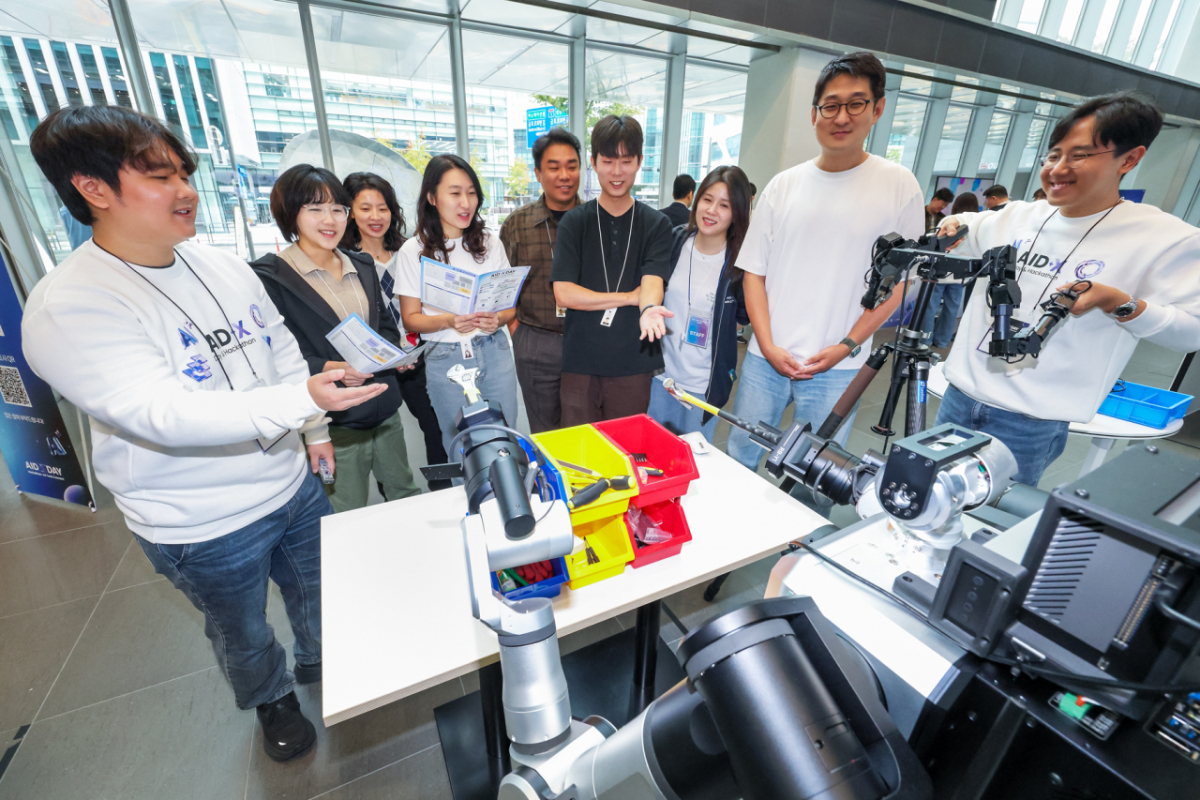
In another exhibition space, a humanoid robot picked up an object and moved it to a target point. A KT representative said, "Looking at manufacturing and logistics sites, the items handled or work methods differ from site to site." KT introduced the "Robot Skill Flywheel" technology, which collects data through a remote control method where robots mimic workers' movements and learns and verifies various situations in virtual environments. It is promoting application in manufacturing and logistics sites through the robot service platform "KT RaaS Suite," which connects this to cloud, edge, and on-device environments.
AI was also utilized in the software development process. KT's AI development platform "kode" supports everything from planning and design to development and verification. In a pilot development conducted with KT DS, the development and testing of five features, which typically take one month, were completed in three days. A person in charge explained, "We did not simply use AI; we documented our working rules so that AI could understand them and applied this to the entire pre-development process."
AI utilization results also emerged from group companies. KT m&s saved 40,000 hours annually by having approximately 2,000 employees automate repetitive tasks using its in-house AI platform "Nexus." It also achieved a result of shortening the work for used phone grade determination, which previously took 10 minutes, to 30 seconds by introducing AI. Genie Music unveiled an AI system that analyzes music content sales by country, platform, and planning company.
In one corner of the venue, a hackathon where group employees directly create services using AI was held. The 32 teams that advanced to the finals competed in development for approximately 15 hours. Participants in the developer-centric "Procode" division were provided with $600 worth of AI development tools per person.
The "Ask Anything Bot" team in the non-developer-centric "Lowcode" division developed an AI agent that helps with B2B AX business proposals and project execution. A participant said, "Even as a non-developer, I was able to develop necessary functions by utilizing vibe coding or workflows through Copilot Studio."

 in TECH

