

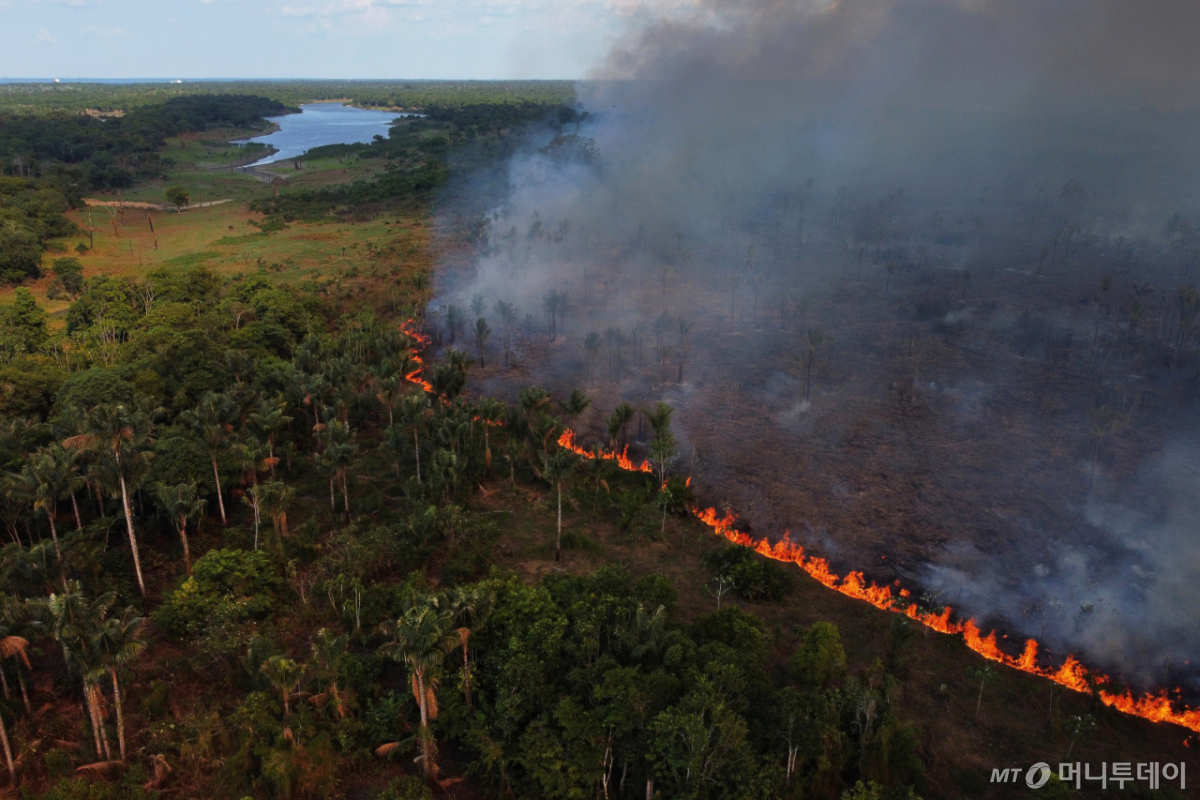
A proposal has been put forward that the starting point of the "Anthropocene," a term referring to the period when human activities caused rapid changes in the Earth's environment, should be set at 1952.
An international research team, which included Park Beom-soon, Chair Professor at the Graduate School of Science and Technology Policy (and Director of the Anthropocene Research Center) at KAIST, announced on the 16th that it presented this academic stance through a special feature on the "Anthropocene Debate" in the international academic journal "NATURE Reviews Earth & Environment."
The Anthropocene is a concept describing an era in which human activities have had such a significant impact as to alter the entire Earth environment, including climate and ecosystems. Although the concept has spread over the past 20 years, differing interpretations have continued regarding when to define its starting point.
The research team, composed of Park Beom-sun (Prof.), Jan Zalasiewicz, Professor at the University of Leicester in the UK, Julia Adnani, Professor at Notre Dame University in the US, and Jurgen Renn, Professor at the Max Planck Institute for the Science of Human History in Germany, proposed "1952" as the starting point of the Anthropocene.
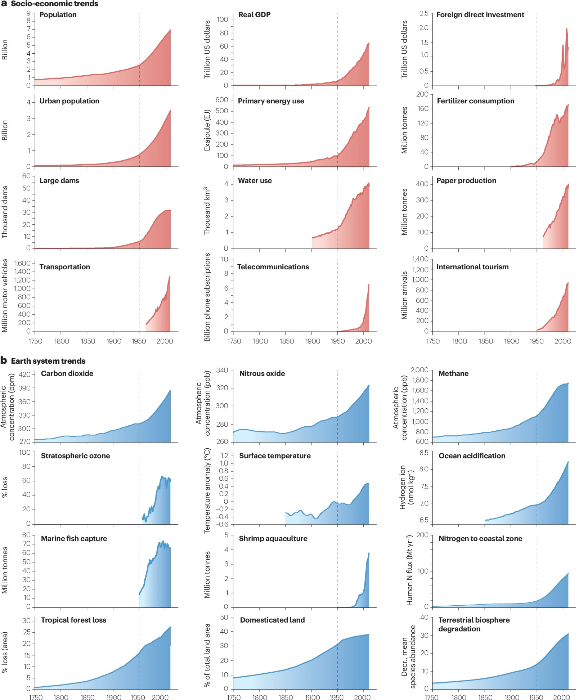
It is the mid-20th century, when industrialization and urbanization progressed rapidly around the world. It coincides with the period of "Great Acceleration" when various indicators of human activity and the Earth's environment changed drastically. It was a time when socio-economic changes such as urbanization, energy use, and transportation, and Earth system changes such as carbon dioxide concentration, ocean acidification, and biodiversity loss appeared in similar patterns.
The research team specifically viewed that after the mid-20th century, the impact of human activities had grown large enough to shake the safety of the entire planet. The point of comparison is the "Holocene," which lasted for approximately 12,000 years. In the relatively stable climate and environment of the Holocene, which began after the last ice age, humanity developed agriculture, cities, and civilization.
Professor Park said, "The Anthropocene is a common language for understanding how quickly and significantly humans are changing the Earth," adding, "If its meaning and criteria are clarified, we can more accurately compare changes in the Earth's environment and discuss directions for response together."
Meanwhile, the International Union of Geological Sciences has long debated whether to recognize the Anthropocene as an official geological era, but the proposal was rejected in 2024.

 in TECH

