

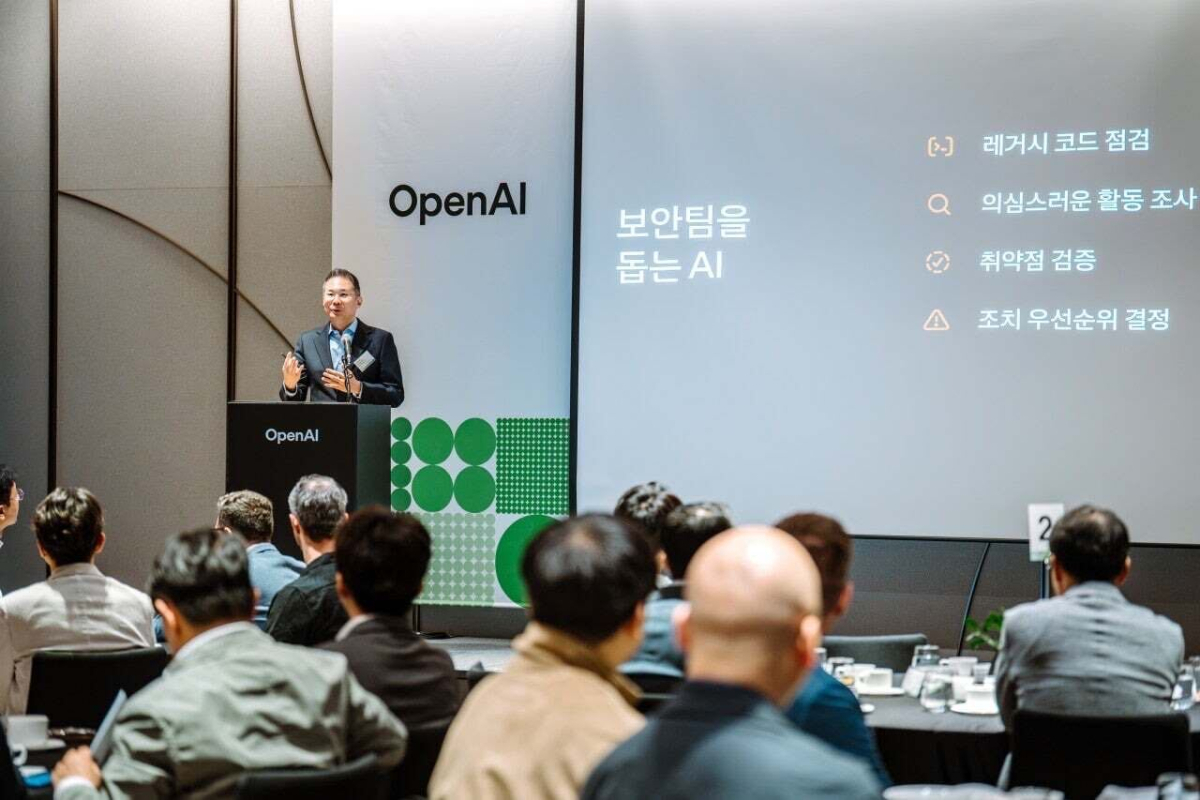
OpenAI gathered domestic corporate executives to present cyber defense strategies for the AI era and methods for applying enterprise security in real-world settings.
On Friday, OpenAI announced that it hosted the 'OpenAI Cyber CXO Roundtable' at the Westin Seoul Parnas in Gangnam-gu, inviting approximately 60 senior corporate executives, including chief information security officers (CISOs).
The event was organized to examine how cyber threats are changing with AI and to share methods for enhancing security response capabilities.
Kim Kyung-hoon, head of OpenAI Korea; Dominic Grillo, head of Technical Success at OpenAI and a cybersecurity expert; Wana Thun, a security specialist engineer; and others delivered presentations. OpenAI emphasized the importance of using AI to identify and resolve issues before attackers exploit vulnerabilities.
The company also introduced how its integrated cyber defense solution, 'Daybreak,' which connects OpenAI's AI models with Codex, Codex Security, and security workflows, supports corporate security operations.
Daybreak integrates AI into the security tools and workflows that companies are already using to discover vulnerabilities and verify actual exploitability in a controlled environment. It can also prepare remediation plans and confirm their effectiveness. Currently, a significant number of major domestic companies have either already adopted it or are considering adoption.
OpenAI also shared its experience in building its 'Defense Factory.' The Defense Factory is an operational system that connects AI agents, repeatable workflows, and isolated execution environments with existing security and development tools to continuously conduct vulnerability checks and resolutions.
At the core of this approach is a method where security teams and development teams work together to ensure that discovered issues are communicated to responsible organizations and followed through to remediation and verification.
The company also emphasized the importance of human oversight and clear authority settings in this process. Companies must define the scope of data, systems, and tasks that AI can access and perform, and establish procedures for humans to review critical judgments and changes.
It explained that security performance should be evaluated based on evidence demonstrating actual risk reduction, such as how quickly major security risks were resolved and whether the effectiveness of remedial actions was verified.
Kim Kyung-hoon, head of OpenAI Korea, said, "For companies to quickly identify and respond to major security risks in the AI era, they must treat cybersecurity as a core management priority." He added, "We will help domestic companies integrate AI into their existing security systems to verify effectiveness in the field and develop it into a sustained defense capability."

 in TECH
