

The Ministry of Science and ICT and the National Research Council of Science and Technology (NST) will draw up an implementation plan by the first half of next year for reforming government-funded research institutes following the abolition of the Project-Based System (PBS).
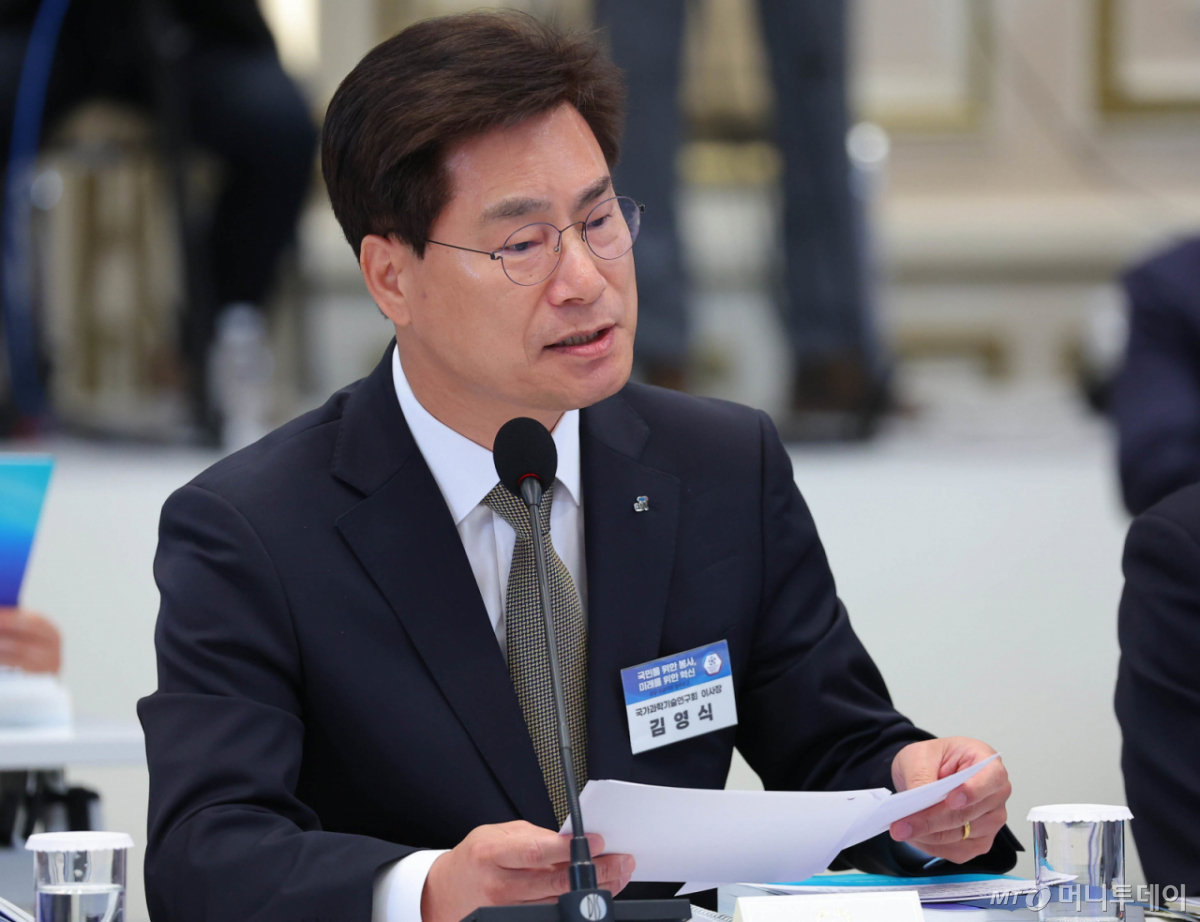
Kim Young-sik, chairman of NST, announced the plan during a parliamentary audit of NST and its affiliated research institutes held at the Korea Advanced Institute of Science and Technology (KAIST) in Daejeon on Monday.
The ministry and NST plan to fully cover personnel expenses at government-funded research institutes through government contributions by 2030, when the PBS system is set to be completely abolished. They also plan to restructure existing research programs around major national missions, including strategic research projects.
As the number of externally commissioned research projects declines, research incentives, which have traditionally been tied to the volume of such projects, will be replaced with a performance-based differential compensation system.
However, the planned introduction of performance-based compensation has raised concerns among researchers that some may see their actual compensation and working conditions deteriorate compared with those before the PBS system is abolished.
Rep. Kim Nam-kuk of the Democratic Party of Korea said, "There are concerns that only personnel expenses will be guaranteed, without sufficient funding for research and essential operating costs." He added that frontline researchers could once again be reduced to "salespeople" seeking external research contracts.
Rep. Hwang Jeong-a of the Democratic Party of Korea also said researchers were deeply concerned about research incentives and asked Kim how the incentives would be structured after the PBS system is abolished.
Kim said the issue was being reviewed comprehensively because research incentive systems vary by institution. "We are currently conducting policy research, and once the results are available, we will communicate with stakeholders and proceed accordingly," he said.
Regarding the timeline, Kim said, "We have commissioned a policy study, so I believe we will be able to draw up an implementation plan in the first half of next year." He added that "the key is how to allocate funding based on research performance" and said he understood that the overall goal was to put researchers on an upward trajectory.
"The PBS system has been in place for 30 years, and it is now set to change almost overnight. Some confusion is inevitable during this transition," he said. "We are working to minimize the disruption."
Kim also responded to Rep. Kim Nam-kuk's criticism of NST's plan to professionalize administrative functions across its 23 affiliated research institutes. The lawmaker questioned whether recruiting 40 additional staff members solely for auditing would merely strengthen the central government's oversight and supervisory functions.
"This is an issue that researchers, NST and the Ministry of Science and ICT must work through together, and we are preparing alternatives accordingly," Kim said.

 in TECH
