

As the Ministry of Climate, Energy and Environment is pushing to introduce a dedicated "grid code" for AI data centers (DCs) within the year, concerns have been raised that this could become a new regulation for AI DCs.
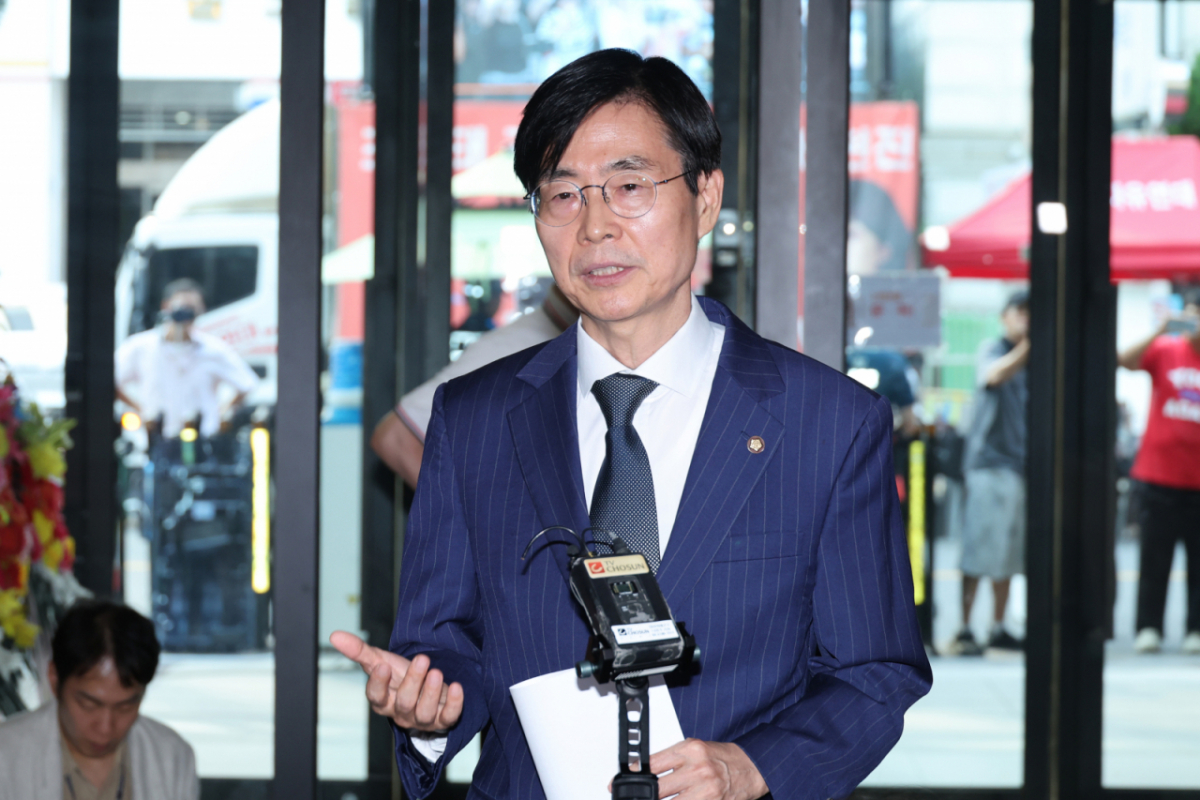
On the 21st, Cho Kyung-tae, a National Assembly member of the People Power Party from Busan Saha-gu Eul district and a member of the Science, ICT and Communications Committee (Science, ICT and Communications Committee) of the National Assembly, pointed out that the AI DC-specific grid code planned to be established by the Ministry of Climate, Energy and Environment within the year lacks transparency regarding its scope of application and timing, and could become a new regulation for AI DC investment. He further urged that the Ministry of Science and ICT, as the competent ministry, should play an active role.
The grid code is a set of "connection rules" that power plants or large-scale electricity consumption facilities must follow when connecting to the power grid. It is a measure to maintain voltage at a constant level so that facilities can withstand problems in the power grid, involving load forecasting on hourly and 5-minute intervals. When applying the grid code to AI DCs, factors such as the scale of applicable targets, whether it will be retroactively applied to existing projects, and criteria for load fluctuation rates must also be considered, which could create another barrier. The Ministry of Climate, Energy and Environment believes that large-scale AI DCs can consume massive amounts of power in short bursts during AI computation processes, potentially destabilizing the power grid, and is pushing this measure accordingly.
The issue is that AIDCs are currently blocked from directly purchasing electricity from LNG power plants. The AIDC Special Act passed by the Science, ICT and Communications Committee last April allowed AIDCs to trade electricity directly with LNG power plants, but due to opposition from the Ministry of Climate, Energy and Environment, the direct power trading (PPA) method was excluded from the bill passed in the plenary session in May.
Immediately after that, the Ministry of Science and ICT and the Ministry of Climate, Energy and Environment signed a memorandum of understanding promising stable power supply through the national power grid, but this grid code is seen as another measure raising the barrier to entry for AIDCs into the power grid.
With construction already underway on gigawatt (GW)-scale AIDC projects by businesses, it is pointed out that if the grid code is applied, requiring design changes or delaying completion, the AIDC mega-project itself could be delayed, and the burden of investment costs would increase, potentially undermining the very purpose of the mega-project.
In response, Jo (Rep.) urged that this issue be discussed in the "AIDC Mega-Project Inter-Ministerial Support Task Force" established by the Ministry of Science and ICT together with the Ministry of Climate, Energy and Environment and others last July.
Jo (Rep.) stated, "After blocking LNG direct trading and telling us to receive electricity through the national power grid, raising that threshold now is inconsistent," adding, "While establishing standards necessary for power grid safety, the application of the grid code should in principle be excluded from projects already underway."
In this comprehensive audit, Jo (Rep.) plans to confirm with the Ministry of Science and ICT △plans to participate in grid code discussions through the Inter-Ministerial Support Task Force and other means, and △plans to request the Ministry of Climate, Energy and Environment to protect projects already underway.

 in TECH
