

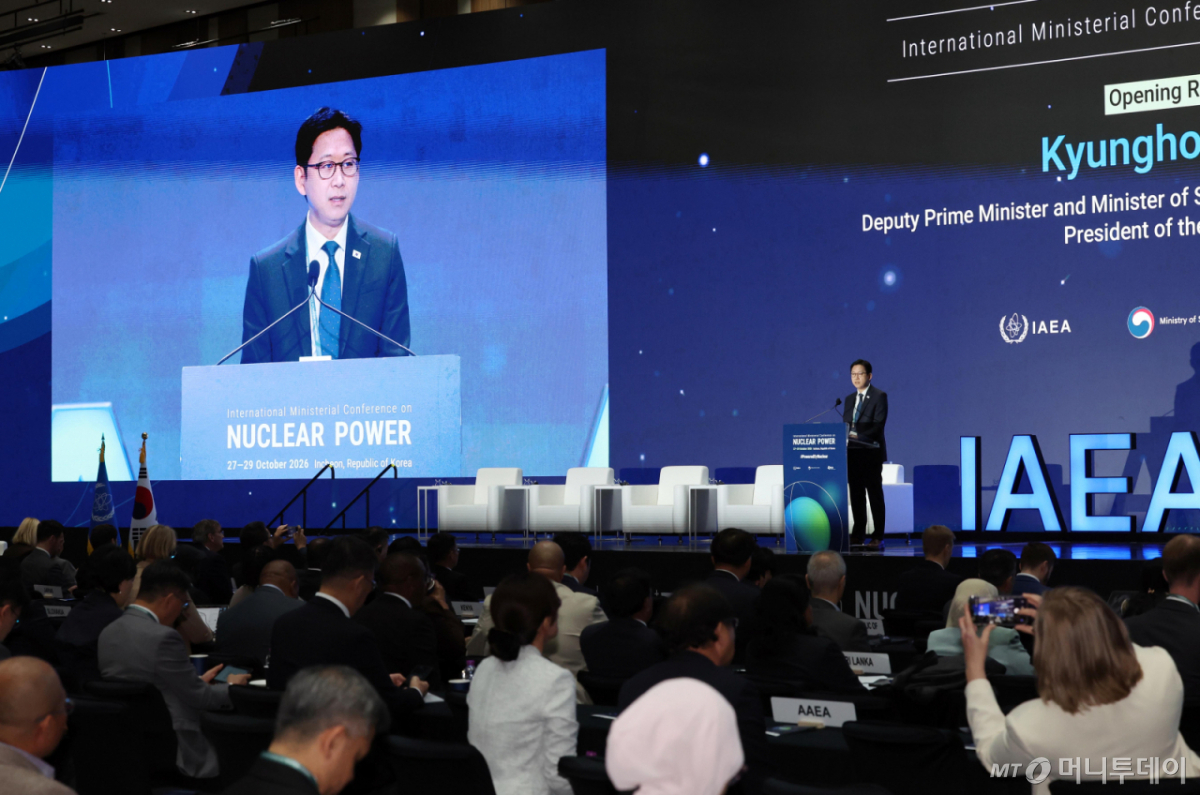
Rafael Grossi, Director General of the IAEA (International Atomic Energy Agency), and Deputy Prime Minister and Minister of Science and ICT Bae Kyu-hun emphasized on the 27th at the IAEA Nuclear Energy Ministerial Conference held in Songdo, Incheon, that “nuclear capacity will increase significantly within decades” and that “countries around the world must join forces to prepare.”
In a video welcome address on the day, Director General Grossi stated, “Support from governments, financial institutions, and consumers for nuclear energy is expanding globally,” adding that “the realistic approach I have emphasized many times in the past is once again gaining traction.”
He also noted that nuclear power has gained substantial momentum since the Nuclear Energy Ministerial Conference held in the United States in 2022, stating, “More countries are asking how much nuclear power can contribute to strengthening energy security and accelerating electrification.”
He presented a new scenario. Director General Grossi revealed, “In 2022, we assumed a situation with almost no change in nuclear capacity by 2050, but currently, even from a conservative perspective, we expect nuclear generation capacity to exceed 640 gigawatts (GW), while an optimistic outlook projects it to surpass 1,000 GW.” However, he emphasized, “Of course, there is no guarantee that the forecast will materialize,” adding that “whether actual installed capacity expands depends on the results of project implementation in the field.”
He further advised, “Political declarations alone cannot answer this question; a strong institutional foundation is needed,” stating, “Effective regulation, skilled personnel, and reliable supply chains are required, and regulatory bodies and suppliers must take time to build sufficient capabilities before advancing projects.”
In his opening address, Bae said, “Forecasts suggest that global nuclear installed capacity in 2060 could reach approximately 3.4 times that of 2025,” adding, “We must find answers together on what to prepare and how to cooperate to realize this possibility safely and responsibly.”
He emphasized, “To ensure that the development achievements of SMRs (Small Modular Reactors) and advanced reactors lead to actual energy supply, we must prepare for demonstration, licensing, and financing together. From the stage of preparing new applications, we must establish safety, regulation, laws, and systems in tandem while building international trust.”
Bae stated, “Over the past half-century, the Republic of Korea has cooperated with the international community to utilize nuclear energy peacefully, steadily strengthening its foundations in technology, industry, safety, and personnel,” adding, “As the host country, we will faithfully support the conference so that discussions at the Nuclear Energy Ministerial Conference can lead to substantive cooperation.”
Behind Director General Grossi’s Sudden “Visit Cancellation” the Day Before: UN Security Council
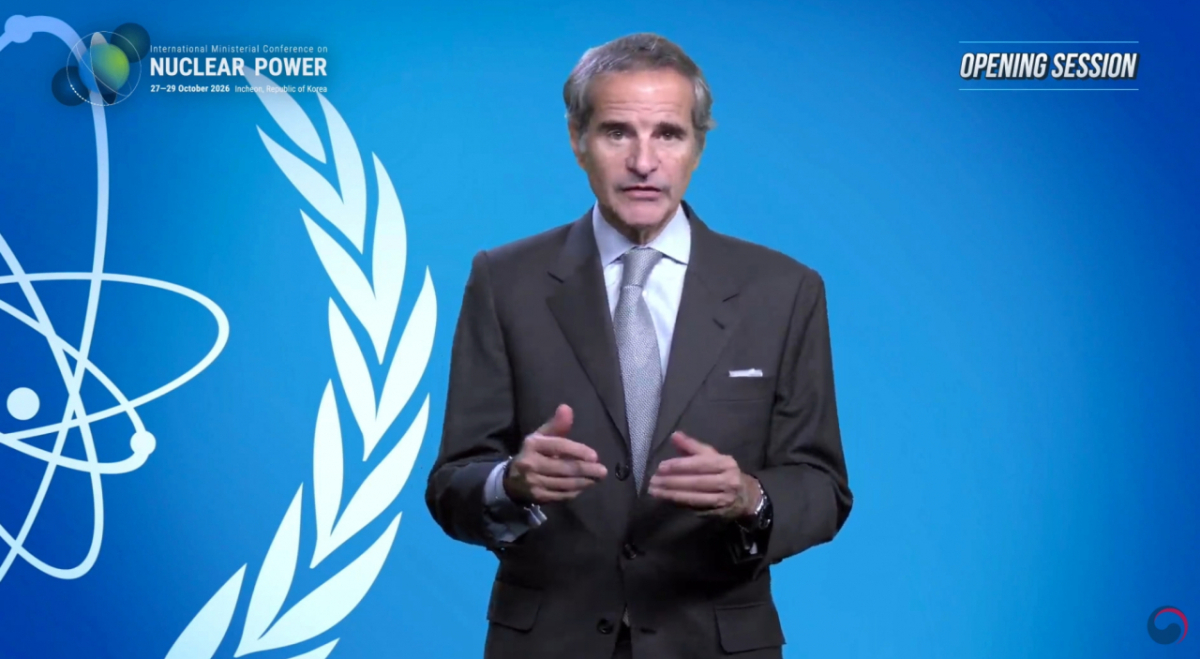
Meanwhile, it is reported that the reason behind Director General Grossi’s sudden cancellation of his visit to Korea on the eve of the IAEA Nuclear Energy Ministerial Conference was a request from the UN Security Council.
In his video welcome address, Director General Grossi revealed, “Yesterday (the 25th), I was requested to come to New York for a briefing at the UN Security Council, and as a result, I have unfortunately had to deliver my message via video.”
Previously, on the 26th, one day before the conference opened, Director General Grossi notified our government that his visit to Korea had been canceled.
Director General Grossi stated, “This is an important conference I have looked forward to while being closely involved in the preparation process,” adding, “I am deeply sorry that I will not be able to attend.”

 in TECH

