

The approval for the restart of Gori Nuclear Power Plant Units 3 and 4 is expected to ease domestic electricity supply. Amid a new forecast by the IAEA (International Atomic Energy Agency) that global nuclear generation capacity could exceed 1,000 GW due to an explosion in energy demand by 2050, voices are rising calling for expedited continued operation reviews for other halted nuclear plants.
Continued operation means extending the lifespan of a nuclear plant that has exceeded its initial operating license period (design life) and continuing to operate it, provided it meets the safety standards required by relevant laws and regulations. The design life is the "minimum period" during which the plant can be operated while meeting safety and performance criteria.
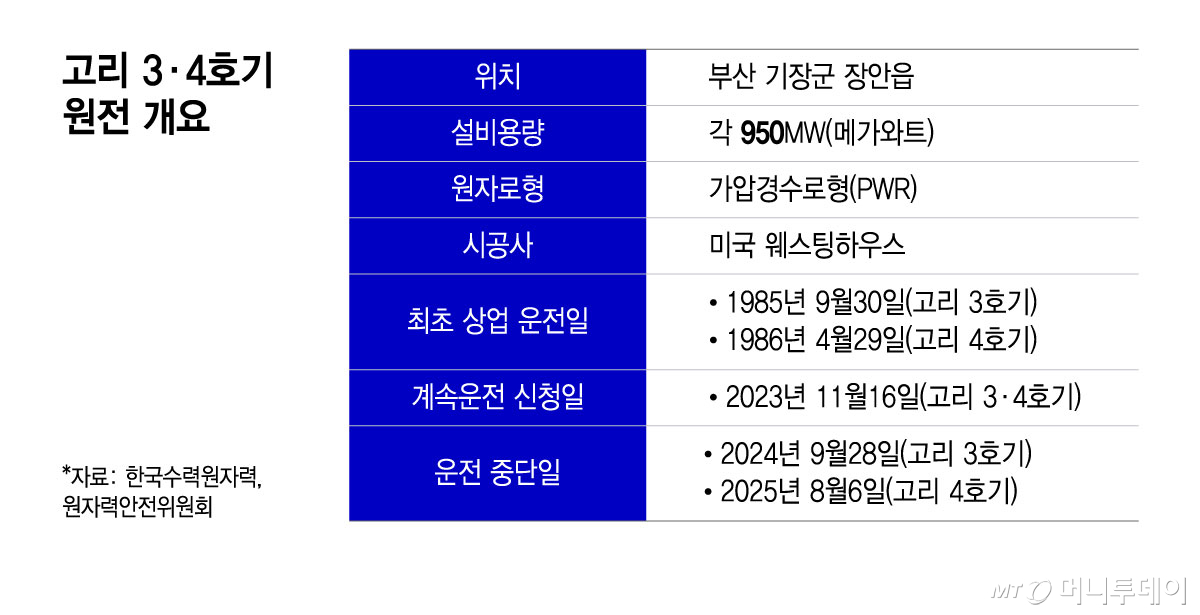
Gori Units 3 and 4 began their initial commercial operations on September 30, 1985, and April 29, 1986, respectively. Their design life is 40 years. Korea Hydro & Nuclear Power applied for continued operation license modification in November 2023, one to two years before the expiration of the design life of the two plants.
KINS (Korea Institute of Nuclear Safety) conducted safety reviews of Gori Units 3 and 4 from May 2023 to September 2026. However, during the review process, the time for the nuclear plants' design lives to expire arrived, and Gori Unit 3 ceased operation on September 28, 2024, while Gori Unit 4 stopped operating on August 6, 2025.
As the operational suspension period for Gori Units 3 and 4 lengthened, voices emerged from within the industry calling for expedited continued operation reviews.
This is due to consecutive heatwaves pushing domestic electricity demand close to all-time highs, coupled with the nationwide expansion of AI data centers, often called "electricity-eating horses." Consequently, support has grown for the opinion that power sources capable of relatively rapid supply, such as suspended nuclear plants, should be expanded urgently.
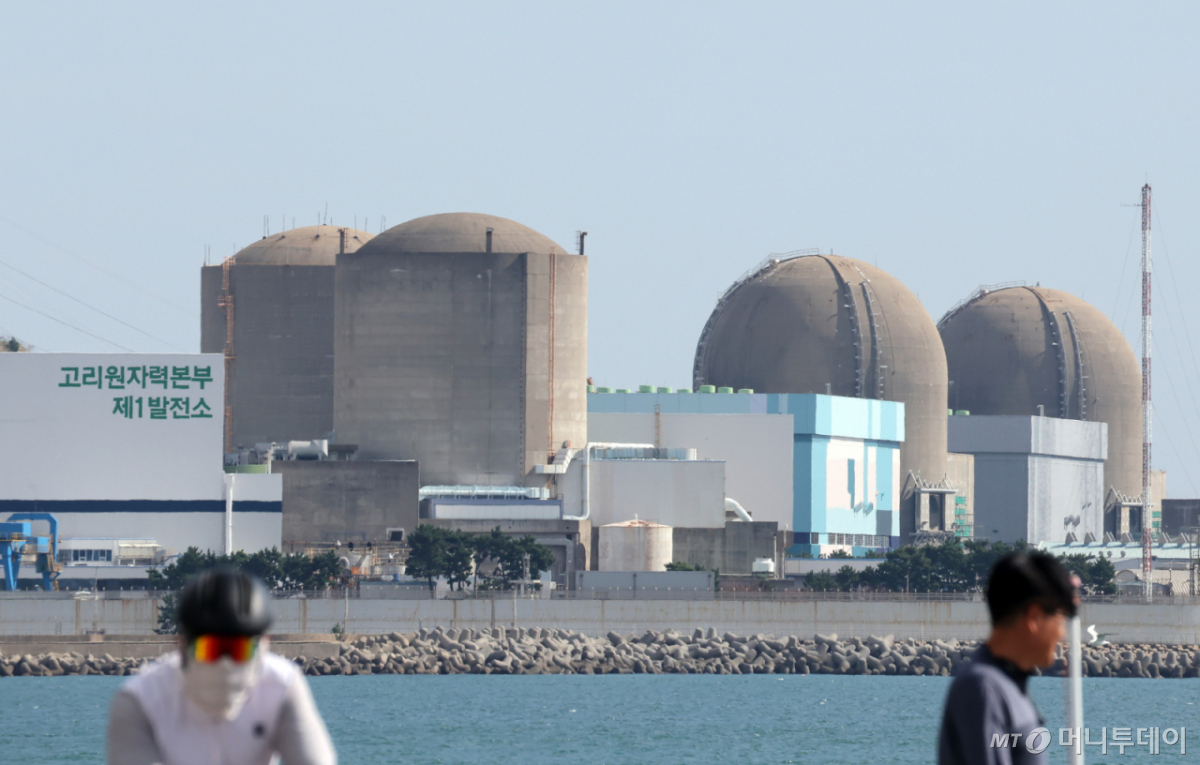
Gori Units 3 and 4 are large nuclear plants with equipment capacities of 950 MW (megawatts) each. Operating both units simultaneously can generate up to 1,900 MW of electricity.
This level is sufficient to comfortably handle the annual electricity consumption of all households residing in Seoul City (approximately 1,700 MW). Based on total power demand (approximately 5,700 MW) combining various uses such as commercial districts and infrastructure, it amounts to supplying about one-third.
Operating two nuclear plants would also allow for the operation of a dozen or so 100 MW-class AIDCs (AI Data Centers). Representative examples of 100 MW-class AIDCs include those being built by SK Group and Amazon Web Services (AWS) in the Ulsan Industrial Complex area, and one being built by GS Group in Donghae City.
Along with this, a forecast from the IAEA emerged stating that global nuclear generation capacity will reach between a minimum of 640 GW and 1,000 GW by 2050 due to sharply rising energy demand from AIDC establishment and other factors. This represents an increase of approximately three times compared to 2025 levels.
At the IAEA Nuclear Ministerial Conference opening in Songdo, Incheon on this day, Rafael Grossi, Director General of the IAEA, emphasized that "support for nuclear energy from governments, financial institutions, and consumers worldwide is expanding," stating that "(for nuclear expansion) a strong institutional foundation including effective regulation, skilled personnel, and reliable supply chains is needed."
Vice Prime Minister and Minister of Science and ICT, Baek Gyun-hoon, also stated, "We will find answers together on what to prepare and how to cooperate in order to realize the (expansion potential of nuclear energy) safely and responsibly."
Meanwhile, with the continued operation approvals for Gori Units 2, 3, and 4, the total number of domestic nuclear plants awaiting continued operation reviews has become seven.
Among these, since the accident management plan for Hanbit Nuclear Power Plant Units 1 and 2 in Yeonggwang County, South Jeolla Province was approved this month, it is expected that the decision on whether to continue their operation will be made as early as the first half of next year.

 in TECH

