

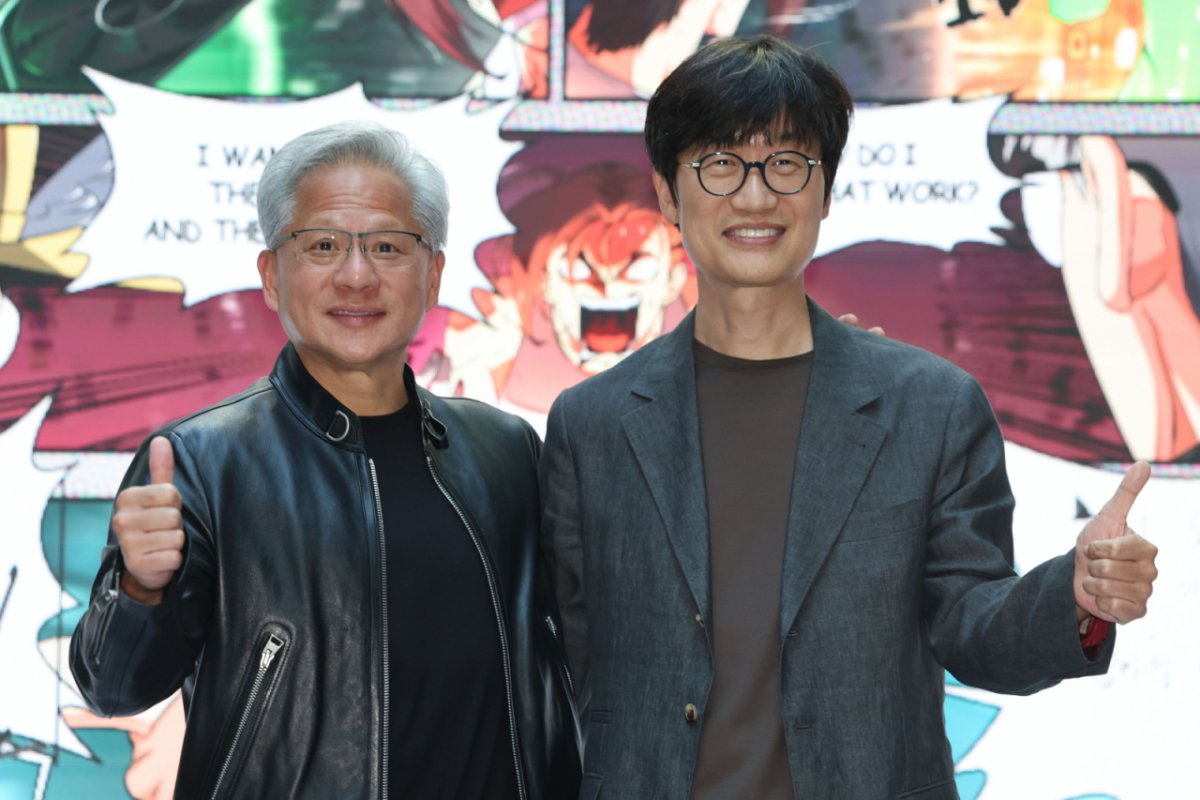
The joint global AI factory construction project being pursued by Naver together with NVIDIA and Brookfield has entered its main phase. As concerns grow over the poor performance and financial burdens of global neocloud companies, attention is turning to whether the three-party alliance model they have proposed will serve as a breakthrough.
Naver said Tuesday that it had signed a contract to secure $9 billion (112 trillion won) worth of computing infrastructure from Brookfield, thereby meeting the prerequisite condition for NVIDIA's strategic equity investment. Accordingly, the third-party rights offering (paid-in capital increase) targeting NVIDIA is also expected to be completed promptly. Upon completion of the process, NVIDIA will become Naver's third-largest shareholder.
The three-party alliance model is characterized by its stability as a business model that combines each company's competitive strengths. Naver leads the project based on its capabilities in building and operating large-scale proprietary GPU (graphics processing unit) clusters accumulated over time, as well as its know-how in data center operations.
NVIDIA provides technical cooperation on next-generation high-performance computing platforms such as DSX, while Brookfield offers the most efficient financing in the AI infrastructure investment sector. In essence, it is a form of physical capital combination that clearly separates capital, technology, and operational capabilities.
Naver has secured a new growth driver in the AI infrastructure business while alleviating the burden of massive data center construction costs and GPU purchase debt. The financial soundness and viability of the three-party alliance are bolstered by the fact that Brookfield is an asset management company with outstanding capabilities in global AI infrastructure investment.
Brookfield, which manages over $1 trillion (approximately 1,325 trillion won) in assets worldwide, has diverse experience, including establishing a semiconductor factory joint venture with Intel and collaborating with Microsoft on renewable energy development for AI infrastructure.
The financial stability of this three-party alliance structure is evaluated as a "standard alternative" amid the controversy over "circular financing," which has become an issue in global investment markets, and the cool reception toward global neocloud operators. Recently, the corporate bond yield of CoreWeave, a leading global neocloud operator, surged to 15%, highlighting the significant funding burden resulting from large-scale investments.
In this regard, Shinhan Investment Corp stated in a report published on the 19th that "Naver's AI factory business model utilizes external capital to share direct equipment investment while focusing on monetization through customer acquisition and operations." The firm added that it "minimized financial burden by not directly bearing large-scale equipment CapEx (capital expenditure), unlike global neocloud operators."
An industry source in the investment banking sector also said, "Until now, competition was about 'who can borrow more to buy more chips,' but it has now evolved into a structural competition of 'who can operate infrastructure efficiently without financial risk.'
The alliance structure of Naver, NVIDIA and Brookfield is a standard model where capital and technology are efficiently allocated according to a thorough division of roles, unlike circular financing that artificially rolls over debt to create an illusion." Naver also differs from other neocloud operators in that it generates stable operating cash flow every year through advertising, commerce, and other businesses.
A Naver official said, "By combining the AI technology and data center operational capabilities we have accumulated with NVIDIA's advanced computing platform capabilities and Brookfield's global infrastructure investment expertise, we can secure both stability and competitiveness in the business." The official added, "Based on a capital-efficient business structure, we will create new growth opportunities in the global AI infrastructure market."

 in TECH
