

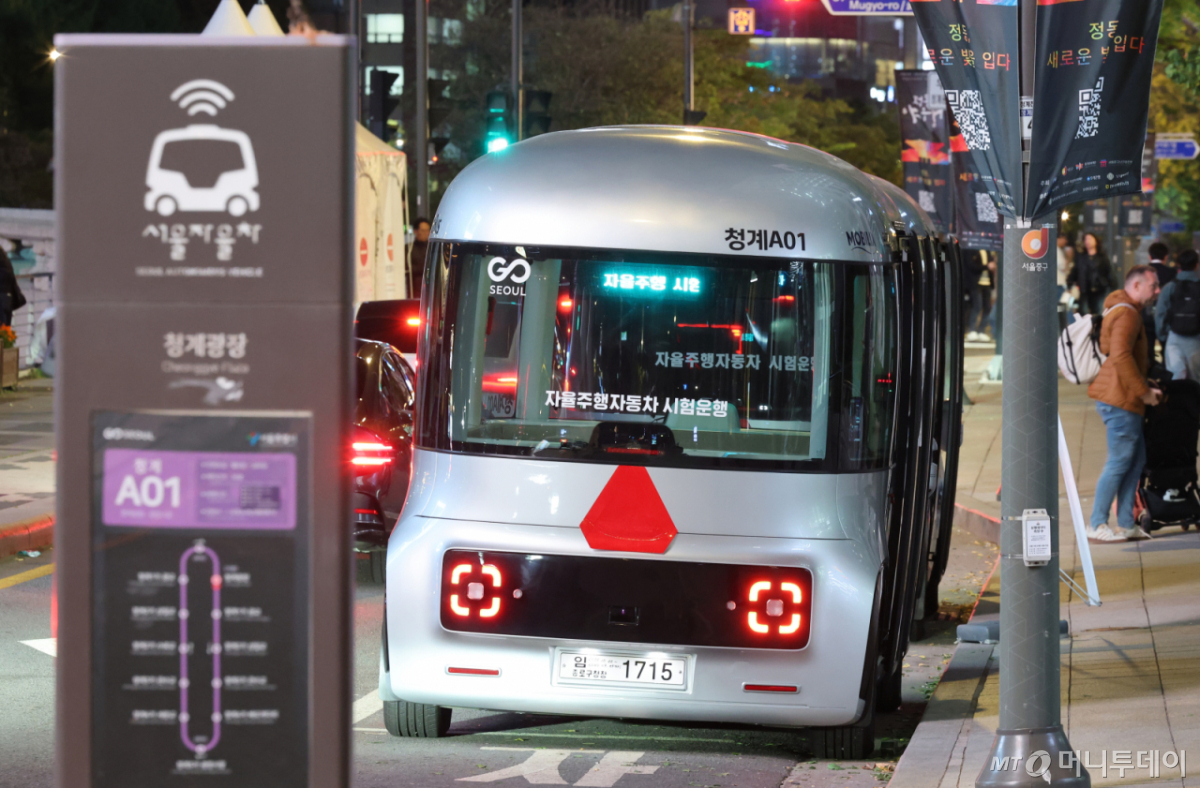
The Ministry of Science and ICT and the Electronics and Telecommunications Research Institute (ETRI) have revised 'SAE J3016,' the international standard for global autonomous driving levels.
The Ministry of Science and ICT announced on the 29th that it had revised the autonomous driving level through its 'Information, Communications and Broadcasting Standards Development Support Project.'
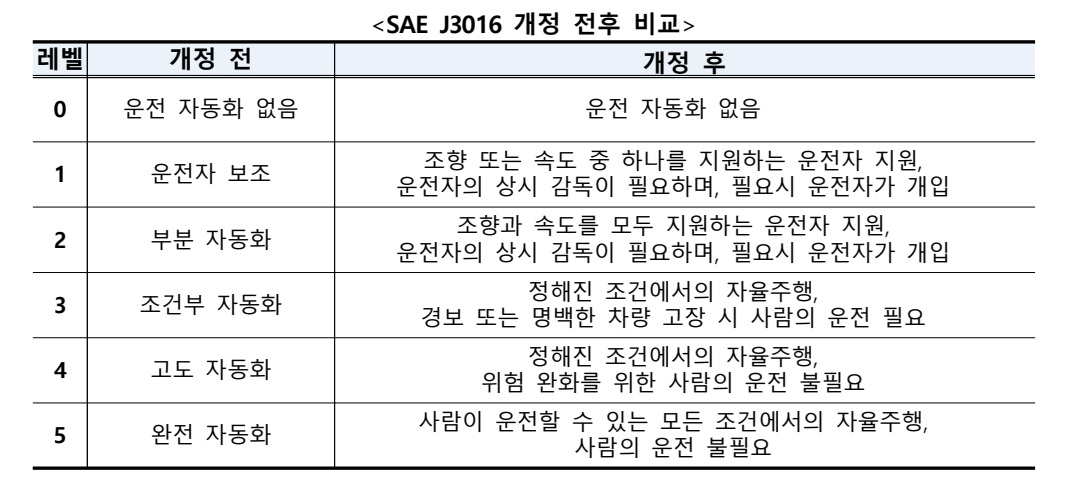
The international standard revised this time is 'SAE J3016.' It classifies the level of driver assistance and autonomous driving technology in automobiles into six stages, from 'Level 0' to 'Level 5,' and defines the concepts and terminology for each stage. Since its establishment in 2014, it has been used as a benchmark by automobile manufacturers, parts suppliers, governments of various countries, and international organizations when developing autonomous driving-related technologies or establishing regulations.
Recently, with the expansion of driver assistance functions such as lane keeping and speed control, and the introduction of 'robotaxi services' that operate without a driver in some countries, the need to reorganize existing standards has emerged. This is because issues can arise, such as misinterpreting driver assistance functions as 'full autonomous driving' or confusing the roles of the automobile and the driver.
The domestic research team, led by Cha Hong-gi, head of ETRI's Intelligent Information Standards Research Lab, spearheaded the revision work for three and a half years. This marks the first instance where SAE J3016, which had previously been revised primarily centered on the United States, was revised by domestic researchers. The 2026 revised edition was officially published on the 20th of last month.
The Ministry of Science and ICT explained, "We focused on clearly defining the roles that drivers and automobiles must perform at each autonomous driving stage." It added, "In particular, we revised the descriptive text for existing autonomous driving levels to make the roles of the driver and the automobile more apparent, allowing for a clearer understanding of the differences between stages."
It further stated, "The fact that domestic researchers led the revision of this international standard is a remarkable achievement," adding, "We will actively support South Korea in continuing to lead international standards in the autonomous driving field going forward."
The standard revised this time will be applied when autonomous driving-related companies and institutional investors worldwide develop functions and design safety systems.

 in TECH

