

IT industry experts gathered to share insights on security, infrastructure, and data center operations in the AI era. The experts emphasized that technology must be developed and applied to suit the changing environment of the AI era.
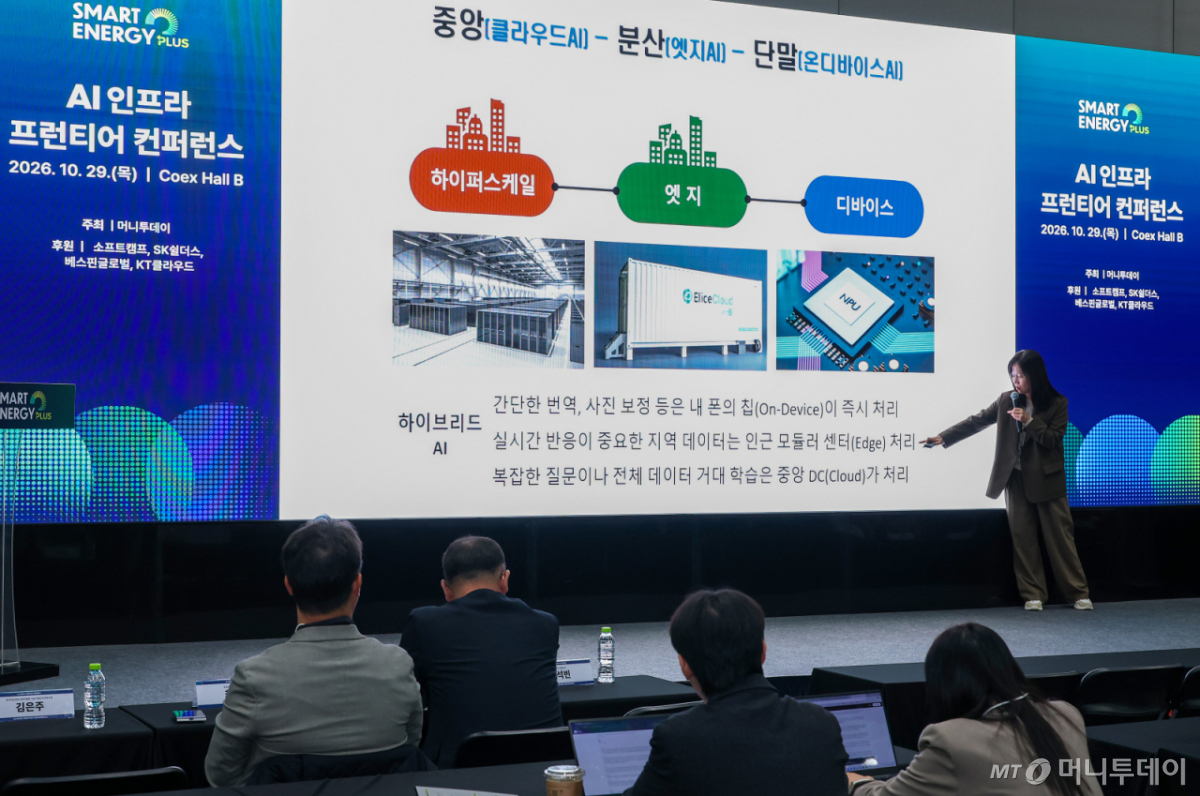
Kim Eun-ju, director of the Intelligent Technology Infrastructure Division at NIA (National Information Society Agency), said at the "2026 AI Infrastructure Frontier Conference" at COEX in Samsung-dong, Seoul on Thursday, that "the era of inference will officially begin next year. If the era of learning was an era of investment, the era of inference is one where we must make money with AI."
Kim said, "The whole world will strive to reduce costs," and proposed "Hybrid AI Infrastructure" as a solution. This model distributes power across hyperscale data centers (DCs), edge DCs, and on-device chips.
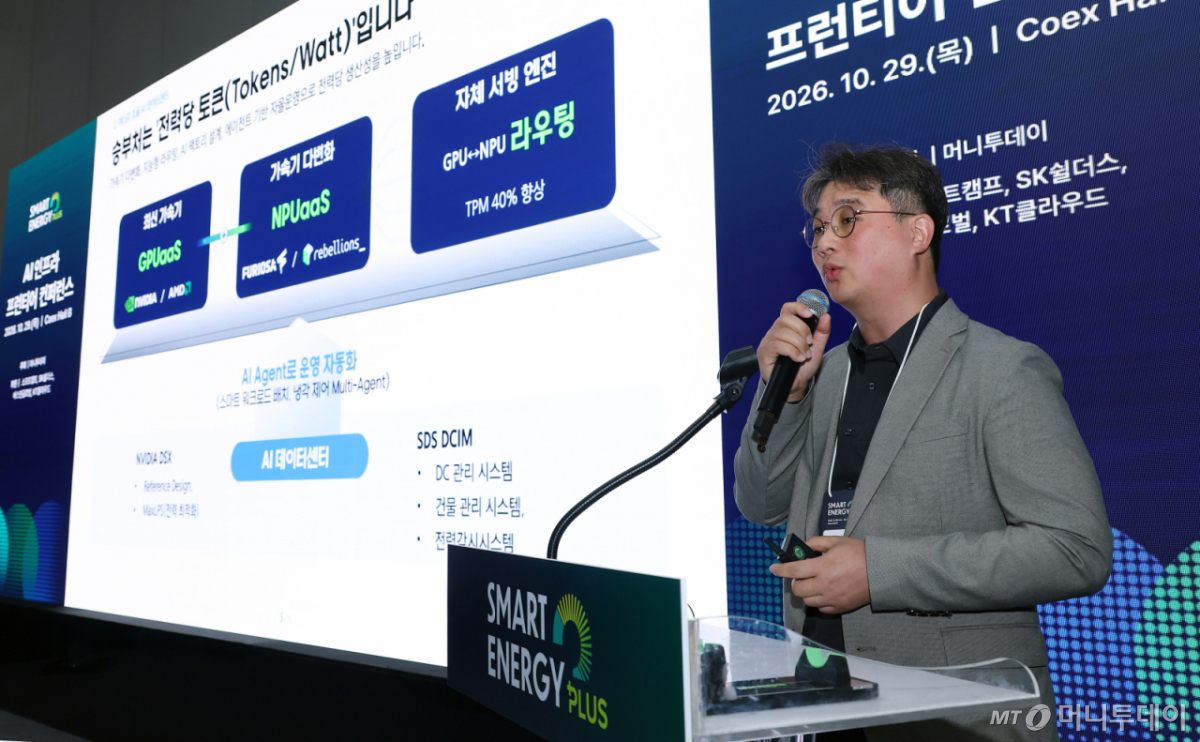
Samsung SDS, which launched the country's first B300 GPUaaS (GPU rental service) in March of last year and began NPUaaS (NPU rental service) based on FuriosaAI's second-generation NPU (Neural Processing Unit), "Renegade," in July of last year, is expanding its serverless services. The company introduced tips for securing the latest GPUs (Graphics Processing Units).
Choi Jung-jin, head of the Evangelist Group at Samsung SDS, said, "As NVIDIA GPU generations advance, prices typically double while performance improves by about threefold," adding, "Introducing the latest accelerators early is an efficient way to operate."
OT (Operational Technology) security is also important in the AI era. Moon Byung-ki, Head of the OT Business Group at SK Shieldus, stated, "Poorly managed OT assets can become attack targets," adding, "Because the OT environment is directly linked to production and equipment operation, a successful attack can lead to tangible operational damages such as production stoppages, quality degradation, and safety accidents, highlighting the importance of security."
SK Shieldus provides OT security services tailored to various industrial sites, supporting companies in ensuring production stability and supply chain reliability. By identifying assets and securing visibility into production equipment, industrial control systems, and OT networks, it precisely analyzes connection structures and potential risk factors within factories. It proactively manages threats that could lead to production stoppages and safety accidents by establishing vulnerability diagnostics, remote access controls, OT network protection, and anomaly detection systems.
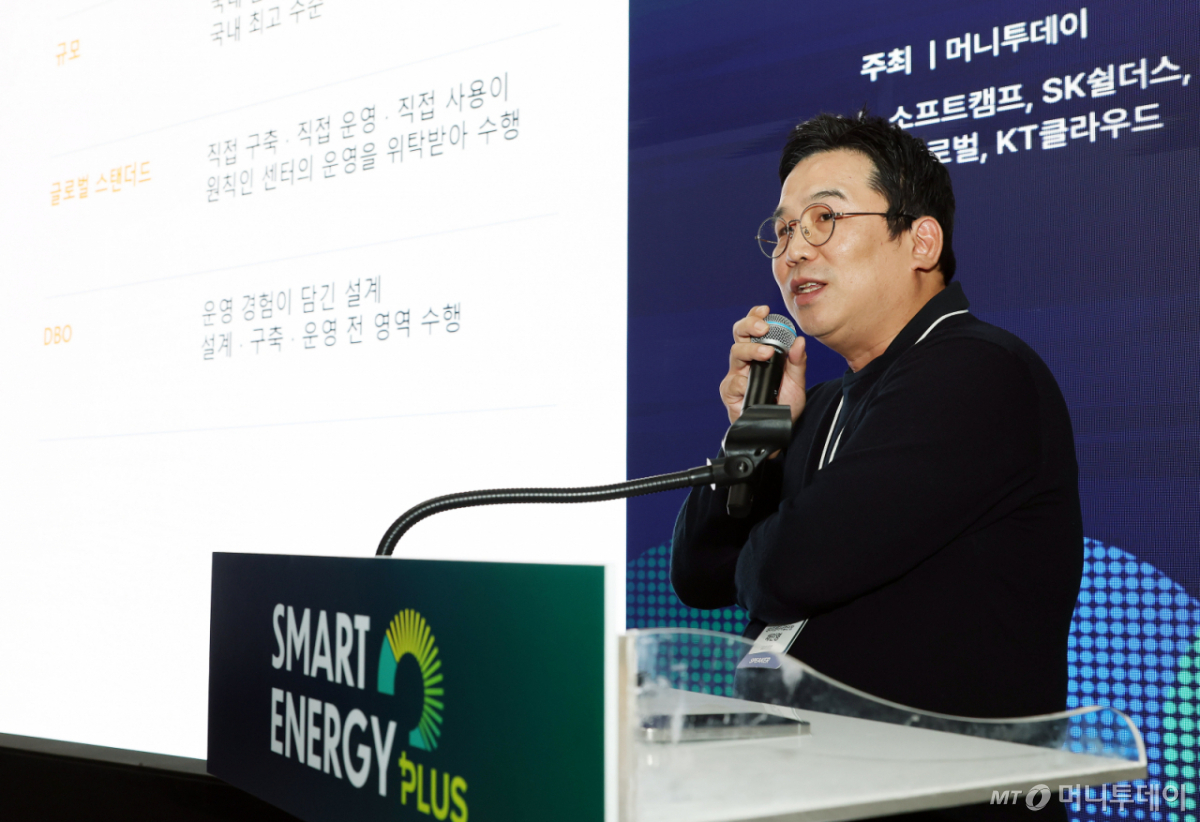
LG CNS, which secured the country's first data center construction project in Indonesia, introduced modular DCs. Chae Min-young, Head of the Data Center Business Division at LG CNS, said, "LG CNS unveiled a prefab modular DC that pre-fabricates GPUs, servers, power, and cooling equipment as modules to enable rapid on-site deployment, facilitating the swift construction of AI factories."
AI factory operations are handled by full-stack services. LG CNS's "AI Factory Full-Stack Service" is an integrated service that provides GPU resources in a cloud format via "GPUaaS," supports real-time learning and inference for physical AI and other applications through "Intelligence Services," and incorporates power and cooling technologies to ensure stable operation. Customers can utilize the necessary GPU computing resources without directly building their own AI infrastructure.
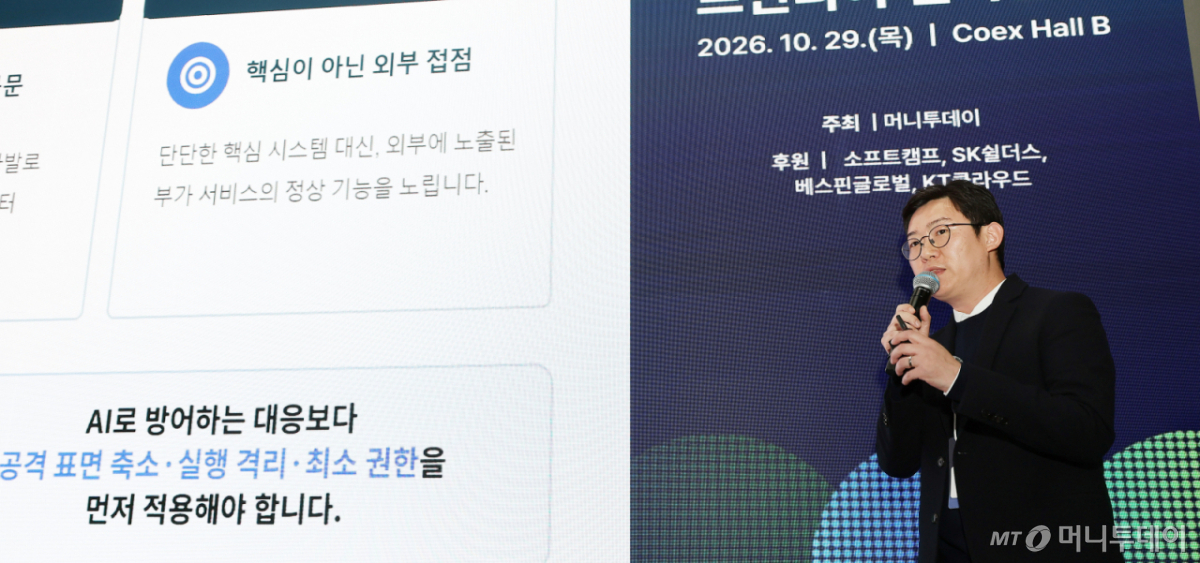
Finally, Softcamp introduced new security standards for the AI era. Kim Dong-hoon, Head of the Consulting Division at Softcamp, proposed, "We suggest placing a secure access portal at the front end of existing business services," explaining, "This involves positioning services used only by authorized users behind the portal and simultaneously restricting bypass routes that allow direct access to original servers, thereby reducing touchpoints accessible from external exploration."
For AI agent security, they proposed the "SHIELD AI Gateway." This consolidates agent calls through a single gateway to verify delegation relationships. Agents are managed as non-human identities, and access decisions are made by linking them to the identity of the user who delegated the authority. Call logs record which agent accessed what under whose authority. Keys for accessing destination systems are centrally managed by the gateway.

 in TECH


