

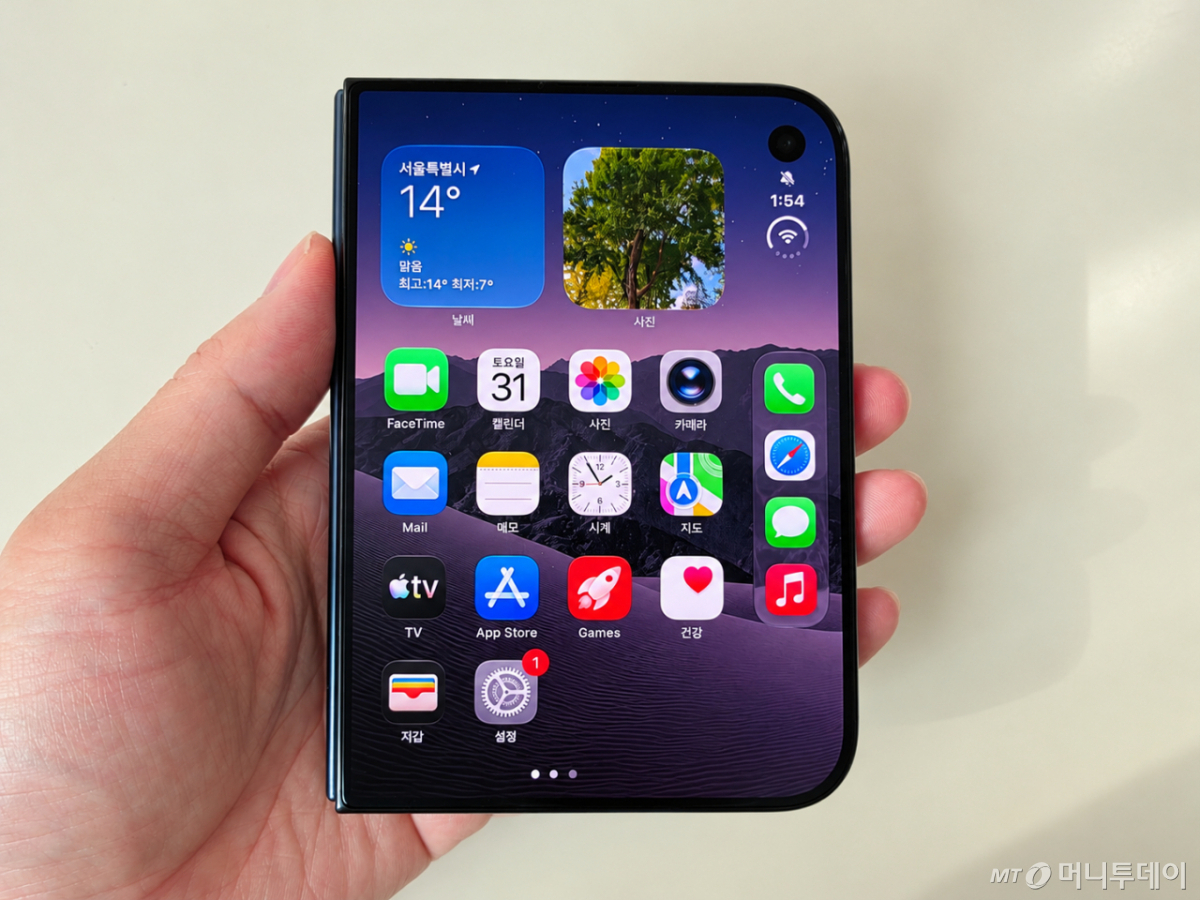
I used Apple’s first foldable smartphone, the iPhone Duo, for a week. In particular, I compared it with Samsung Electronics’ Galaxy Z Fold 8.
After a week of comparative testing, the iPhone Duo led in application processor performance and battery life, but fell short of the Galaxy Z Fold 8 in app optimization, multitasking, and ease of operation. The domestic retail price of the iPhone Duo starts at 3.29 million won, making it more than 1 million won more expensive than the Galaxy Z Fold 8 (2,278,100 won).
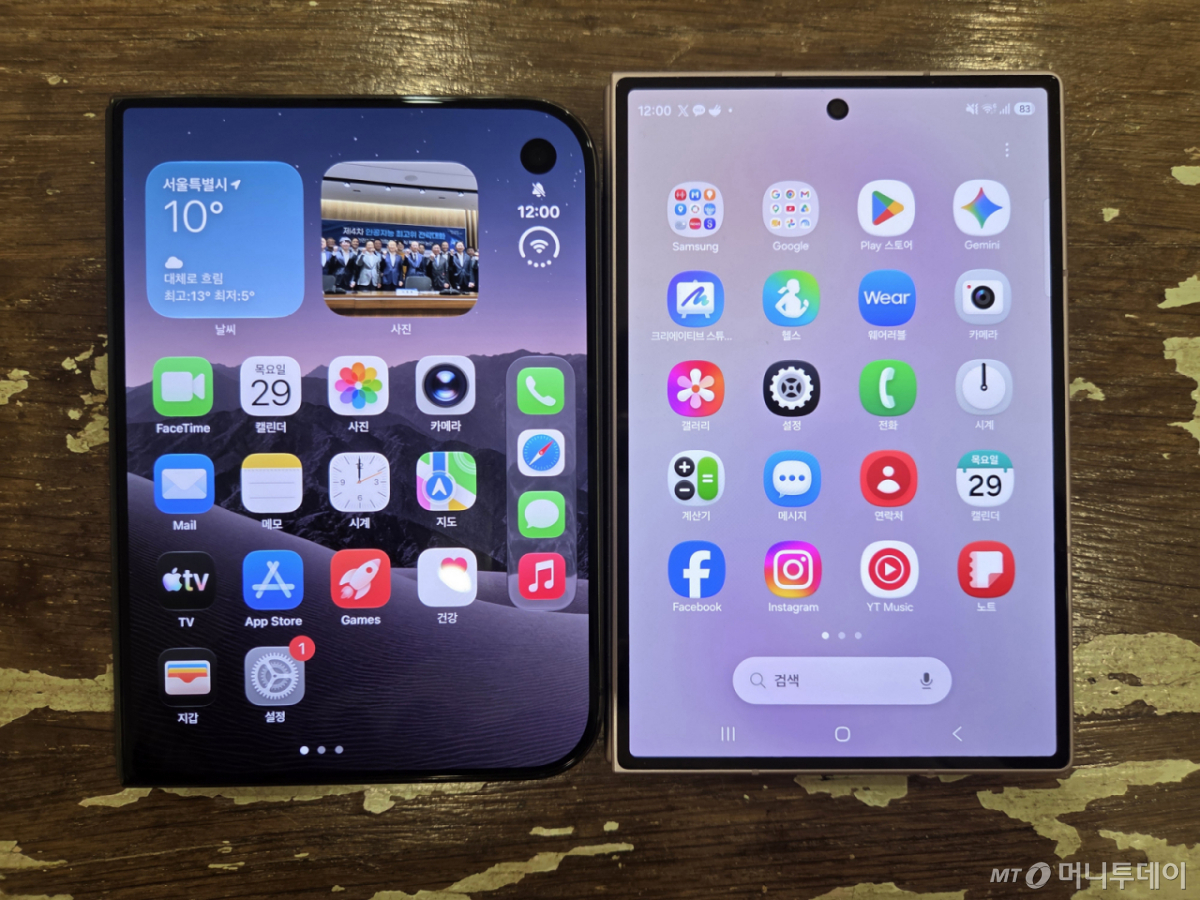
■ iPhone Duo: Disappointing from weight and button placement to screen utilization
Both products are foldable smartphones equipped with a 7.6-inch inner display, but the actual user experience revealed significant differences. First, the iPhone Duo weighs 254 grams, which is 53 grams heavier than the Galaxy Z Fold 8 (201 grams), and the difference was noticeable from the moment it was held in hand.
The placement of the volume buttons was also inconvenient. With the buttons moved from the side to the top edge as seen on previous iPhones, adjusting them with one hand while the device is folded proved difficult. Even when the screen was unfolded, pressing the buttons required moving one’s hand.
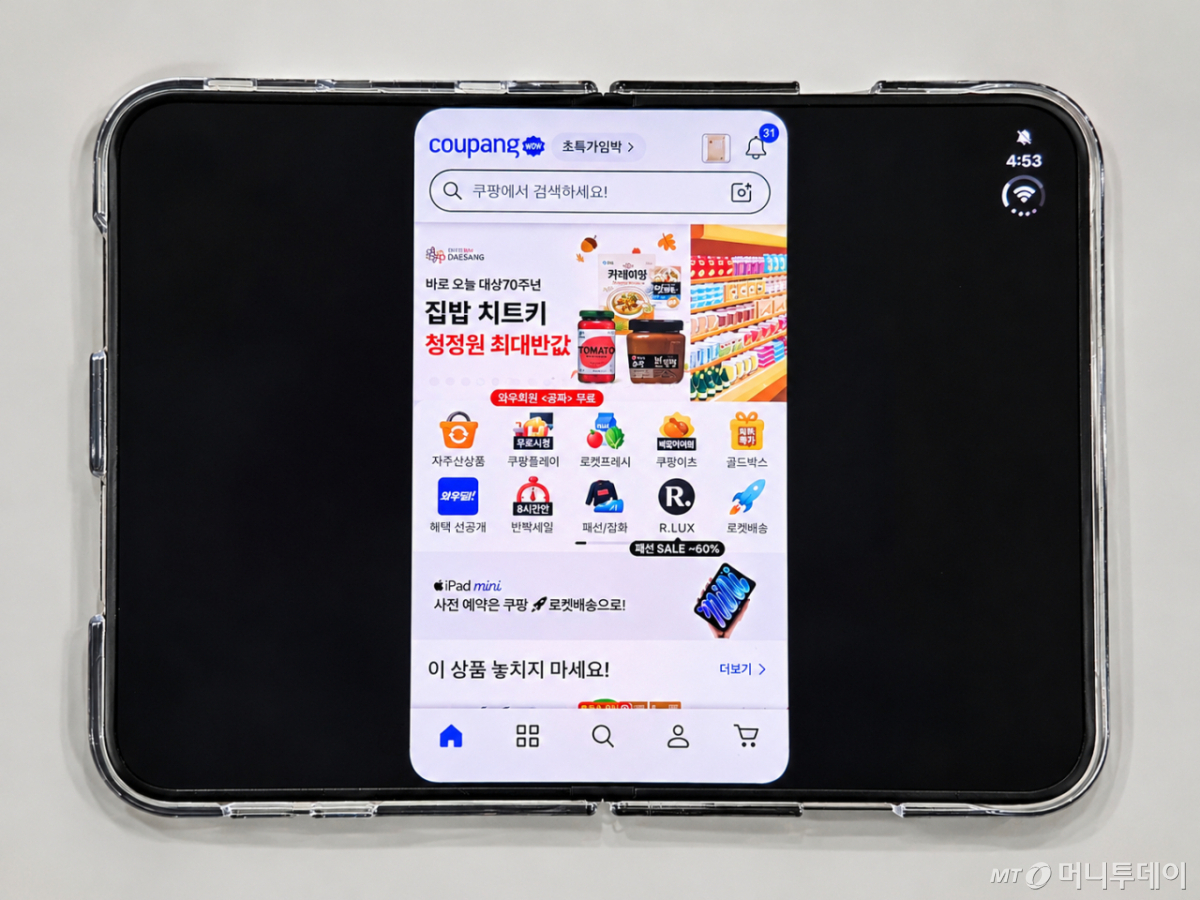
Screen utilization was also disappointing. On the iPhone Duo, a black area displaying status information such as time and Wi-Fi remained on the right side of the screen while web browsing, limiting the space available for viewing content. It was difficult to feel that the expanded screen was being fully utilized.
App optimization was also lacking. When I first received the device, even Apple’s own “Sports” app was not optimized for the wide screen. Although this was improved a few days later, it was surprising that such an issue occurred with a proprietary app. The situation with third-party apps was worse. The Coupang app left considerable black margins on both sides of the screen, failing to leverage the advantages of a foldable phone.

There was also a significant difference in multitasking. The Galaxy Z Fold 8 allows up to three apps to run simultaneously, with adjustable screen size and layout. In contrast, the iPhone Duo can run two apps side by side in landscape mode, but when the device is rotated to portrait, only one app is displayed at a time. However, the ability to split the screen vertically for certain apps when the device is half-folded was an advantage. Similar to the Galaxy Z Flip series, this offers a differentiated user experience compared to the Galaxy Z Fold 8.
■iPhone Duo: Lacking video and game optimization, camera operation also inconvenient
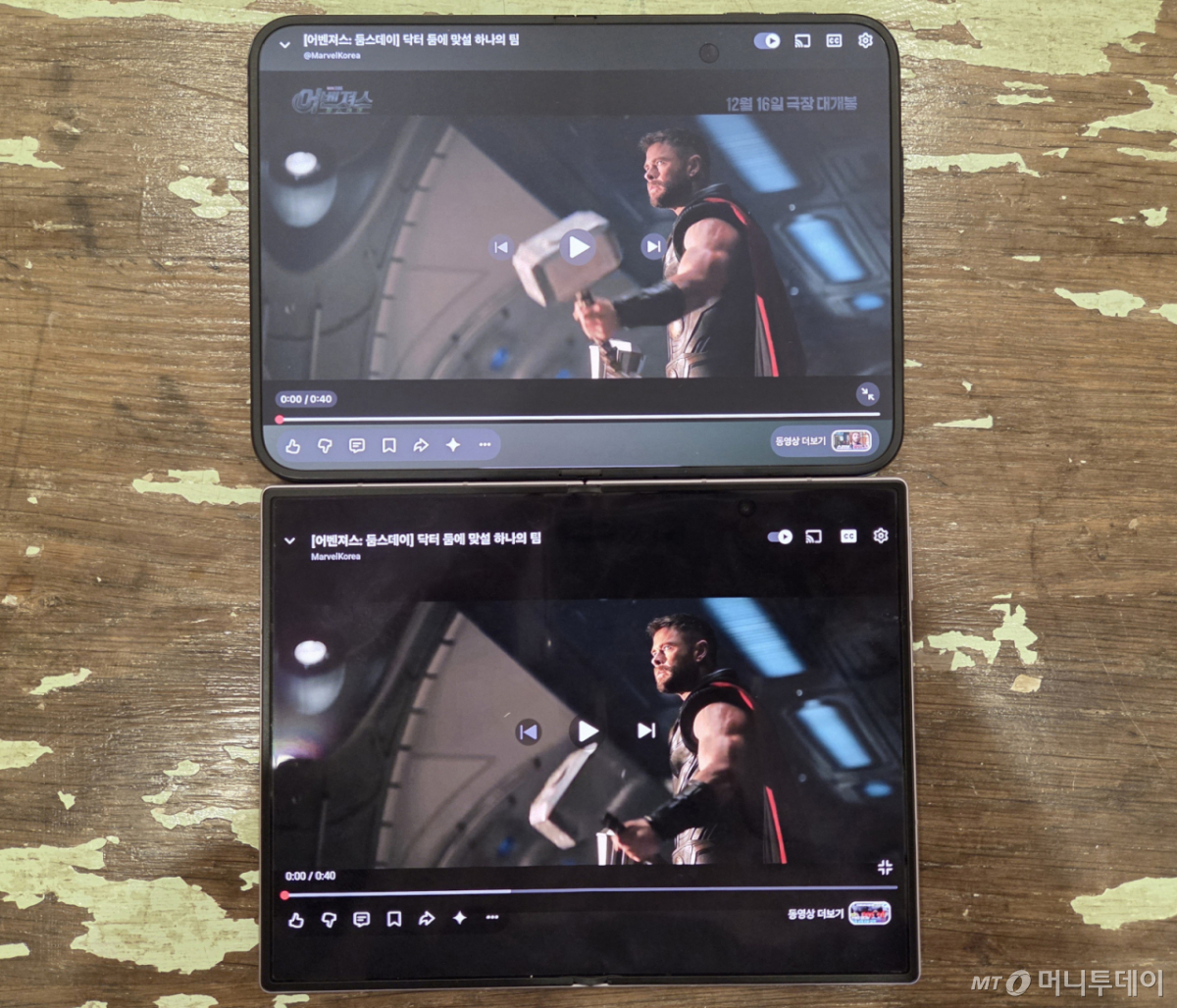
There were also shortcomings in the display. Apple applied a nano-texture to the inner screen to reduce the visibility of wrinkles characteristic of foldable phones. In practice, the curvature in the center of the screen was relatively less noticeable. However, when playing the trailer for the Marvel film “Avengers: Doomsday” on both devices, the iPhone Duo’s screen appeared somewhat hazy with dull colors. Conversely, the Galaxy Z Fold 8 showed relatively distinct black levels and contrast, even in dark scenes.

The iPhone Duo’s screen optimization was also disappointing in high-spec games. “Genshin Impact” ran smoothly without lag, but it failed to properly utilize the wide screen. When holding the device vertically, the game displayed horizontally in the center of the screen, leaving wide black margins at the top and bottom. Even when rotated to landscape, black areas remained at the top and bottom of the screen.

Camera performance evaluations varied depending on shooting conditions. In daytime 10x zoom shots, the Galaxy Z Fold 8 had a relative advantage, but in nighttime 5x zoom shots, the iPhone Duo produced sharper results. In terms of camera operation, the iPhone Duo was inconvenient. When holding the device vertically with the screen unfolded on the iPhone Duo, landscape photos were taken; when held horizontally, portrait photos were captured. To shoot in the desired orientation, users had to rotate the device in the opposite direction, requiring a period of adjustment.
Durability concerns raised immediately after launch were also worrying. While no significant issues occurred with the screen or hinge during a week of use, I felt anxious about potential damage every time I folded and unfolded the device, even with a protective case attached.
■iPhone Duo: Powerful AP performance… Battery and speaker also strengths
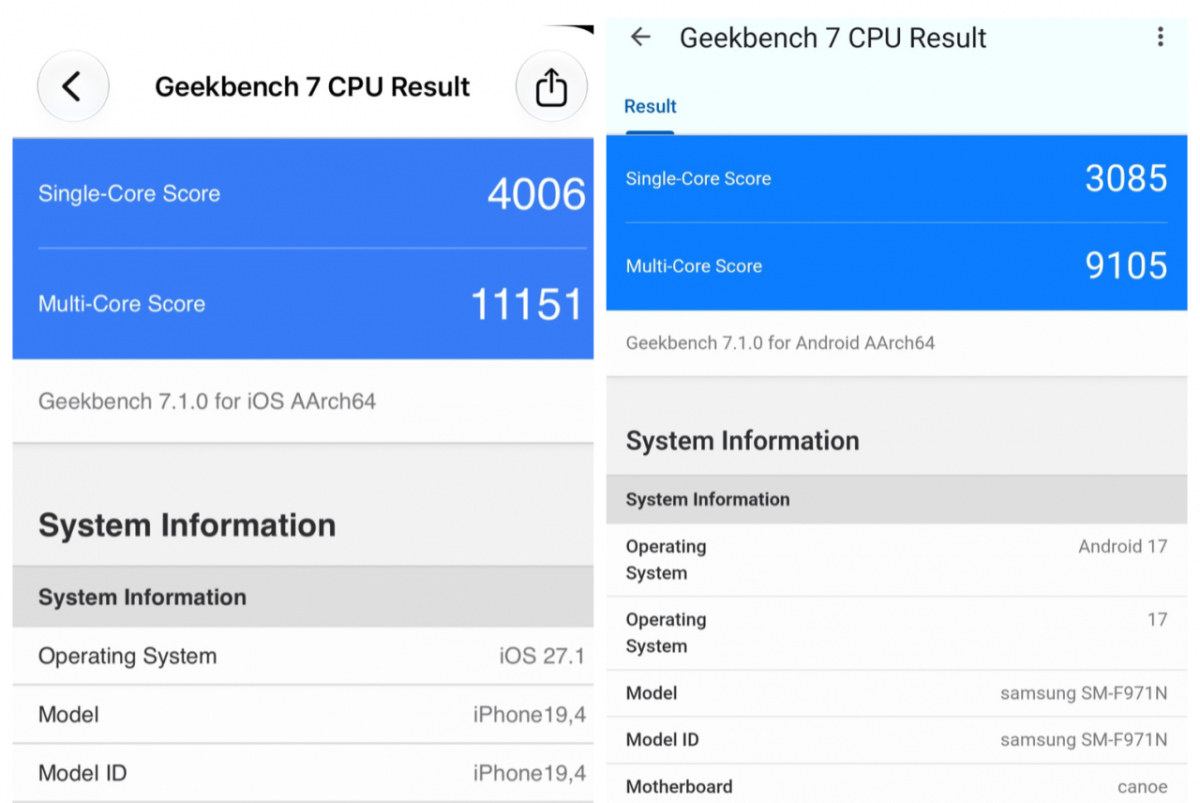
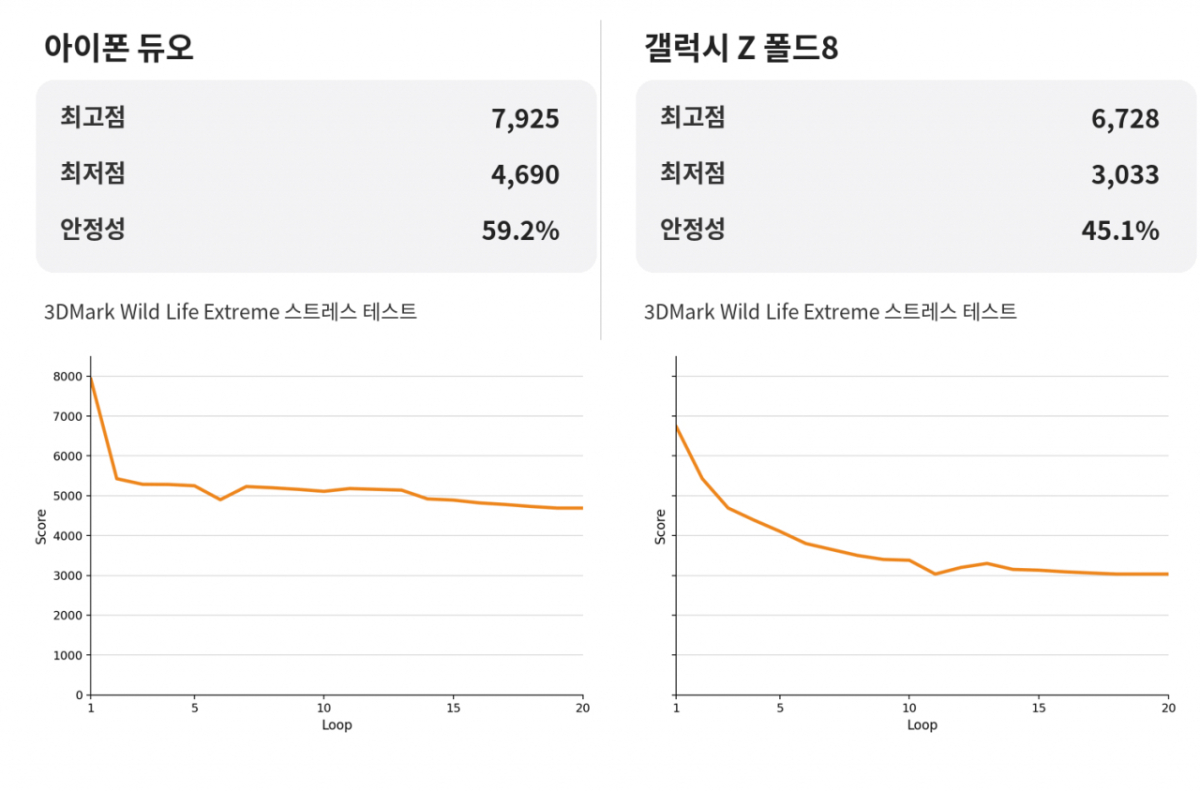
The application processor (AP) performance of the iPhone Duo was impressive. In the Geekbench 7 test, which measures central processing unit (CPU) performance, the iPhone Duo scored 4,006 points in single-core and 11,151 points in multi-core, exceeding the Galaxy Z Fold 8 by 29.9% and 22.5%, respectively. In the 3DMark Wild Life Extreme Stress Test, which involves repeated high-load graphics tasks, performance stability was 59.2%, surpassing the Galaxy Z Fold 8 (45.1%). However, it should be noted that the chips installed in the two products are of different generations.
The iPhone Duo also led in battery life. In actual use, it lasted longer than the Galaxy Z Fold 8. However, charging speed was the opposite. After a 30-minute charge, the iPhone Duo reached 57%, while the Galaxy Z Fold 8 reached 70%. The time taken to reach a full charge was 85 minutes and 65 minutes, respectively, a difference of 20 minutes.
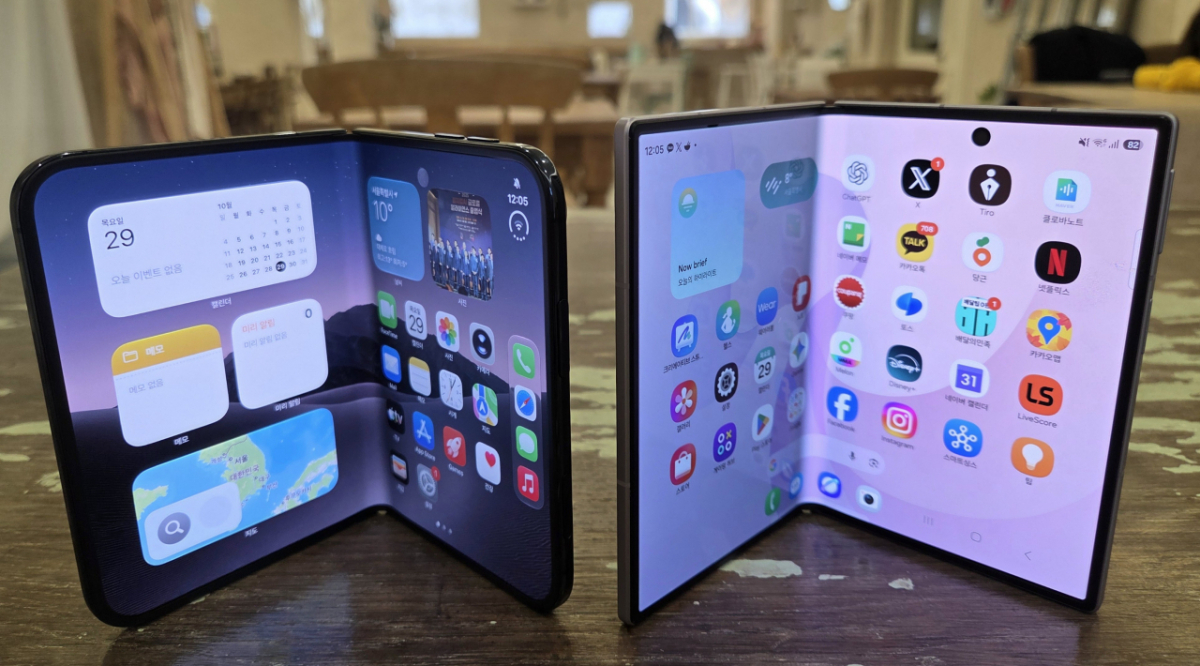
The iPhone Duo’s speakers were more satisfying. On the Galaxy Z Fold 8, when the screen is unfolded for landscape use, two speakers are clustered on one side, causing sound to be biased to that side. In contrast, the iPhone Duo has speakers arranged diagonally across both halves of the body, delivering relatively balanced sound. This was a noticeable difference when enjoying videos or games.
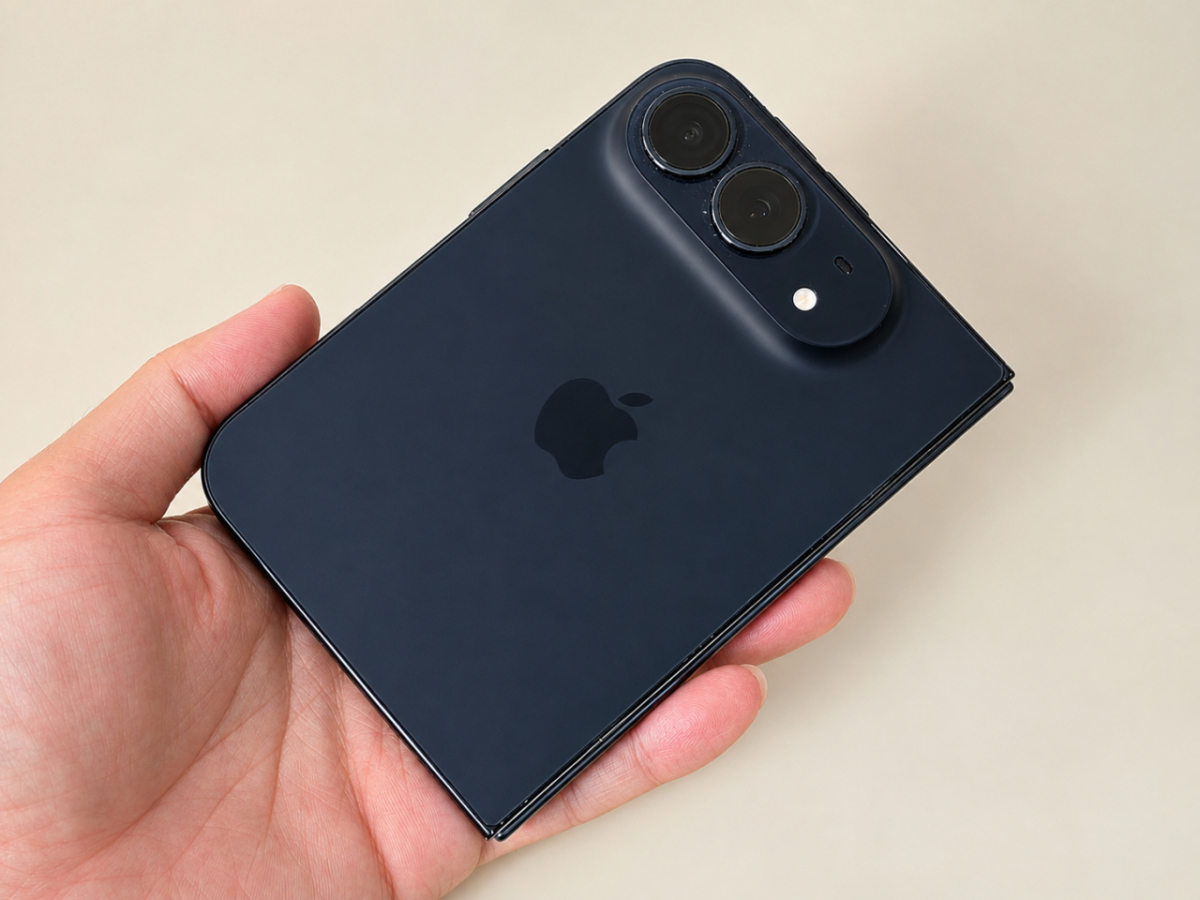
The iPhone Duo reminded me of a car equipped with a top-tier engine but difficult to drive. While its powerful AP, long battery life, and balanced speakers are strengths, it fell short in app optimization, multitasking, and ease of operation. Considering that it is more than 1 million won more expensive than the Galaxy Z Fold 8, it was difficult to evaluate it as having a level of refinement commensurate with its performance.

 in TECH


