

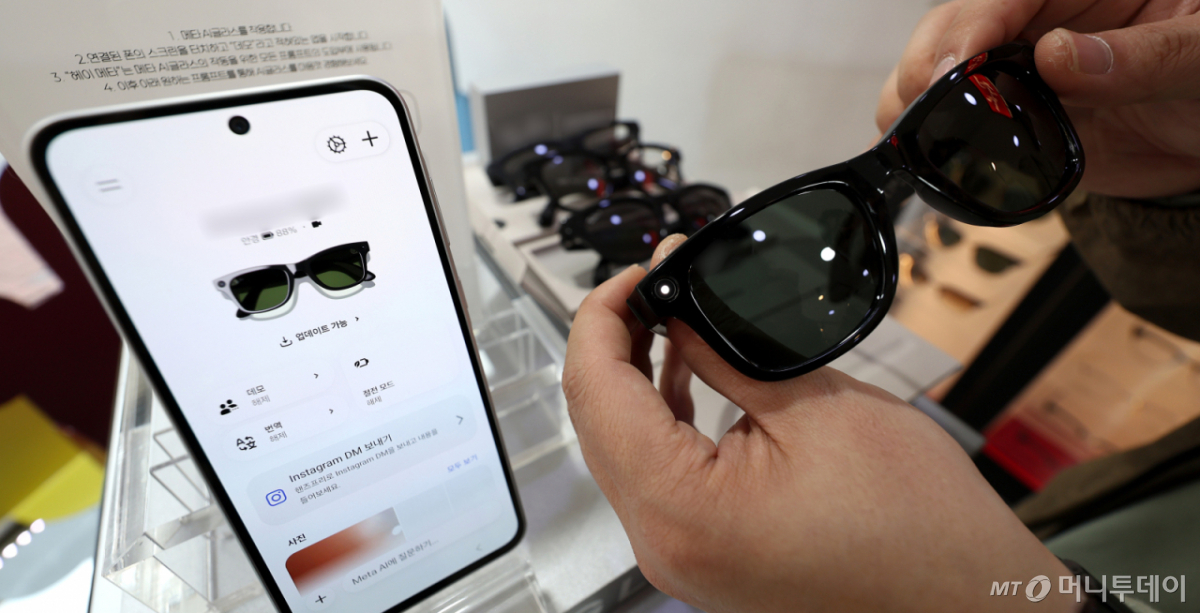
The use of AI by the top scorer of the Certified Tax Accountant exam to commit fraud has come to light. The flames of suspicion are spreading to other exams. It is argued that if a candidate had merely crossed the passing line rather than achieving a conspicuously high score, they would not have been caught. As cheating that was not filtered out in the examination hall surfaced only after suspicions surrounding the scores and the individual's confession, distrust has grown over whether there are more undetected cases.
The claim that 'a large number of cheaters passed other exams' has not been confirmed. Cheating cannot be definitively determined solely by high scores or short preparation periods. The focus of countermeasures is shifting from 'who received an unusually high score' to 'whether cheating can be detected regardless of the score.'
According to the Ministry of Employment and Labor on the 16th, the government is investigating suspected cases of AI cheating in national qualification exams conducted this year and promoting measures such as the introduction of radio wave detectors and supervisor training. Radio wave detectors are devices that detect wireless signals exchanged between smart glasses, mobile phones, and other equipment.
Professor Choi Byung-ho of the Korea University AI Research Institute recently proposed a plan linking pre-exam device inspections, in-exam monitoring, and post-exam solution verification. The idea is to verify at multiple stages rather than trying to catch all cheating with a single piece of equipment.
The first stage is inspection before entering the examination hall. Candidates remove their glasses, which are filmed from the inside out to check for cameras or electronic components. Security stickers are applied to the inspected glasses. This aims to prevent candidates from swapping the glasses they were inspected with for different devices during the exam.
During the exam, supervisors verify signals detected by the detectors. A triggered alarm does not immediately identify a candidate as a cheater. The method involves examining where the signal originated and what actual device was present, then recording the findings. The detector serves to narrow down the targets for supervisor inspection.
The Korea Communications Commission's (KCA) development standards for detectors also incorporate this distinction. They require separate labeling for the discovery of a device and the estimation that AI is being used. If actual AI usage or question content cannot be confirmed by signals alone, it should not be labeled as a definitive fact. When evidence is insufficient, they required suspending judgment or conducting additional observation.
After the exam ends, there is also a method to verify whether the test-taker understands their answers. Professor Choi proposed oral verification. For example, a candidate who answered a calculation problem correctly would be asked to explain which formula was used and why it was applied. The intent is to assess not only the ability to write the correct answer but also the understanding of the solution process.
Verification procedures after detection are also a challenge. Securing actual records of AI usage is a separate issue. Even if a detector catches a signal, it does not confirm what questions the candidate asked the AI. Verifying account usage records that candidates do not voluntarily submit falls under the domain of police investigation.
Measures to examine personal information to prevent AI-assisted cheating are also under consideration. The Personal Information Protection Commission recently received inquiries from relevant ministries regarding cheating using smart glasses. While it has not yet prepared separate guidelines for responding to exam fraud, it stated its position that it will participate if there is a request for consultation on personal information issues.

 in TECH
