

As the influenza and COVID-19 outbreaks continue, concerns are emerging that large-scale movements and gatherings during the Chuseok holiday period could impact the current spread. Although the rate of patient increase has recently shown signs of slowing, the scale of the outbreak remains at a level significantly higher than the previous year.
The KDCA stated in a regular back-briefing for accredited reporters on the 28th, "While the number of influenza (seasonal flu) patients continues to rise, the rate of increase itself appears to be slowing," adding, "We plan to closely examine the impact that meetings and contacts during last week's Chuseok holiday may have on respiratory infection outbreaks."
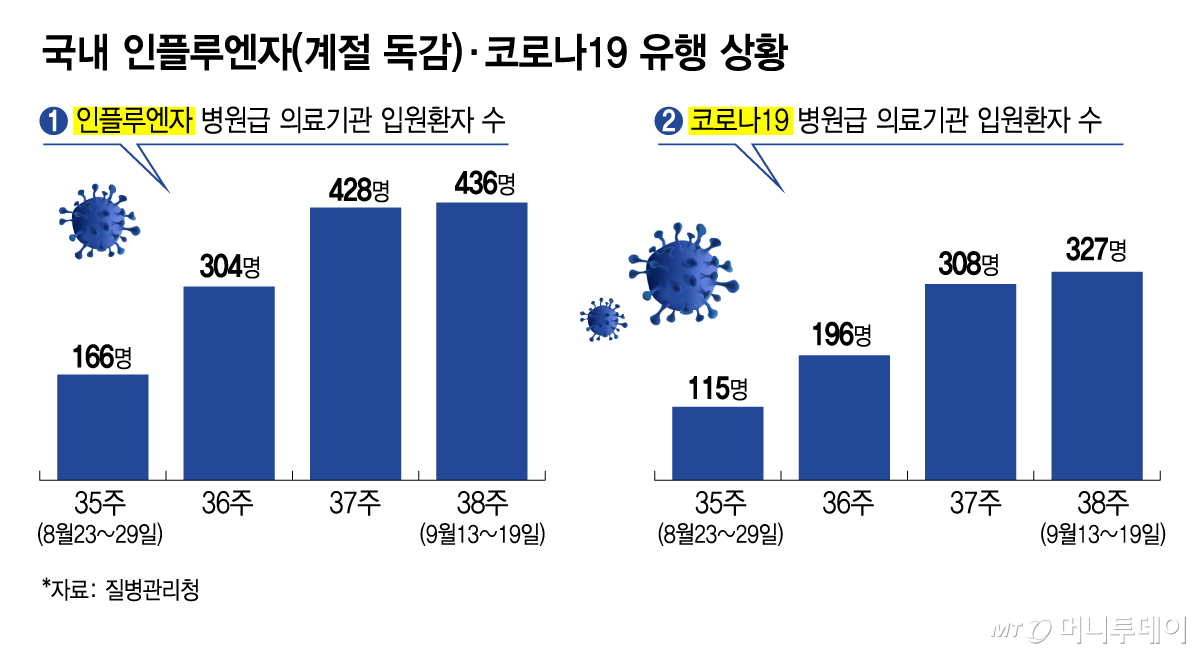
According to the Disease Control and Prevention Administration's sample surveillance data, as of Week 38 (the 13th–19), the number of influenza inpatients at hospital-level medical institutions was 436, an increase of more than 2.6 times compared to Week 35 (the 23rd–29; 166 patients). This figure is nearly 10 times higher than the number of inpatients during the same week last year (44). The influenza-like illness (ILI) rate (suspected infection cases) for Week 38 was 32.3 per 1,000 outpatient visits, a fourfold increase from the same period last year (8).
The Disease Control and Prevention Administration assesses that the rate of increase in influenza patients has recently slowed. Indeed, compared to the late August to early September period when the ILI rate surged by more than 90%, the ILI rates for Weeks 36 through 38 were 25.3, 31, and 32.3, respectively, showing a gradual narrowing of the increase.
However, it is difficult to rule out the possibility that large-scale movements and increased gatherings during last week's Chuseok holiday could affect the spread. A Disease Control and Prevention Administration official said, "The influenza outbreak remains at a high level compared to the previous year," adding, "Influenza is also showing high activity and an increasing trend in neighboring Asian countries such as Japan, China, and Hong Kong."
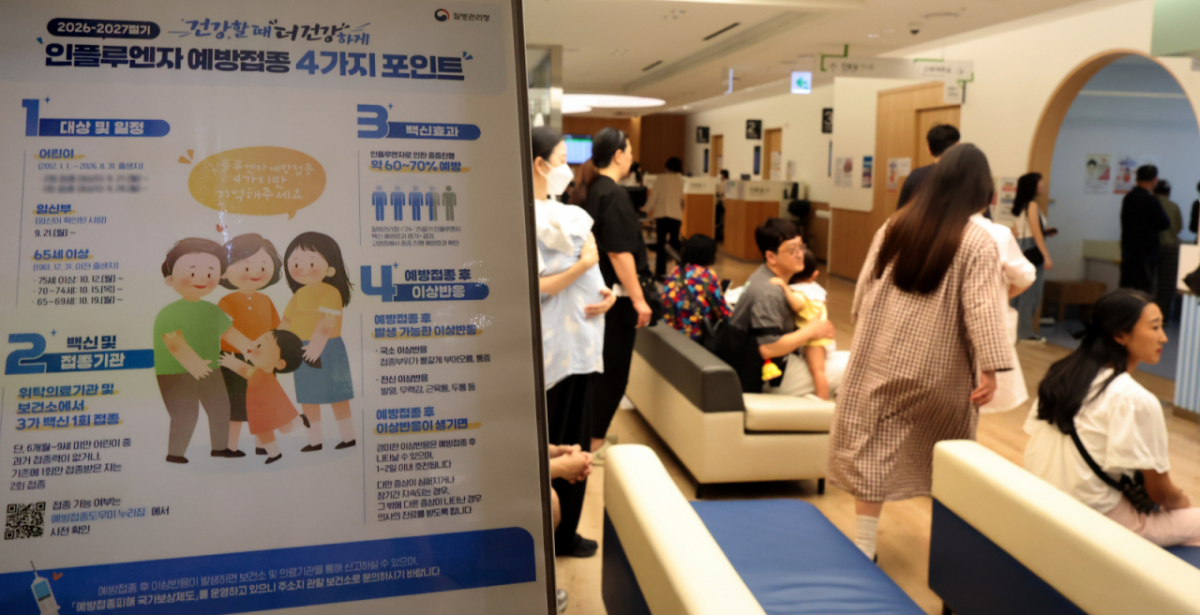
Due to the early spread, vaccination rates are also higher than last year. The number of children receiving the 2026–2027 National Immunization Program (NIP) vaccinations, which began on the 21st, was approximately 710,000 as of the 7th day, the 27th (total target population: 4.95 million; vaccination rate: 14.3%). This is more than double the number of children (ages 6 months to 13 years) vaccinated during the same period last season (approximately 340,000; 7.3%). Individuals aged 14 have been included in the NIP target group starting this season. Influenza NIP vaccinations for the elderly will begin in the following order: those aged 75 and older on October 6, those aged 70–74 on October 12, and those aged 65–69 on October 15.
Since COVID-19 is also circulating among the elderly, simultaneous vaccination remains an option. The Disease Control and Prevention Administration has allowed cost reimbursement for COVID-19 preventive vaccinations from October 6 onwards if a medical institution holding both influenza and COVID-19 vaccines administers them simultaneously to eligible recipients who visit according to the influenza vaccination schedule, based on the judgment of the vaccinating physician. As of Week 38, the number of COVID-19 inpatients in hospitals was 327, an increase of nearly three times compared to Week 35 (115). The virus detection rate was surveyed at 16.5%, an increase from Jeonju (14.2%).
A Disease Control and Prevention Administration official stated, "The influenza outbreak period has been brought forward, and as the outbreak continues centered on infants, toddlers, and school-age children, vaccination rates are rising rapidly compared to last year." The official added, "We plan to cooperate with local governments and private medical institutions to ensure that the elderly preventive vaccinations starting next week are conducted safely in the field. In particular, we recommend that the elderly receive the COVID-19 vaccine along with the influenza vaccine when getting their flu shot."

 in THEBIO

