


As the burden of chronic disease incidence rises due to population aging, a "diagnostic testing standardization" system that guarantees identical test results regardless of which hospital is visited is drawing attention. This is to prevent cases where patients miss treatment opportunities or undergo unnecessary treatments by accurately diagnosing chronic diseases such as diabetes and hypertension at an early stage.
Oh Jin-hee, Director of the KDCA Chronic Disease Management Division, stated at the "National Chronic Disease Diagnostic Testing Standardization Project Academy" held on the 20th at Bundang Seoul National University Hospital in Seongnam, Gyeonggi Province, that "we have been establishing and managing a 'National Diagnostic Testing Standardization System' since 2011 to improve the accuracy and reliability of diagnostic test results," adding that "results are being achieved, such as the domestic medical institutional investor accuracy for creatinine testing to confirm kidney function rising from 52.5% in 2015 to 77.6% in 2022."
The Chronic Disease Diagnostic Testing Standardization Project was launched to establish standard testing methods that ensure accurate and identical diagnoses regardless of which hospital performs the test. To date, standard testing methods for seven items (including glycated hemoglobin and creatinine) related to four diseases (diabetes, kidney disease, dyslipidemia, and liver disease) have been completed. The production of standard reference materials for testing is carried out at five medical institutional investors, including Konkuk University and Bundang Seoul National University Hospital.

In testing institutional investors, patient diagnostic values can vary depending on the management status of testing equipment and the proficiency of the tester, even when using the same product.
Accordingly, the KDCA conducts product quality evaluations twice a year for 434 diagnostic instruments, including diagnostic reagents and equipment from in-vitro diagnostic product companies, targeting 79 diagnostic testing institutional investors participating in the project.
Lee Yeon-kyung, Head of the Chronic Disease Prevention Division at the KDCA, emphasized that "the purpose of the project is to minimize false negatives, where abnormal findings are missed in tests despite the presence of an actual disease, and false positives, which is the opposite," adding that "this aims to prevent medical cost burdens resulting from lost treatment opportunities or unnecessary additional testing and treatments."
The Korean Association for Quality Control in Laboratory Medicine is conducting comprehensive quality evaluations, including proficiency, based on external quality control for 796 private medical institutional investors. External quality control is performed by having multiple testing institutional investors measure the same specimen to correct biases in measured values arising from equipment or measurement methods. The Korean Society of Laboratory Medicine is responsible for supporting the execution of standardization project tasks and providing consultation.
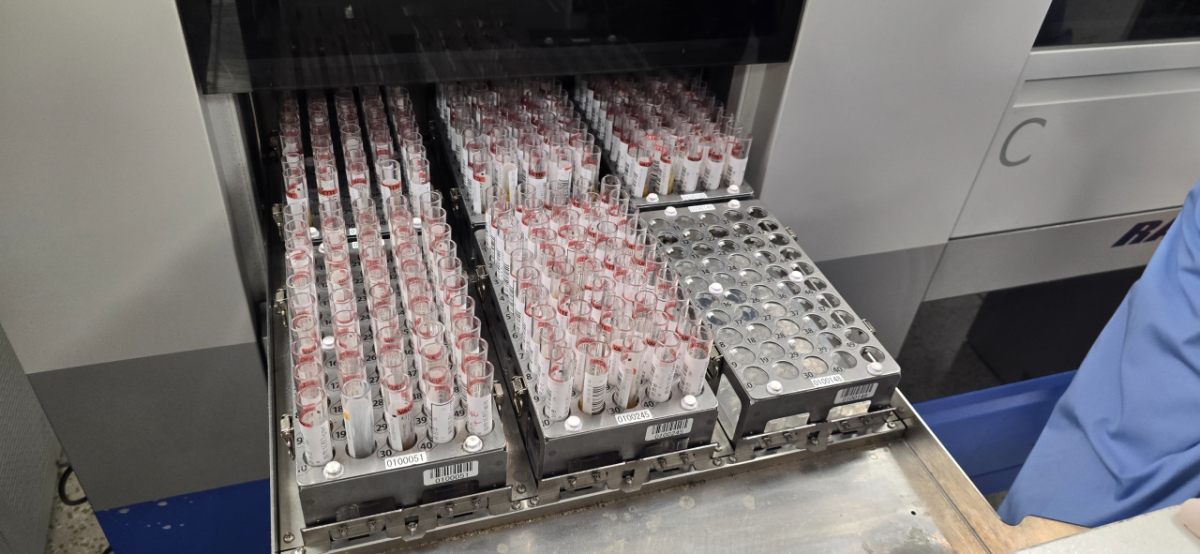
Diagnostic testing standardization appears to be able to alleviate the national medical cost burden in the long term. According to an analysis by the Korean Society of Laboratory Medicine, investing up to 910 million won annually in diabetes screening standardization resulted in savings of approximately 100 million won due to a reduction in false positives and approximately 4.6 billion won due to a reduction in false negatives.
There are also cases where testing measurement errors were corrected through the standardization system. According to the Korean Society of Clinical Chemistry, a domestic hospital recognized that measured values from glycated hemoglobin tests conducted within the hospital were up to 0.5% or more higher than the true value (the internationally established reference value).
Subsequently, through the external quality control process, it was confirmed that the average figures from 48 institutional investors nationwide using the same equipment had similar errors. The hospital reportedly replaced the calibration substance (a substance used for accuracy adjustment) used with the equipment and informed clinical departments that patient results could be 0.1 to 0.2 percentage points lower than before.
Yoon Yeo-min, Professor in the Department of Laboratory Medicine at Konkuk University Hospital and a member of the Korean Lim Sang-hwa-hak (Chairman), stated, "The diagnostic criterion for diabetes is 'a glycated hemoglobin level of 6.5%,' but even if it is only 0.1 to 0.2 percentage points lower, it is classified as prediabetes," adding that "finding biases in measured values, correcting the causes, and informing clinical departments constitute diagnostic testing standardization."

However, since the project relies on the voluntary participation of medical institutional investors, there are also points raised that incentives and compensation plans need to be strengthened to expand participation. There are also opinions that sanctions are necessary for institutional investors that do not meet laboratory quality control standards. In fact, in the United States, relevant laws (CLIA '88) require laboratories to undergo annual quality control evaluations, and operations must be suspended if standards are not met consecutively.
Director Oh stated, "We plan to conduct related research commissions next year to understand overseas cases where diagnostic testing standardization management systems have been advancedly established, such as in the United States, Germany, Japan, and Australia, and reflect them in the domestic system," adding that "we will strive to provide support, including compensation and incentives for participating institutional investors and the establishment of standard guidelines related to major tests."

 in THEBIO


