


As confirmed cases of Ebola virus disease have rapidly increased in Kenya since the start of this month, with a fatality rate reaching up to 90%, the KDCA announced on the 19th that it will designate Kenya as a "Key Quarantine Management Area" starting on the 20th and strengthen quarantine measures.
A Key Quarantine Management Area refers to an area within a Quarantine Management Area where a notifiable infectious disease is prevalent or has the potential to become prevalent, and which requires intensive quarantine due to its high lethality and infectivity.
According to the Korea Disease Control and Prevention Agency (KDCA), Kenya recorded its first imported case of Ebola virus disease on the 5th. As family members and medical staff who were under isolation subsequently tested positive, the total number of confirmed cases rose to 8 (including 1 death).
According to the Kenyan Ministry of Health, the first patient was a Kenyan national who had resided in the Democratic Republic of Congo for seven years. After developing symptoms one month prior and receiving treatment from multiple medical institutional investors, the patient entered Kenya through Nairobi International Airport via land route through Uganda and tested positive on the 5th. The seven additional patients identified afterward were all close contacts of the first patient (3 family members, 3 medical staff, and 1 caregiver) and had been placed in isolation beforehand.
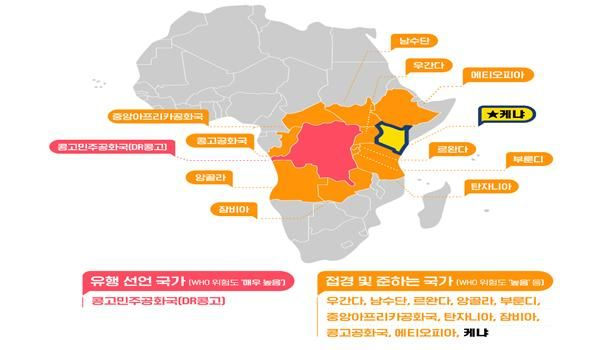
The Kenyan Ministry of Health stated that it has completed isolation for 128 out of 130 identified contacts (98.5%), with 2 still being tracked. It also noted that all additional confirmed cases are epidemiologically linked to the first imported case, and there is currently no evidence suggesting widespread community transmission.
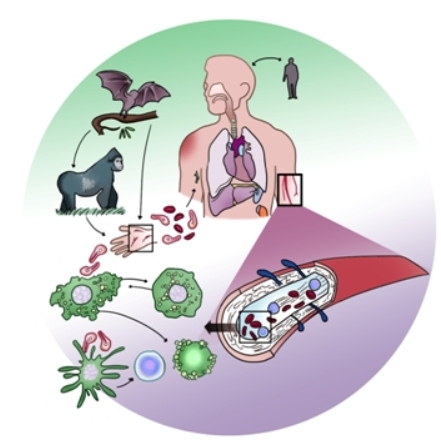
Ebola virus disease is an acute febrile and hemorrhagic illness caused by infection with the Ebola virus. In Korea, it is classified as a "Class 1 Notifiable Infectious Disease." The virus can be transmitted from animals to humans and from person to person. For instance, the virus can enter the human body through contact with animals infected with the Ebola virus, such as fruit bats, monkeys, gorillas, chimpanzees, and antelopes, or through handling or consuming such animals.
In addition, infection can occur through sexual intercourse or other contact (exposure) to the blood or bodily fluids of an infected patient, exposure to the wounded skin or mucous membranes of an infected patient or deceased individual, breastfeeding by an infected person, or sexual intercourse with a patient who has recovered from Ebola infection.
The duration for which the Ebola virus remains in the body varies depending on the type of bodily fluid. It was detected in male semen for as long as 18 months (565 days), followed by breast milk (16 months), cerebrospinal fluid (9 months), ocular fluid (101 days), amniotic fluid (38 days), urine (64 days), sweat (44 days), female vaginal fluid (33 days), feces (29 days), tears (28 days), and saliva (22 days).
The issue is that the incubation period ranges from 2 to 21 days. The possibility of transmission from "asymptomatic carriers" who are infected with the virus but show no symptoms cannot be ruled out. After the incubation period, symptoms such as fever, loss of appetite, weakness, and fatigue appear. Subsequently, patients experience a lack of energy throughout the body, decreased blood pressure and consciousness, high fever, fatigue, weakness, muscle pain, severe headache, chest pain accompanied by coughing, followed by Wi (Minister) symptoms such as nausea, vomiting, diarrhea, and abdominal pain.
The World Health Organization (WHO) announced on the 8th that it conducted a rapid risk assessment regarding Kenya following the occurrence of its first confirmed patient, and does not recommend travel or trade restrictions for affected countries.
Based on a risk assessment reflecting the cases in Kenya, the KDCA maintained the overall domestic risk level at "Low," as before. While there is a possibility of Ebola virus disease being imported into Korea, it was judged that the likelihood of exposure for the general public is low, given the characteristic that transmission occurs through direct contact with the blood or bodily fluids of patients and is limited primarily to close contacts such as medical staff and family members.
However, considering the possibility of additional transmission within Kenya and importation into Korea due to movement via international flights and visits by medical institutional investors, Kenya has been designated as a Key Quarantine Management Area. Since there are differences in the scale of occurrence and transmission patterns compared to the Democratic Republic of Congo, where a large-scale outbreak is ongoing, phased quarantine measures proportional to the risk level will be implemented.
Accordingly, starting on the 20th, entrants who have stayed in or transited through Kenya within the last 21 days must report their health status via Q-CODE (or Health Status Questionnaire).
Additionally, the KDCA is urging Korean nationals to be cautious of Ebola virus disease infection when departing for or staying in Kenya, and will send guidance text messages informing them to immediately report suspected symptoms such as fever or abdominal pain after entering the country by calling 1339 or contacting a local health center. It will also activate community surveillance networks to ensure that medical staff can verify overseas travel history when patients seek medical institutional investor care during the incubation period in the community.
KDCA Director Lim Seung-gwan stated, "The core of Ebola quarantine lies not only in airport quarantine inspection counters but also in maintaining meticulous community surveillance throughout the 21st-day incubation period. Therefore, we are activating the quarantine network from guidance at the departure stage to comprehensive reporting upon entry and linkage with local clinics and hospitals." He added, "We will closely monitor the Ebola outbreak situation in the African region and respond swiftly based on the patterns of occurrence and risk assessments."

 in THEBIO


