

Cases of mass infection with "Hepatitis C," which spreads through blood, are recurring within medical institutional investors. Given that Hepatitis C can progress to serious liver diseases such as cirrhosis and liver cancer, there is a call to strengthen the level of infection control in medical institutional investors.
According to South Gyeongsang Province and the KDCA on the 22nd, an epidemiological investigation has been underway for more than two weeks after Hepatitis C infections were confirmed in a total of 14 people (13 patients and one worker) at a hemodialysis room in a medical institutional investor located in Changwon City, South Gyeongsang Province. A provincial official said, "We are examining genetic analysis comparing dialysis room environmental samples with samples from those confirmed infected, as well as the medical records of patients who tested positive and their movements captured on closed-circuit (CC)TV," adding, "Based on this information, we are identifying the exact route of infection."
On the 14th of last month, two Hepatitis C patients were first reported at the said institutional investor. Subsequently, on the 1st of this month, it was confirmed that a patient reported at another medical institutional investor had used the same hemodialysis room, prompting South Gyeongsang Province and the local health center to begin an epidemiological investigation on the 6th. As a result of testing all patients and workers who used the dialysis room, 14 infection cases have been confirmed so far. No cases of severe complications have been reported.
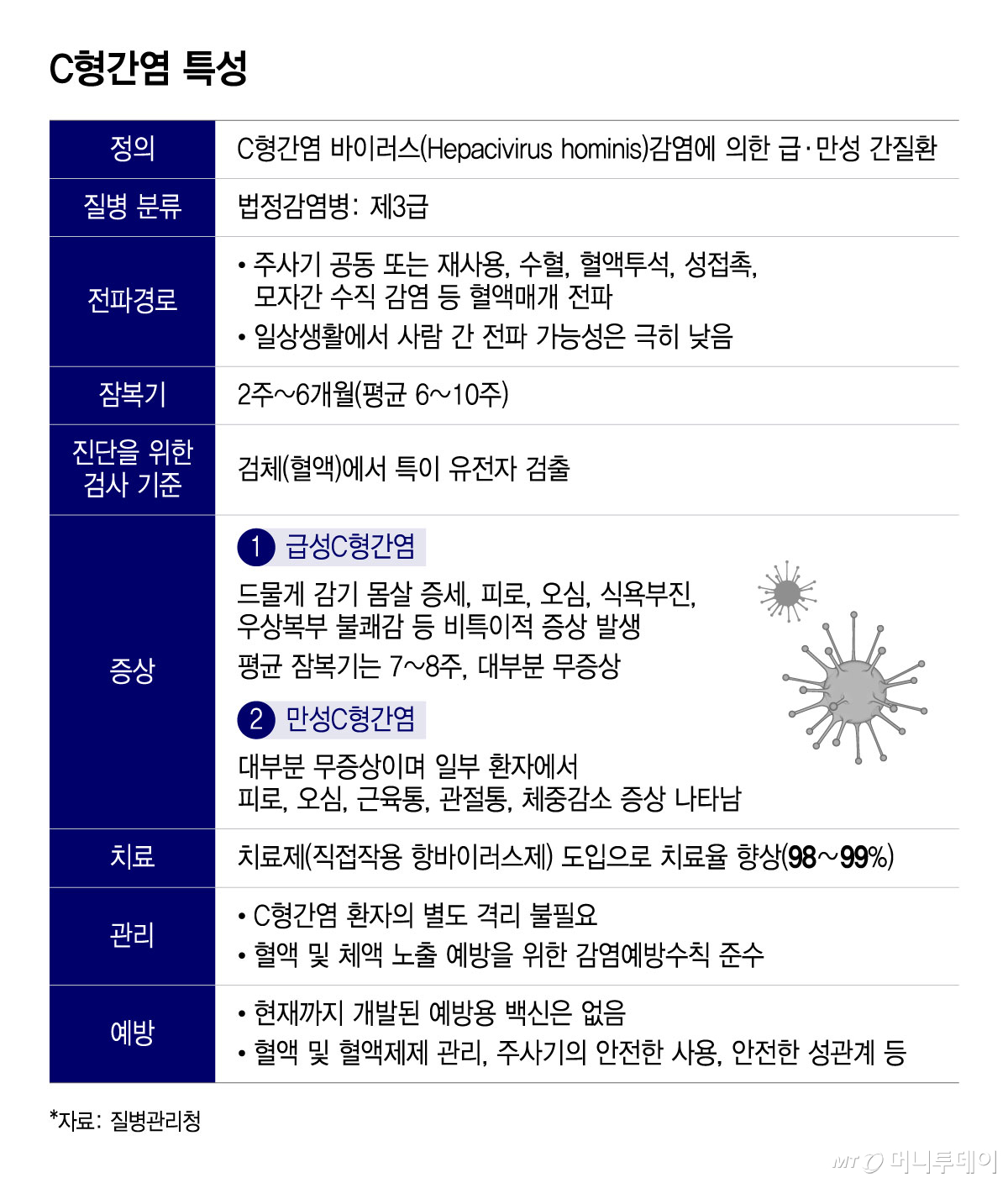
The Hepatitis C virus is a major risk factor causing liver-related diseases and deaths. It is known that 58 million to 71 million people are infected worldwide, and it spreads through blood via shared or reused syringes, hemodialysis, and sexual contact. The incubation period is long, ranging from two weeks to six months (average of six to 10 weeks), and 70% to 80% of patients have no symptoms, leading to late detection in some cases.
The cure rate reaches 99% with antiviral treatment. However, if left untreated, 54% to 86% of acute hepatitis cases can progress to chronic hepatitis, and in severe cases, it may advance to cirrhosis and liver cancer. In fact, Hepatitis C is known to account for 10% to 15% of the causes of liver cancer.
In particular, hemodialysis involves repeated needle insertions and blood passing through an external dialyzer, posing a higher risk of blood exposure than other medical procedures. Therefore, dialysis patients must be tested for Hepatitis C antibodies every six months and have their liver function tests checked monthly. When new infections are confirmed, quarantine authorities shorten the testing interval to one to three months to check for additional infections.
The number of Hepatitis C patients in South Korea peaked at 11,850 in 2020 and has been steadily declining since. Last year, the number of Hepatitis C patients was recorded at 5,639. However, mass infections due to syringe reuse and contaminated intravenous fluid prescriptions within medical institutional investors continue to occur, necessitating ongoing management. Previously, 70 Hepatitis C cases occurred at a Seoul Yang Cheon-gu (Rep.) in 2015, and 210 cases occurred at a clinic in Wonju City, Gangwon Province the following year. In 2023, a mass infection of 19 people also occurred at a hospital in Seogu District, Daegu.
There is currently no preventive vaccine for Hepatitis C. The best course of action is to follow relevant guidelines, such as safely using blood, blood products, and syringes. A Disease Control and Prevention Agency official said, "Many invasive medical procedures (using needles) are performed at medical institutional investors, but there are cases where infection control regarding the overall environment or related items is neglected during the process," adding, "We are investigating with an open mind to various possibilities that could cause infection, including syringe reuse."
Professor Eom Jung-sik of the Department of Infectious Diseases at Gachon University Gil Hospital emphasized, "If an epidemiological correlation in the genotype (of the Hepatitis C virus) is confirmed, it is possible that the outbreak occurred due to common contamination in the intravenous fluids or injections provided to patients," adding, "We must strengthen management levels to identify the exact route of infection and prevent further infections."

 in THEBIO
