

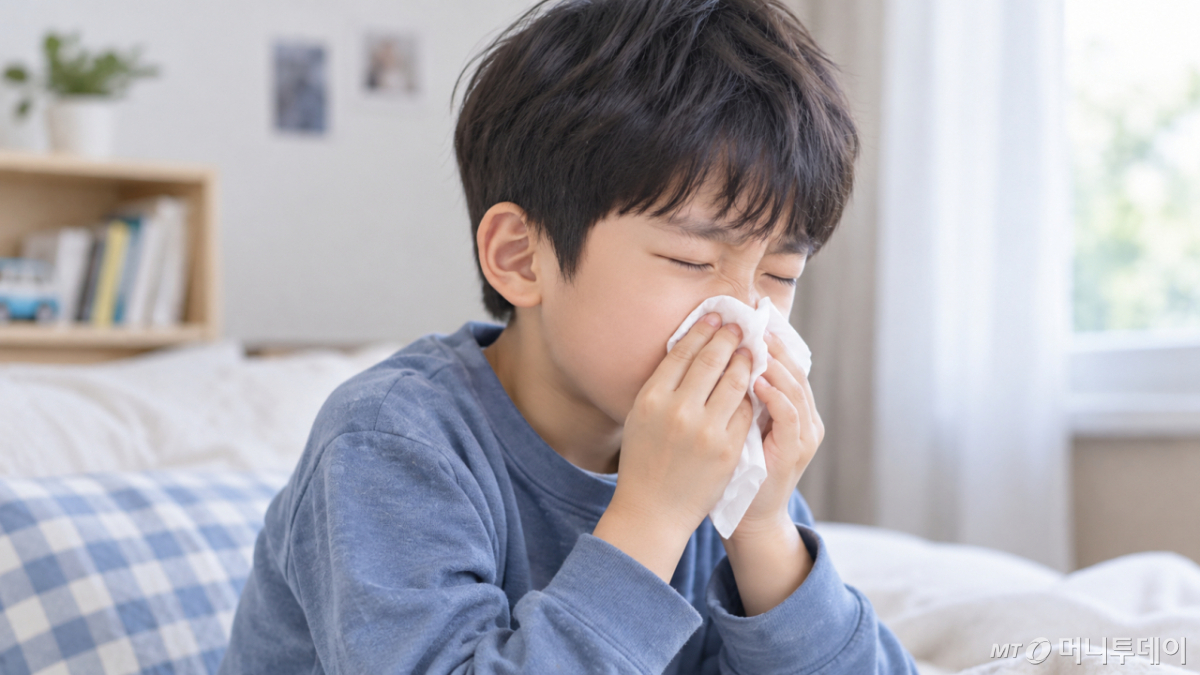
As the number of patients suffering from allergic diseases such as allergic rhinitis and atopic dermatitis increases, voices are emerging that the infrastructure for early awareness and education on prevention methods is lacking. Although health authorities are strengthening preventive management programs centered on schools nationwide, these efforts are currently focused primarily on daycare centers and elementary schools.
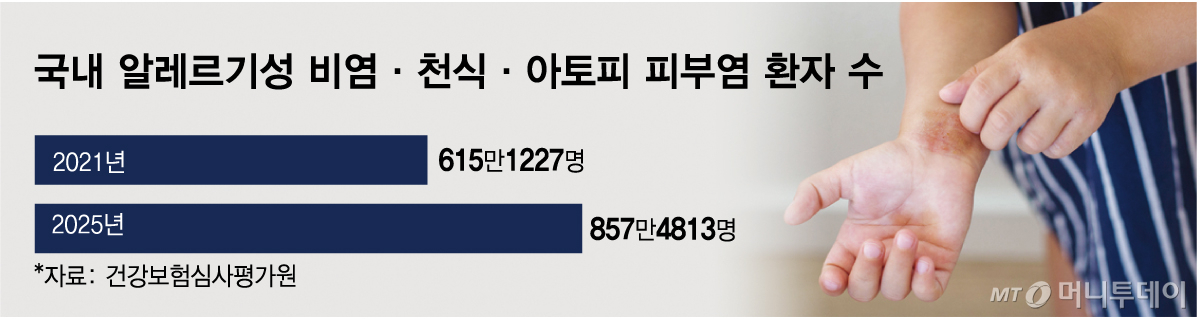
According to the Health Insurance Review and Assessment Service (HIRA) on the 25th, the number of domestic patients treated for allergic rhinitis, asthma, and atopic dermatitis increased by approximately 40%, from 6,151,227 in 2021 to 8,574,813 last year. During this period, medical expenses expanded from 417.7 billion won to 735.1 billion won.
Allergic diseases are conditions in which the body's immune system overreacts to specific external substances, and their symptoms can worsen during seasonal transitions due to factors such as large temperature fluctuations and dry air. It is interpreted that changes in living environments, including dust mites, smoking, and air pollution, have led to a gradual increase in the occurrence of allergic diseases and risk factors. According to the KDCA's National Health Statistics, the physician-diagnosed experience rate for allergic rhinitis (the proportion of people who have been diagnosed with the disease) increased from 15.7% in 2010 to 20.9% in 2024. During the same period, the physician-diagnosed experience rate for atopic dermatitis rose from 3.3% to 6.6%.
Active management is necessary because delayed treatment of allergic diseases during childhood and adolescence can lead to persistence into adulthood or progression to severe conditions. In fact, approximately 20% to 30% of pediatric asthma patients continue to experience symptoms as adults, and it is known that lung function remains impaired even when symptoms disappear. While atopic dermatitis generally improves with growth, it is reported to persist in more than 10% of cases into adulthood. Patients with rhinitis may suffer from loss of smell and taste, respiratory difficulties, and malocclusion.
In response, health authorities are establishing and supporting a continuous management system. The Korea Disease Control and Prevention Agency (KDCA) accepts applications annually from kindergartens, daycare centers, and elementary, middle, and high schools nationwide to designate "Atopic Dermatitis and Asthma Safe Schools" (hereinafter referred to as Safe Schools). The KDCA and the Ministry of Education have operated Safe Schools since 2008 with the aim of preventing declines in students' learning abilities and quality of life due to allergic diseases and strengthening on-campus emergency response capabilities.
Safe Schools establish on-campus emergency networks related to allergic diseases and conduct education on prevention and how to handle emergencies for patients and their guardians. In coordination with public health centers, they also provide support for examination fees, medication costs, treatments, and moisturizers for vulnerable children suffering from allergic diseases. Currently, there are 4,673 Safe Schools operating nationwide, an increase of 8.8% compared to the previous year (4,296 schools).
However, when compared to the total number of over 46,000 educational institutions, the number of Safe Schools remains at only about 10%. Participation in Safe Schools is concentrated among early childhood and elementary education facilities, resulting in minimal operation in middle and high schools. Currently, only 260 middle and high schools operate as Safe Schools, accounting for just 5.6% of the total.
A KDCA official stated, "In the case of middle and high schools, interest in allergic diseases is lower than in lower grades, leading to low participation rates. Therefore, we are continuously discussing the expansion of Safe School designations with the Ministry of Education and others." The official added, "Regarding the 'Atopic Dermatitis and Asthma Education Information Center,' which provides free counseling and education on allergic diseases, plans are underway to expand from the current 11 centers to a total of 13 through a public competition in the first half of next year."

 in THEBIO

