

Voronoï said Tuesday that it presented Phase 1 clinical trial results for 'VRN11,' a treatment for EGFR (epidermal growth factor receptor)-mutated non-small cell lung cancer, at the European Society for Medical Oncology Annual Congress (ESMO Congress 2026), held in Madrid, Spain, starting on the 23rd (local time).
VRN11 is a next-generation targeted therapy for EGFR-mutated non-small cell lung cancer being developed by Voronoï. Antitumor efficacy and safety were confirmed in the previously conducted Phase 1a trial. It is Voronoï's representative new drug pipeline, having demonstrated 100% 'blood-brain barrier permeability' (BBB) and relatively superior safety in preclinical studies.
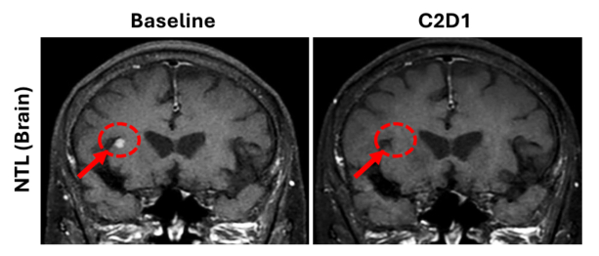
In this presentation, Voronoï emphasized that it identified numerous cases where brain lesions completely disappeared in patients with brain metastases. It also demonstrated antitumor efficacy in patient populations who had developed resistance to existing EGFR targeted therapies.
Based on these clinical trial results, Voronoï is conducting first-line treatment trials targeting not only patients with prior treatment experience but also those without prior treatment experience in multiple countries.
In the Phase 1 trial, VRN11 recorded an intracranial disease control rate of 95% (19/20) among 20 'C797S'-negative patients with brain metastases who received doses of 160 milligrams (mg) or higher. Of these, four patients (20%) showed intracranial complete response (intracranial CR), where brain lesions completely disappeared. C797S is one of the major resistance mechanisms to EGFR targeted therapies.
The median intracranial progression-free survival (iPFS), indicating the period during which treatment was administered without worsening of brain lesions, was 9.1 months. The 6-month and 12-month intracranial progression-free survival rates were recorded at 79.8% and 49.9%, respectively. 85% of this patient population consisted of patients enrolled after receiving third-generation EGFR targeted therapy.
The representative case disclosed, a 71-year-old female patient, had received three prior treatments, including the already approved lung cancer therapies 'Tagrisso' and 'Lazak'. Brain lesions completely disappeared at week 4 of VRN11 administration. Partial response across the whole body was confirmed at week 8.
In the case of Tagrisso, a third-generation targeted therapy, iPFS was 3.5 months in clinical trials targeting patients who developed brain metastases after receiving first- or second-generation targeted therapies. The 6-month intracranial progression-free survival rate was reported at 31%, and the complete response rate was 0%. This means that the therapeutic effect of VRN11 was more pronounced in patients with brain metastases.
VRN11 demonstrated antitumor efficacy even in patient populations where additional treatment options (means) were limited after receiving existing EGFR targeted therapies, including Tagrisso.
Among patients confirmed to have C797S resistance mutations after prior treatment, tumor shrinkage was observed in seven out of eight patients who received doses of 160 mg or higher. The median progression-free survival (mPFS) was 11.0 months, and the 6th-month progression-free survival rate was 66.7%.
The key case disclosed, a 63-year-old male patient, had received six prior treatments. Tumor shrinkage was confirmed in all four lesions in the lungs and lymph nodes at week 4 of VRN11 administration.
An mPFS of 7.3 months was also recorded in patients where C797S mutations were not identified. The 6-month progression-free survival rate for 17 patients who received doses of 320 mg or higher was 52.5%. Of these, 82.4% were patients enrolled after third-generation EGFR targeted therapy.
Among all 82 patients, treatment-related adverse events of Grade 3 or higher occurred in 2%. No dose-limiting toxicity occurred during the process of increasing the dose up to 560 mg. There were no discontinuations of medication due to treatment-related adverse events.
In particular, in the patient group receiving doses of 160 mg or higher, 90% of total dosing days remained at Grade 1 or lower adverse events. Of these, 45% had no treatment-related adverse events. No pattern of cumulative Grade 3 or higher adverse events was observed even as the duration of administration lengthened.
The primarily reported adverse events were mild skin and gastrointestinal symptoms known in EGFR targeted therapies, such as diarrhea, itching, and rash. No specific pulmonary adverse events, such as interstitial lung disease, were reported.
Voronoï designed VRN11 so that the drug can effectively reach the brain. Results measured in patients showed that 'Kp,uu,CSF,' an indicator representing how well the drug is delivered to cerebrospinal fluid, was 2.0, a value approximately 10 times higher than Tagrisso (0.22). Based on this, Voronoï calculated that VRN11 (320 mg) has target engagement approximately 4 times higher than Tagrisso in the whole body and approximately 40 times higher in the central nervous system.
Voronoï is expanding development of VRN11 into the first-line treatment area for lung cancer, synthesizing efficacy, target engagement, and safety data confirmed to date. It selected 320 mg as the low dose for the Phase 1b trial for dose optimization evaluation. In the Phase 1b trial, it plans to conduct a first-line treatment cohort (same group), a C797X cohort targeting patients receiving second-line or later treatments, and a central nervous system metastasis cohort. Among these, patient enrollment is currently underway for the first-line treatment cohort.
A Voronoï official stated, "VRN11 has demonstrated antitumor efficacy not only in patients who developed resistance after existing targeted therapy but also in patients with brain metastases," adding, "Based on these results, we will expand development into the first-line treatment area to confirm its potential as a new therapy that can overcome the limitations of existing treatments."

 in THEBIO
