

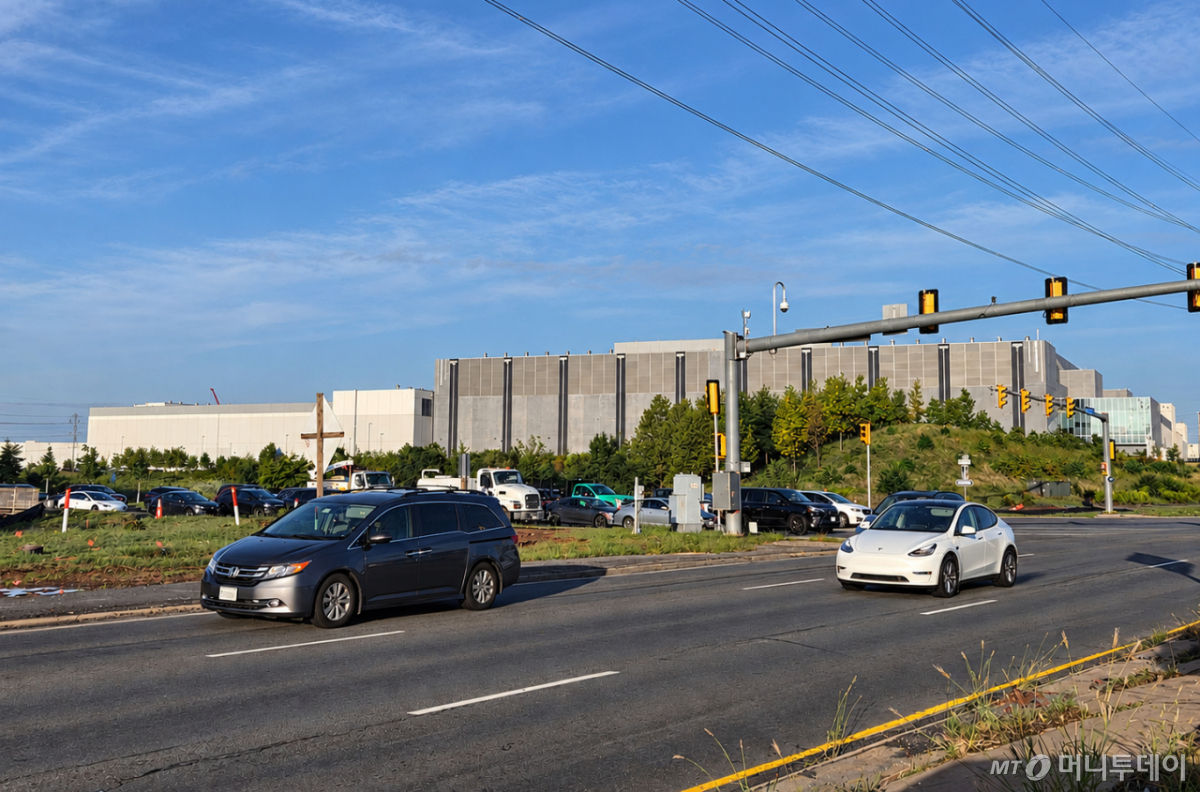
In Loudoun County, Virginia, U.S., buildings where servers operate have become a major tax source propping up local finances.
According to Loudoun County, data center-related tax revenue for fiscal year 2027 is projected to reach $1.3 billion (approximately 1.7391 trillion won), accounting for 40% of general budget revenue. This refers to taxes levied on buildings, land, and internal computer equipment. Related tax revenue increased from $150 million in 2015 to $1.1 billion in 2025, a sevenfold increase over the decade.
Direct and indirect jobs tallied by Loudoun County number more than 17,000. The increased revenue was used for △expansion of schools, libraries, and roads, and △support for police and fire services. The property tax rate decreased from 1.145% in 2016 to 0.805% this year, a drop of about 30%. However, the actual amount paid varies depending on the assessed property value.
In Quincy, Washington State, with a population of approximately 8,500, about 30 data centers account for 57% of the city's property tax revenue. The expanded tax base supported the expansion of local infrastructure such as high schools and hospitals.
According to research commissioned by the Data Center Coalition (DCC) from PwC, the GDP contribution of the U.S. data center industry in 2024 was estimated at approximately $927 billion, a 21% increase from the previous year, with tax revenue contribution estimated at approximately $204 billion. These figures include the ripple effects on related industries and consumption associated with general and cloud data centers.
However, there are also significant resident protests regarding concerns over rising electricity rates and the burden of power grid expansion costs, as well as noise from cooling equipment and the construction of transmission facilities near residential areas. Governor Abigail Spanberger of Virginia announced a policy last month to prevent the transfer of power infrastructure costs to consumers and strengthen environmental management.
South Korea, which is also seeking to attract AI (artificial intelligence) data centers, faces a situation where it must consider tax revenue expansion alongside power and Ministry of Environment burdens. According to materials obtained by Democratic Party of Korea legislator Hwang Jung-a from the National Assembly Budget Policy Office, if domestic corporate performance is simply scaled up to the 1GW (gigawatt) level, annual corporate tax would be calculated at 828.1 billion won, and local corporate income tax at 82.8 billion won. However, these are hypothetical values based on profitability and utilization rates, not projections of actual tax payments.
Turning the employment effects of the construction phase into long-term industrial growth is also a challenge. Jimmy Lee, Chairman of ASI Foundry, who served as Deputy Secretary for Commerce and Trade in Virginia, said in an interview with this newspaper, "After data center construction is completed, not many personnel are needed for operation and maintenance," adding, "Data centers must serve as the brain of the local community and industrial ecosystem." He emphasized that "data center construction is not the end, but the first step."
[Production Support: Ministry of Culture, Sports and Tourism Citizen-Centered Communication Activation Project]

 in TECH
