

BTGen, which changed its name this year, is moving to expand external customers and strengthen production capacity, leveraging expansion funding through the National Growth Fund.
The company’s strategy is to raise the share of external orders to half next year and secure medium- to long-term growth drivers through investments in drug substance (DS) and drug product (DP), as well as new modality (drug delivery method) businesses via collaboration with affiliates.
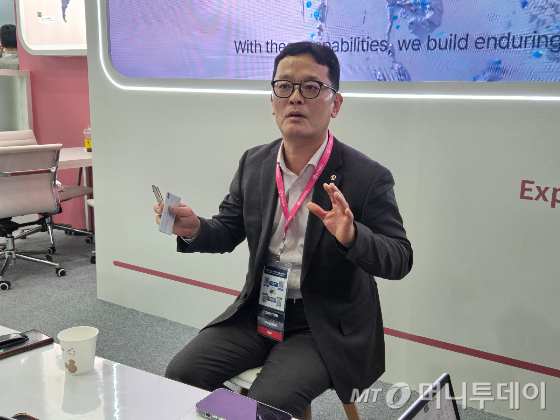
Lee Hyun-min, CEO of BTGen, met with <MoneyToday> on the 28th at the “BioPlus-Interphex Korea” event held at COEX in Seoul Samsung-dong and said, “This year’s main milestones were securing funding for future five-year growth and commencing expansion.”
He added, “Next year, we will raise the share of external orders to 50% and secure medium- to long-term growth drivers through DS and DP investments and new modality (drug delivery method) businesses via collaboration with affiliates.”
BTGen changed its name from ST Gen Bio in May. Prior to this, in April, it was selected as the first bio sector recipient of support from the National Growth Fund and received approval for a long-term, low-interest loan of 85 billion won.
Based on this, the company began construction in September on an expansion project for its Songdo Plant No. 1, with an investment of approximately 110 billion won.
Annual revenue, which surpassed 100 billion won for the first time last year, is also expected to maintain its growth trajectory this year. While first-half performance declined compared to the previous year due to major customer orders being concentrated in the second half, the company expects annual revenue to grow by around 10%. It anticipates improvements in profit and profit margins through process and yield enhancements and cost reduction activities.
The customer composition will be gradually adjusted. The internal-to-external ratio this year is approximately 7-to-3, but the goal is to reach 5-to-5 next year and raise the external share to 70% by 2032, the group’s 100th anniversary. “External” refers to customers outside the group, both domestic and international.
CEO Lee stated, “We have already secured over 50 billion won in external orders for this year,” explaining that “a significant portion will be reflected in performance through shipments next year.”
Negotiations are also underway to secure new overseas customers. The approach involves verifying quality through small-scale production before expanding transactions to commercial volumes. CEO Lee said, “We cannot start with large-scale transactions from the beginning,” adding, “We plan to produce starting with one or two batches, have our quality evaluated, and prepare to be able to produce on the newly expanded LINE.”
The expansion equipment targets different demands than those of large contract development and manufacturing organization (CDMO) companies. The additional bioreactors being introduced are two units of 2,500L capacity.
This is to respond to small- and medium-sized customers with niche market needs such as high-value products that do not require large-scale cultivation equipment and rare diseases, as well as multi-product production demands. The new DS LINE aims for full operation in the second quarter of 2028, while the DP LINE targets full operation by the end of the same year.
DP will expand its business scope based on quality competitiveness. CEO Lee stated, “The capability to maintain global Good Manufacturing Practice (GMP) standards in aseptic filling processes is crucial,” noting that “DS is a battle of volume, but DP is closer to a battle of quality.”
Currently, the DP LINE is operating with a backlog of orders. The new LINE will introduce isolator-based aseptic filling equipment that reduces operator intervention. The portfolio will be expanded from existing pre-filled syringes (PFS) to pen cartridges and auto-injectors, which are related, and the construction of a vial LINE is also being considered in the long term.
Recent audit results were cited as evidence of quality competitiveness. CEO Lee stated, “We confirmed certification renewal at the closing meeting of the European Medicines Agency (EMA) audit at the end of August last month,” evaluating it as “confirmation of our core capabilities.” He also mentioned that the company received a Gold rating in its first assessment by global sustainability evaluation firm EcoVadis.
New modalities will focus on antibody-oligonucleotide conjugates (AOC). The company reports that competition is intensifying in the antibody-drug conjugate (ADC) CDMO sector due to increased investment in production facilities domestically and internationally, and it aims to find opportunities in areas where BTGen’s antibody production capabilities can be combined with ST Pharm’s oligonucleotide expertise.
CEO Lee said, “We are reviewing targets that can create synergies among the group’s core competencies as a differentiated market.” While discussions with ST Pharm cover not only technology but also directions for facility investment cooperation, it is currently in the early stage of concretizing ideas. AOC and the vial LINE are being reviewed as long-term projects looking about five years ahead.
Efforts to link policy finance support with the domestic bio ecosystem are also underway. The company has signed agreements with domestic materials, components and equipment companies and is testing prototypes such as bags and filters to provide feedback on whether they comply with GMP standards.
CEO Lee stated, “There is a scope of responsibility assigned through the National Growth Fund,” adding, “We expect to contribute to making the domestic industrial ecosystem healthier and more vibrant.”

 in THEBIO
