

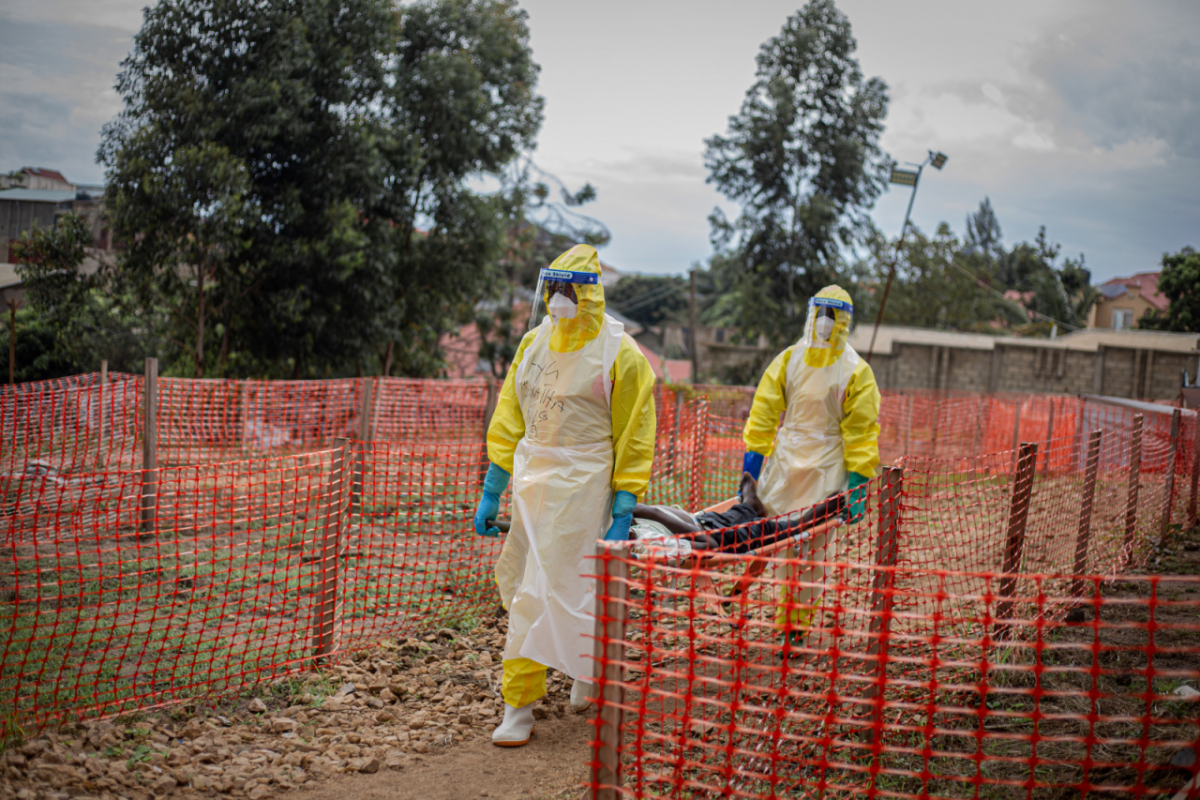
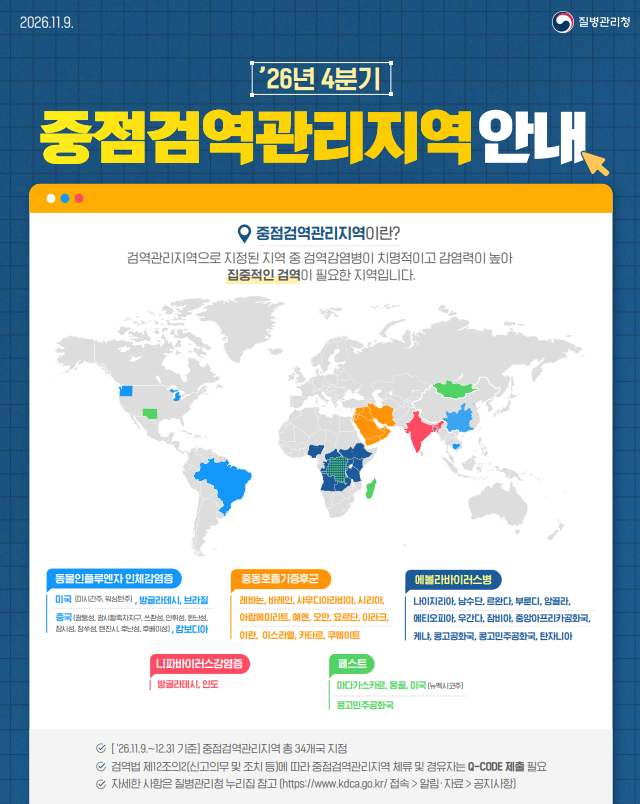
The disease control authorities will additionally designate Nigeria, where overseas importation of Ebola virus disease has been confirmed, as a key quarantine management area.
The Korea Disease Control and Prevention Agency (KDCA) announced on the 6th that, following the occurrence of an overseas-imported Ebola case in Kenya, it will additionally designate Nigeria as a key quarantine management area starting the 9th and strengthen its quarantine response.
Accordingly, travelers entering the country who have stayed in or transited through Nigeria within the past 21 days must report their health status through the Quarantine Information Pre-entry System (Q-CODE) or a health status questionnaire.
The KDCA plans to send text message alerts advising caution regarding Ebola infection for those departing for or residing in Nigeria, and to provide guidance on reporting suspected symptoms such as fever and abdominal pain to 1339 or local health centers after entry. It will also support medical institution-based surveillance during the incubation period (21 days), enabling medical staff to verify overseas travel history and report suspected Ebola patients during consultations.
Nigeria poses a risk of additional importation due to international air travel between countries. The KDCA stated that it is taking proactive quarantine measures considering factors such as the potential for secondary transmission during border crossings and medical consultations, and the delay in time until confirmation and the lack of clear identification of the infection source and exposure route.
According to Nigerian health authorities, the first confirmed case entered Nigeria by air from Uganda via Addis Ababa, Ethiopia, on the 3rd of last month. Symptoms appeared on the 7th of the same month, and after medical consultations, a positive diagnosis was made on the 20th. Nigerian health authorities have identified all 62 contacts, including healthcare workers and patient caregivers, and are currently tracking them.
The Ugandan Ministry of Health announced that no additional confirmed cases have occurred since declaring the end of the Ebola outbreak on August 27. Currently, the ministry is conducting a joint investigation into the movement route and exposure history of the Nigerian confirmed case.
The World Health Organization (WHO) is reviewing its risk assessment to reflect new epidemiological information, including the ongoing transmission of Ebola in the Democratic Republic of the Congo (DRC) and overseas importation cases in Kenya and Nigeria. It assessed that investigations and surveillance need to be strengthened regarding the possibility of unrecognized exposure and additional transmission, considering factors such as the unclear infection source and exposure route, and the 13th-day period from symptom onset to confirmation.
The KDCA also conducted a rapid risk assessment on the 26th of last month, reflecting recent cases in Kenya and Nigeria. The agency maintained the overall domestic risk level for Ebola at "low," as previously. This result reflects that while there is a possibility of domestic importation, the primary transmission route of Ebola is direct contact with the blood or body fluids of patients, and transmission is limited to close contacts such as medical staff and family members, resulting in a low exposure probability for the general public.
KDCA Director Im Seung-gwan stated, "While the possibility of domestic importation of Ebola is currently at a low level, proactive quarantine response is important in preparation for domestic importation given the consecutive occurrence of overseas importation cases." He urged, "Citizens who have visited or plan to visit key Ebola quarantine management areas such as Nigeria must strictly adhere to preventive guidelines and immediately report to 1339 or local health centers if suspected symptoms occur after entry."

 in THEBIO

