

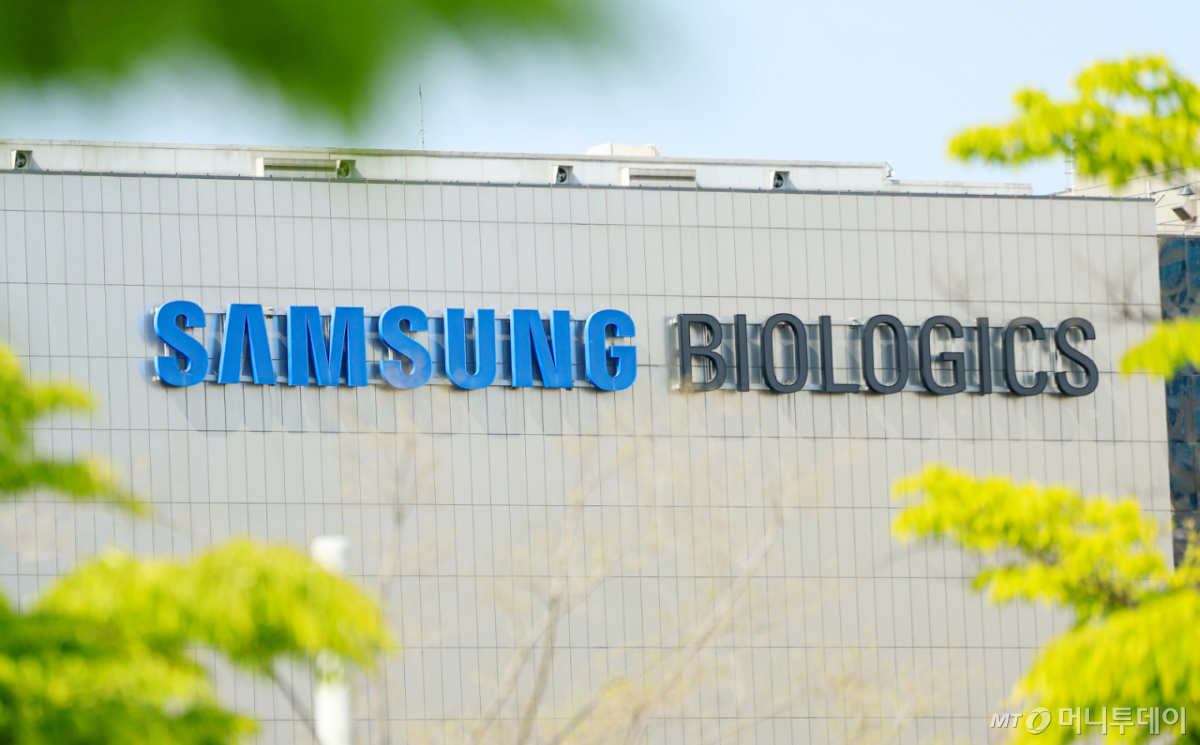
Samsung Biologics said Wednesday that a total of 2,198,146 shares were subscribed to in its rights offering targeting existing shareholders and the employee stock ownership association, conducted over two days from Nov. 9 to 10, resulting in a subscription rate of 96.8%.
This means that the approximately 2.7 trillion won rights offering, launched to leap into a top global contract development and manufacturing organization (CDMO) for biopharmaceuticals, has crossed the “nine-tenths mark.”
Samsung Biologics will raise a total of 2.665 trillion won through a rights offering issuing 2.27 million common shares, based on a confirmed issue price of 1,174,000 won per share. The raised funds will be used as acquisition funds for securities of other corporations to acquire Polypeptide Group, a global peptide CDMO.
By subscription type, the employee stock ownership association subscribed to 405,430 shares out of the 454,000 shares allocated with priority, recording a subscription rate of 89.3%.
Shareholders holding certificates of rights to subscribe to new shares subscribed to 1,792,716 shares (including over-subscriptions) out of the 1.816 million shares allocated.
The subscription rate is 98.7%. Among major shareholders, Samsung C&T and Samsung Electronics also subscribed to their full allocated amounts (Samsung C&T: 782,818 shares; Samsung Electronics: 567,503 shares) through board resolutions.
In July, Samsung Biologics Logistics announced that it would acquire Polypeptide Group for 146 million Swiss francs (2.7 trillion won at the time of announcement), the largest deal in the history of mergers and acquisitions in Korea’s pharmaceutical and bio industry.
The company plans to expand its business scope into the peptide field, following antibody drugs, messenger ribonucleic acid (mRNA), and antibody-drug conjugates (ADCs). This strategy aims to simultaneously achieve portfolio diversification and secure medium- to long-term growth drivers.
In the recent completed tender offer for shares of Polypeptide Group, 97.98% responded, meeting the requirements for securing the acquisition. The company plans to secure 100% of Polypeptide Group’s shares through compulsory buyouts and other measures in the future.
Samsung Biologics Logistics’ rights offering will be conducted via a method of allocation to shareholders followed by a public offering of unsubscribed shares.
The general public subscription for remaining shares will be held on the 12th and 13th. Subsequently, the capital increase process will be completed through share payment on the 17th and the listing of new shares on the 30th. If any remaining shares occur after the public offering, the lead underwriter will purchase them.
An official from Samsung Biologics Logistics stated, “Despite an issue price exceeding 1 million won per share and a difficult market environment with continuing domestic and international uncertainties, we confirmed shareholders’ trust as over-subscriptions of more than 30,000 shares were received.”
On Tuesday, Meritz Securities evaluated that if Samsung Biologics Logistics acquires Polypeptide Group, it will signify an expansion of its business scope from an antibody-centric model to a peptide CDMO, where demand has recently increased for obesity treatments.
Kim Jun-young and Kim Hyun-bi, research analysts at Meritz Securities, explained, “Samsung Biologics Logistics’ consolidated operating profit margin (OPM) could be diluted in the early stages of the Polypeptide Group acquisition due to high local production costs and integration expenses,” adding, “It needs to be evaluated from the perspective of expanding global peptide production bases and customer base, rather than short-term profit contribution.”

 in THEBIO
