

As the first investment project under the Korea-U.S. tariff agreement, it has been confirmed that a plan to invest $19.8 billion (approximately 30 trillion won) in constructing a gas combined-cycle power plant in southeastern Texas is being seriously considered. In line with the two countries' agreement, the South Korean government is expected to make an equity investment through a special purpose vehicle (SPV), while major domestic plant companies will participate in the project.
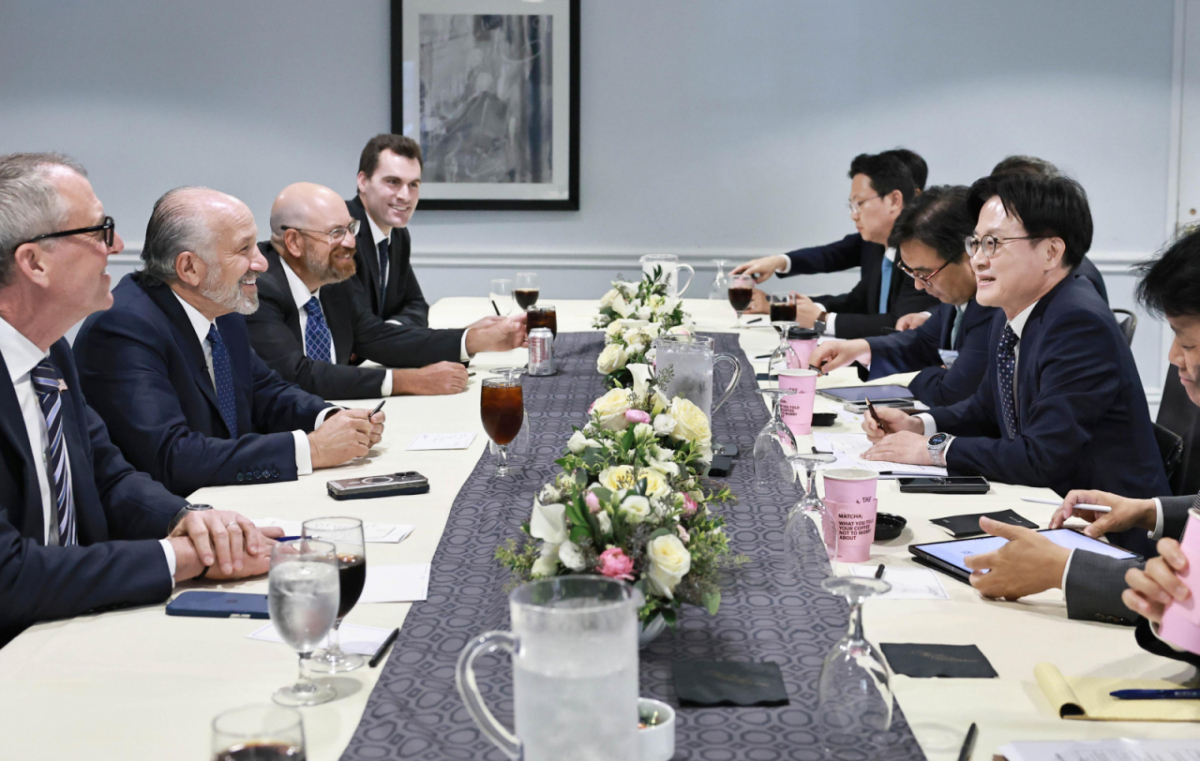
According to a comprehensive report by MoneyToday on the 28th, the government is coordinating with the U.S. side to proceed with the gas combined-cycle power plant construction as its first U.S. investment project. Minister Kim Jeong-kwan visited Washington D.C. from the 22nd to the 25th and held discussions with key U.S. officials including Commerce Secretary Howard Lutnick. It is understood that the Korean negotiation team is currently in final coordination in the United States.
The power plant is scheduled to be built in southeastern Texas, where electricity demand has recently surged sharply. The investment amount is reported to be $19.8 billion. After final coordination with the U.S. side, the government plans to officially announce the first U.S. investment project next month. A source familiar with the matter stated, "We are in final negotiations with the U.S. side to finalize the project," and added, "At this stage, it is highly likely that a gas combined-cycle power project will be pursued."
According to the 'Memorandum of Understanding on Korea-U.S. Strategic Investment' concluded through last year's Korea-U.S. tariff agreement, South Korea will invest a total of $350 billion in the United States: $150 billion for shipbuilding cooperation and $200 billion for strategic investment. To facilitate this, South Korea enacted the Korea-U.S. Strategic Investment Act, which came into effect last month, and recently launched the Korea-U.S. Strategic Investment Corporation to handle practical implementation.
The project will be advanced through SPVs established for each specific project. South Korea will establish a Korea-U.S. Strategic Investment Fund, make equity investments in the SPV, and the SPV will repay the principal and interest using profits generated from the project.
As this is a large-scale investment project, commercial rationality is the most critical criterion in selecting projects. This means that sufficient recovery of invested funds must be guaranteed. In the case of gas combined-cycle power plants, it is analyzed that adequate business viability can be secured due to the recent surge in electricity demand driven by AI (artificial intelligence) investments within the United States.
When advancing U.S. investment projects, participation by Korean companies will be given priority consideration. Given South Korea's strength in plant construction, it is expected that various related companies such as KEPCO Engineering and Doosan Enerbility will participate in securing contracts. Investment funds will be contributed on an annual basis up to a limit of $20 billion through a capital call mechanism based on the progress of the project.

 in ECONOMY
