

[Exclusive] 14 Trillion Won Grid Exemption from Preliminary Feasibility Study Confirmed…Grid Construction Accelerated by 18 Months
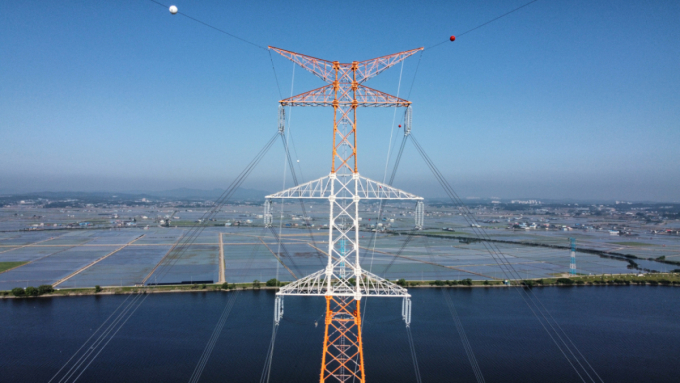
The government has confirmed exemption from the preliminary feasibility study (PFS) for a national key power grid project worth 14 trillion won, accelerating grid construction. The PFS exemption is expected to shorten the construction period of transmission lines connecting Honam to the capital region by approximately 18 months.
According to government sources on the 24th, the Ministry of Economy and Finance notified KEPCO earlier this month of the confirmation of PFS exemptions for 15 national key power grid projects. This is a large-scale national project with total investment of 14.2 trillion won, and the plan is to accelerate the projects through PFS exemption.
This project has been promoted under government leadership due to the urgent need to expand national key power grids. Since the implementation of the "Special Act on Expansion of National Key Power Grids" in September last year, the government has established a Power Grid Expansion Committee under the Special Act and designated 99 power grid projects as national key grid projects.
Among these, PFS exemptions are being pursued for 32 projects with total project costs exceeding 200 billion won and either national fiscal support or public institutional investor contributions exceeding 100 billion won. The PFS exemption was approved at the State Council meeting in December last year. The total cost of the 32nd projects is 25.2 trillion won, which is the largest PFS exemption scale in history (based on package projects), surpassing the 2019 National Balanced Development Project (24.1 trillion won).
The Ministry of Economy and Finance and the Ministry of Climate, Energy and Environment held joint meetings to finalize the PFS exemptions for these projects and confirmed PFS exemptions for 15 projects among the 32 that have finalized route designations. For the remaining 17 projects, the plan is to sequentially confirm PFS exemptions after completing project plans such as finalizing route designations.
The 15 projects confirmed for PFS exemption include five AC (alternating current) transmission lines, four DC (direct current) transmission lines, and six substations, totaling 14.2 trillion won. These primarily target transmission grids connecting Honam to the capital region.
Among them, the largest project is a 350-kilometer HVDC (high-voltage direct current) line from Shin Haenam to West Incheon Combined Power Plant, with total investment of 1.9 trillion won. The HVDC project connecting Shin Haenam to Dangjin Thermal Power Station, spanning 290 kilometers and costing 1.5 trillion won, has also been confirmed for PFS exemption. Additionally, the Saemangeum-West Hwaseong HVDC (220 km) and Saemangeum-Yeongheung Thermal Power (210 km) projects, each with investments of 1.2 trillion won, have been exempted from PFS.
Among AC projects, Sinpyeongtaek-Godeok (15 km), Shin Haenam-Sin Gangjin (27 km), and Shin Daesan-Dangjin TP (15.1 km) are included. PFS exemptions were also confirmed for the Saemangeum Substation and Shin Haenam Substation projects, each valued at 1.6 trillion won, which serve as hubs for transmission lines.
The government expects that this PFS exemption will shorten the power grid construction period from the current 10 years and 6 months to 9 years, a reduction of about 1 year and 6 months. This period typically corresponds to the time required for PFS investigations. It is also analyzed that costs associated with PFS investigations (approximately 6 billion won) will be saved.
Through PFS exemption, the plan is to ensure uninterrupted construction of power grids to enable early operation of the Yongin semiconductor cluster. The government also plans to pursue PFS exemptions for power grid projects aimed at supplying electricity to Honam semiconductor industrial complexes.
Abundant Electricity from Honam Flows to Capital Region…PFS Exemption Accelerates Energy Superhighway
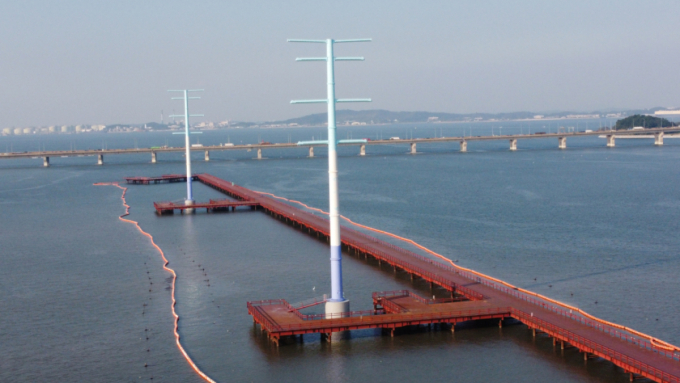
With the confirmation of PFS exemptions for large-scale transmission grid projects connecting Honam to the capital region, power supply to major advanced industries such as the Yongin semiconductor cluster is expected to be relieved. The government plans to ensure timely power supply to the Yongin semiconductor industrial complex through early construction of transmission grids and also pursue PFS exemptions for power grid projects dedicated to Honam semiconductor industrial complexes.
According to sources from the Ministry of Climate, Energy and Environment and KEPCO on the 24th, the government established a Power Grid Expansion Committee in October last year and designated 99 transmission grid projects as national key grid projects. Once designated as national key grid projects, various special measures such as site selection, environmental impact assessments, and regulatory improvements can be applied.
To accelerate national key grid projects, the government decided to pursue PFS exemptions for 32 projects among the 99 that are subject to PFS and began formal review from early this year. The Ministry of Economy and Finance recently confirmed PFS exemptions for 15 projects among the 32nd after consultations with the Climate Ministry, Korea Electric Power Corporation, and other relevant institutional investors. The total scale is 14.2 trillion won.
With the confirmation of PFS exemptions for large-scale transmission grid projects, the government's energy superhighway project is also expected to gain momentum. The government expects that PFS exemption will shorten the power grid construction period from the current 10 years and 6 months to 9 years, a reduction of about 1 year and 6 months.
With rapid increases in electricity demand due to AI (artificial intelligence) data centers and semiconductor factory expansions, the need for swift power grid construction is also growing. According to the power demand forecast released by the General Committee for the Establishment of the 12th Basic Plan on Electricity Supply and Demand (Electricity Master Plan) on the 20th, maximum electricity demand in 2040 is projected to reach 165 GW (gigawatts), a 70% increase from current levels.
Among these, an additional 28.5 GW of power facilities are estimated to be required for the operation of three mega-projects: AI data centers and semiconductor factories. This scale is equivalent to approximately 20 new large-scale nuclear reactors.
To promote mega projects, expanding generation facilities alone is insufficient; constructing power grids capable of delivering generated electricity to demand areas is essential. Currently, South Korea's power market structure faces a serious mismatch between power production and demand areas.
While over 70% of advanced industries such as semiconductor complexes are concentrated in the capital region, its power self-sufficiency stands at only 65%. In contrast, Honam is experiencing frequent generation curtailments due to oversupply from a surge in renewable energy generation.
To transmit electricity produced in Honam and other regions to the capital region, large-scale transmission grid construction is essential. However, currently, there are only two 345kV (kilovolt) high-capacity lines connecting Honam and the capital region. Although swift power grid construction is needed, project delays are occurring due to issues of local acceptance and massive project costs.
If projects are accelerated through PFS exemptions, electricity supply to the Yongin semiconductor industrial complex is expected to proceed without disruption. The government plans to shorten the completion timeline for the Yongin National Industrial Complex (Samsung Electronics) from 2047 to 2040, a reduction of seven years, through swift permitting and early grid construction. For the Yongin General Industrial Complex (SK Hynix), the timeline is being advanced from 2045 to 2033, a reduction of 12 years.
The transmission grids confirmed for PFS exemption this time, including Shin Haenam-West Incheon Combined, Shin Haenam-Dangjin Thermal Power, and Saemangeum-Yeongheung Thermal Power, mostly connect Honam to the capital region. The projects are being pursued with a target completion date of up to 2038. The government plans to complete power supply by 2041 to ensure early completion of the Yongin semiconductor industrial complex.
The government is also pursuing PFS exemptions for power grids serving Honam semiconductor industrial complexes. The Honam semiconductor industrial complex aims for its first phase operation in 2029 after rapidly building power and water infrastructure. The Climate Ministry and Korea Electric Power Corporation plan to push for State Council approval of PFS exemptions following consultations with the Ministry of Economy and Finance.
For Honam industrial complex power supply, the government will initially pursue a plan to branch off from the Sinjangseong-Sin Gwangju line and connect it to the complex. The total cost for underground conversion and substation construction is expected to be 939.7 billion won.
Experts point out that swift power grid construction requires not only PFS exemptions but also a long-term roadmap at the national level. Park Woo-young, an energy transition researcher at the Energy Economics Research Institute, stated, "Although the government has set a goal of 100 GW for renewable energy by 2030, it will be meaningless if power grid planning is not properly established." He added, "To achieve a transition to an electric nation, a long-term national roadmap must include plans for hydrogen and thermal energy in addition to power grids."
PFS Exemption Is Not the End…Variable of 'Local Opposition' in Grid Construction
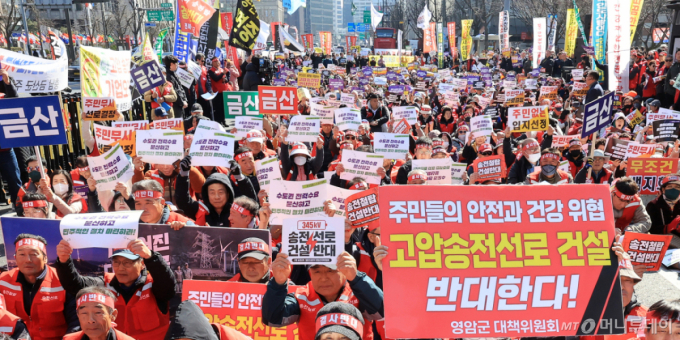
Although the government has decided to shorten administrative procedures for national key grid projects through PFS exemptions, the challenge of resident consultation remains in the actual process of constructing transmission grids. Even if PFS and permitting procedures are accelerated, it is pointed out that achieving the expected shortening of project timelines may be difficult if construction is delayed due to local opposition.
According to the power industry on the 24th, transmission grid projects often require consultations with residents and local governments during route finalization and construction phases even after PFS and permitting. Even if administrative procedures are accelerated, prolonged local opposition over the location of transmission lines and substations may make it difficult to achieve the expected shortening of project timelines.
In fact, the Donghaean-Sin Gapyeong 500kV transmission line, a key component for power supply to the capital region, experienced delays of approximately 66 months in construction compared to the original plan due to ongoing local opposition over concerns such as forest fires and land value depreciation during site selection.
The Bukdangjin-Sintangjeong 345kV transmission line faced prolonged delays due to overlapping issues including local opposition to transmission tower construction and problems with development activity permits from local governments. This means that even if administrative procedures such as PFS and permitting are completed, significant time may be required before actual construction can begin if agreements with the local community are not reached.
Ultimately, how quickly conflicts over routes and locations between residents and developers are resolved will determine the speed of transmission grid projects. Especially since transmission lines often pass through multiple regions, conflicts in one area can affect the entire schedule.
If construction of transmission grids is delayed, power generated in areas with high generation capacity may not be delivered to demand areas, leading to output control. This could also impact the timely operation of large-scale power demand centers such as semiconductor complexes and AI data centers in the capital region.
The government and KEPCO are promoting underground conversion of transmission lines, expansion of resident-friendly substations, and resident explanation sessions and support measures to reduce local opposition. Underground conversion is considered a measure that can reduce residents' negative perceptions of transmission towers. However, it may require higher project costs and longer construction periods compared to overhead lines, and new conflicts may arise over underground routes and land compensation.
Moving transmission lines underground does not resolve all issues of local acceptance. Therefore, there are calls for parallel efforts to shorten administrative procedures through PFS exemptions while implementing government-wide conflict resolution and resident compensation and support measures.
A power industry official stated, "The key to timely construction of power grids is mutual cooperation with local residents and swift administrative support from local governments." He added, "To achieve the goal of stable national power supply while enhancing local acceptance, active communication, understanding, and mutual cooperation are necessary."
As the government embarks on expanding transmission grids connecting large-scale power demand centers such as the Yongin semiconductor cluster and Honam region with generation bases, analysis suggests that how quickly local acceptance can be secured is crucial to translating the project timeline shortening initiated by PFS exemptions into actual construction and completion.

 in ECONOMY


