

Last month’s consumer price inflation rate rose back above 3% for the first time in two months. This was largely driven by a base effect from a discount on SKT phone bills offered as compensation for a personal data breach in August of last year.
According to the 'August 2026 Consumer Price Trends' released by the National Data Administration on the 2nd, the consumer price index (CPI) for last month rose 3.1% year-on-year (hereafter same basis), reaching 120.05 (base year 2020=100). The consumer price inflation rate had fallen to below 2% in July for the first time in three months but has now returned to above 3%.
By category, petroleum prices rose by 14.2%, largely due to the impact of the Middle East conflict, which pushed up diesel (19.6%) and gasoline (11.5%). However, this was a slight decrease compared to the previous month (15.5%). As a result of rising petroleum prices, industrial product prices increased by 3.7%.
Prices for agricultural, livestock, and fishery products fell by 2.6% compared to a year ago, marking a shift from the 0.9% increase recorded in July. This was due to increased supply and the effects of the government’s livelihood price stabilization measures, including historically maximum discount support.
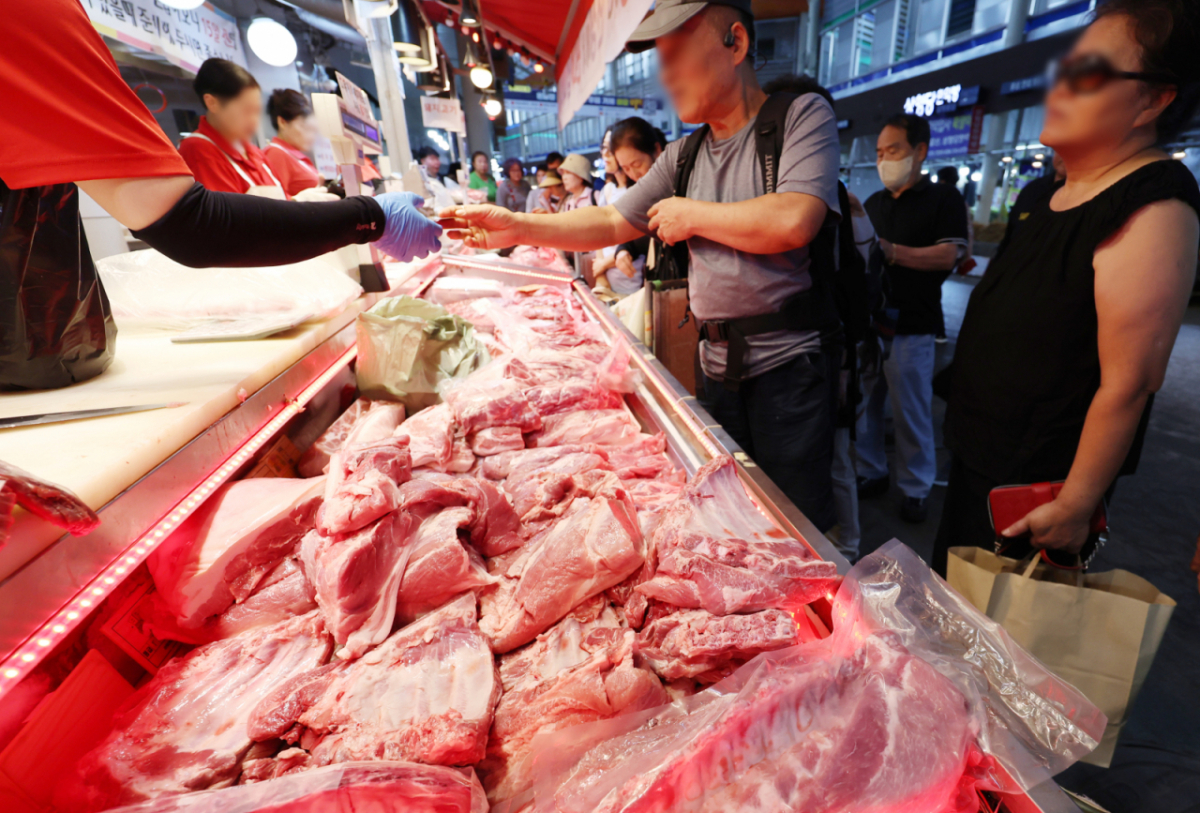
Agricultural product prices fell by 6.7%, while livestock and fishery product prices rose by 1.5% and 3.8%, respectively. Prices increased for rice (6.2%), domestic beef (3.3%), eggs (5.2%), mackerel (6.5%), and hairtail (7.5%). In contrast, prices declined for cabbage (-26.2%), tomatoes (-24.8%), apples (-8.9%), pork (-2.2%), watermelon (-17.5%), and peaches (-14.3%).
Service prices rose by 3.7%. Specifically, housing rent increased by 1.2%, public services by 6.5%, and personal services by 3.5%. Notably, holiday fees in public services surged by 26.7%, while overseas group travel expenses in personal services jumped by 14.9%.
The sharp rise in public services was largely due to a base effect from the 50th% phone bill discount provided by SKT following last year’s August personal data breach. The Data Administration analyzed that the base effect from communication fee discounts raised the overall consumer price inflation rate by 0.6 percentage points (p).
The core CPI, which reflects the underlying trend of prices and excludes agricultural products and petroleum, rose by 3.1%. The food and energy-excluded index, based on OECD standards, increased by 3.4%.
The living price index rose by 3.2%. The fresh food index fell by 6.7%. Fresh fish prices rose by 4.1%, while fresh vegetables (-9.8%) and fresh fruits (-10.0%) declined.

 in ECONOMY
