

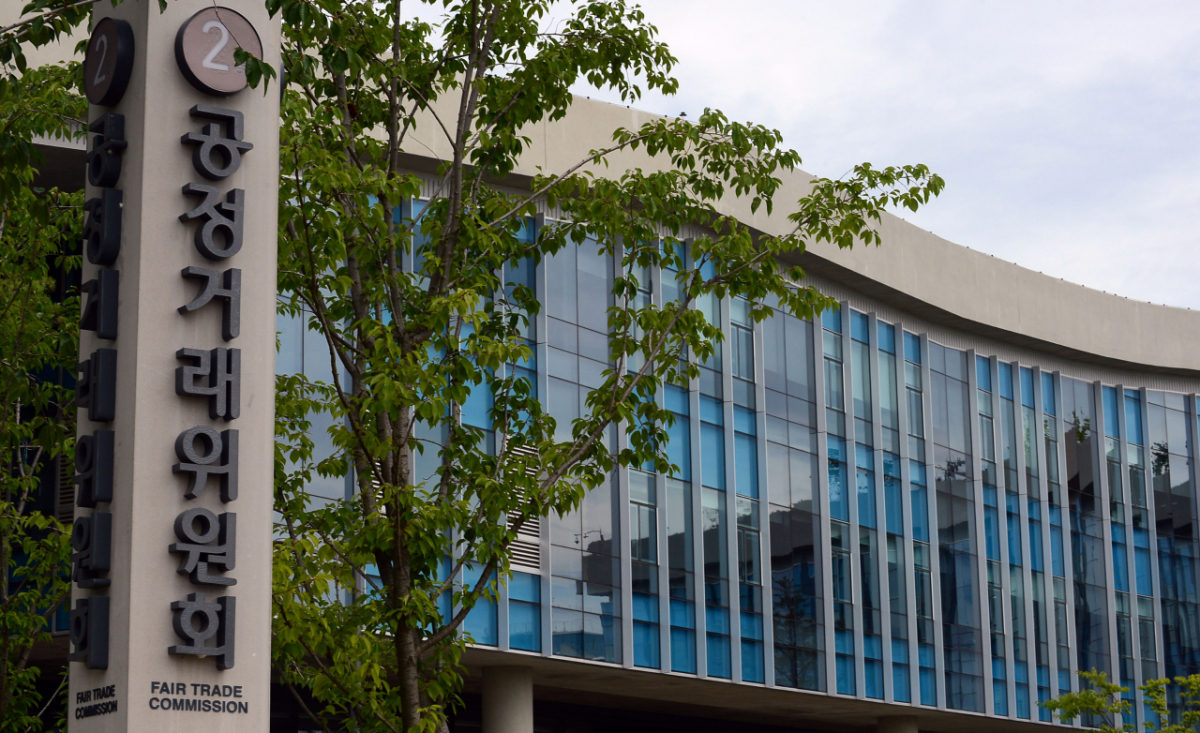
"If the Board of Audit and Inspection or the National Assembly raises any concern about 'favoritism,' the responsible official is left in ruins."
This reflects the structural background behind the recent trend of "strict administration" at the Korea Fair Trade Commission, as pointed out by a former FTC official. The imposition of massive fines before the judiciary's final judgment is attributed to the prevalence of self-preservationism within the civil service community. This has been further compounded by President Lee Jae-myung's call for "strict responses" to corporate unfair practices, leading analysts to conclude that the Korea Fair Trade Commission's strict stance has become even more pronounced.
The official stated, "If there is even a hint of suspicion regarding favoritism toward companies, responsible civil servants could face disciplinary action from audits or inspections by the Board of Audit and Inspection. Therefore, imposing the strictest possible penalties ensures personal security."
This risk-averse tendency within bureaucratic society manifests under the guise of "strong sanctions." Even if courts issue a defeat verdict years after imposing massive fines, it is extremely rare for responsible officials to face personnel disadvantages or bear responsibility.
Another former Korea Fair Trade Commission official noted, "In the past, penalty levels were determined carefully by comprehensively considering economic repercussions, impacts on the industrial ecosystem, and past precedents. However, currently, there is a proliferation of penalties that simply say 'punish as harshly as possible and take it to court if you disagree.'"
In reality, Korea Fair Trade Commission officials are highly sensitive to the term "favoritism." During the sugar cartel case, when criticism arose that the FTC had reduced fines by 99 billion won, they explained, "Fines were imposed in accordance with relevant regulations such as the fine announcement guidelines." Regarding claims that Korean Air's compliance penalties were reduced by 94%, they clarified, "The compliance penalty guidelines include exceptional provisions allowing for penalties different from standard criteria to ensure specific validity for each case."
Analysts also suggest that efforts to strengthen investigative functions and expand organizational capacity and personnel since President Lee took office have further reinforced the Korea Fair Trade Commission's strict punishment approach. Notably, the FTC's Investigation Bureau, once dubbed "the reaper of the business world," is set to be revived as the "Key Investigation Planning Unit" 21 years after its abolition in 2025.
The fine system has also been significantly strengthened. A notable change is the increase in the minimum fine rate. For instance, in cartel cases, the lower limit of the fine imposition rate was raised from the previous 0.5% to 10%, a maximum 20-fold increase. The lower limit for major cartels, previously set at 3%, has been raised to 15%. For cases involving profit-seeking (unfair support and improper benefits to special relationships), the fine imposition rate's lower limit was increased from the previous 20% to 100%.
While the intent is to enhance deterrence against legal violations, this approach also effectively blocks any possibility of favoritism by the Korea Fair Trade Commission. Nevertheless, the political sphere continues to view the FTC with suspicion, questioning whether it engages in lenient punishment for companies.
President Lee himself remains wary of potential favoritism by the Korea Fair Trade Commission. The abolition of exclusive prosecution rights is a prime example. Exclusive prosecution rights are a system under which public prosecutions can only be filed for six laws among the 13th laws under the FTC's jurisdiction that carry criminal penalties, and only upon referral by the FTC. In March, during a State Council meeting, President Lee stated, "Could it not be that the FTC investigates but drags out time and then covers up allegations as unfounded? Ultimately, since the FTC monopolizes authority, it has even gained the power to show favoritism."
Consequently, critics point to a structural vicious cycle where the Korea Fair Trade Commission, under suspicion of favoritism from the political sphere, is forced to adopt strict punishment measures to avoid audit or disciplinary risks.
Additionally, there are analyses suggesting that regulations on managing external contacts have turned the Korea Fair Trade Commission into an "isolated island." While the intent was to encourage reporting and meetings with former FTC officials or industry stakeholders, the mere fact of meeting such individuals can raise suspicions from the National Assembly or Board of Audit and Inspection. As a result, a culture has emerged where contact itself is avoided altogether. This forms the backdrop for criticisms that the Korea Fair Trade Commission is isolated from the market and fails to grasp the rapidly changing trends in the industrial ecosystem in a timely manner.
Another former Korea Fair Trade Commission official remarked, "The pace of market change is accelerating, yet the FTC tends to judge current markets based on past standards, remaining tied to history. If it becomes too rigid and static, it could disrupt the market and infringe upon consumer interests, so flexibility appears necessary."

 in ECONOMY
