

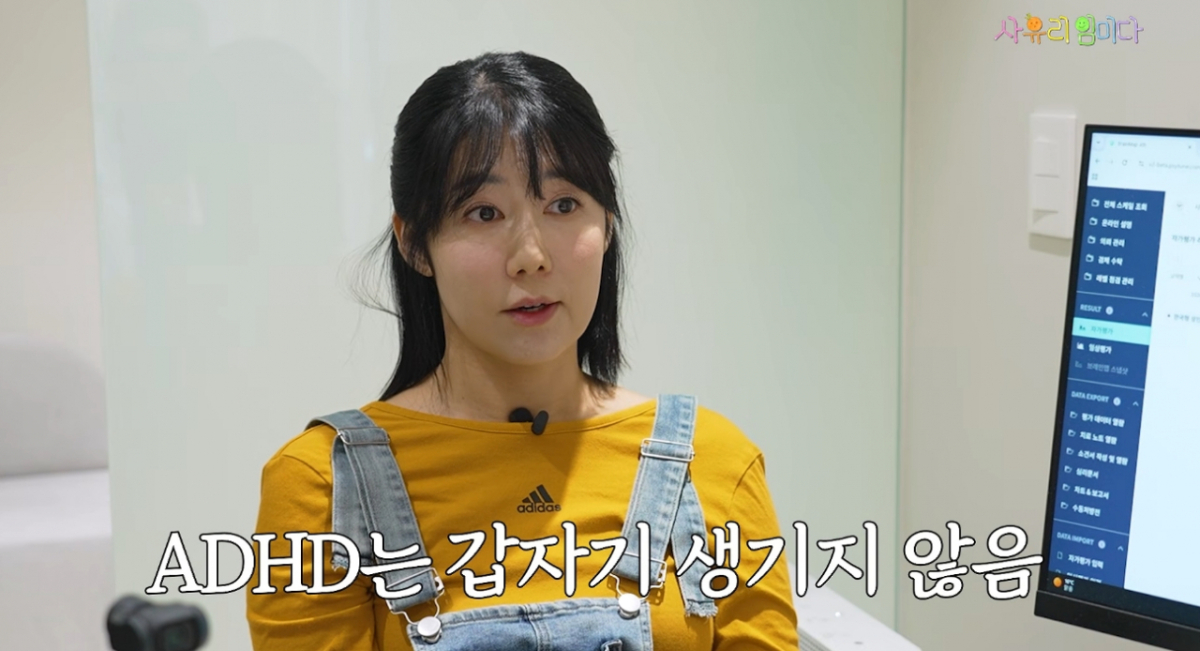
Broadcaster Sayuri was told by a psychiatrist that she is highly likely to have attention-deficit/hyperactivity disorder (ADHD).
A video showing Sayuri consulting a mental health specialist was released on her YouTube channel on Tuesday. She visited the YouTube channel Dr. Friends, run by psychiatrist Oh Jin-seung.
In the video, Sayuri struggled to stay focused from the beginning of her first test. She repeatedly touched objects around the testing equipment and asked how long she would have to continue the test.
After reviewing her results, Oh said, "To sum up, there is a possibility that you have ADHD. The likelihood is high."
Sayuri scored particularly high in inattention, hyperactivity and impulsivity in assessments covering inattention, disorganization, hyperactivity, impulsivity, emotional dysregulation and APD/CD/ODD (antisocial personality disorder, conduct disorder and oppositional defiant disorder).
Oh explained that her tendency toward inattention meant she often struggled to concentrate and made mistakes.
"High hyperactivity means you have a lot of energy. When you do something, you want to try this and that, and you have the energy to take on new challenges. But when there is too much of it, things can become disorganized," he said.
He added that disorganization refers to difficulty following a set sequence when doing tasks. For example, someone might use different methods and sequences each time they clean.
"ADHD does not suddenly develop. Some patients come in for consultations and say it started last year, but that is something different from ADHD," Oh said.
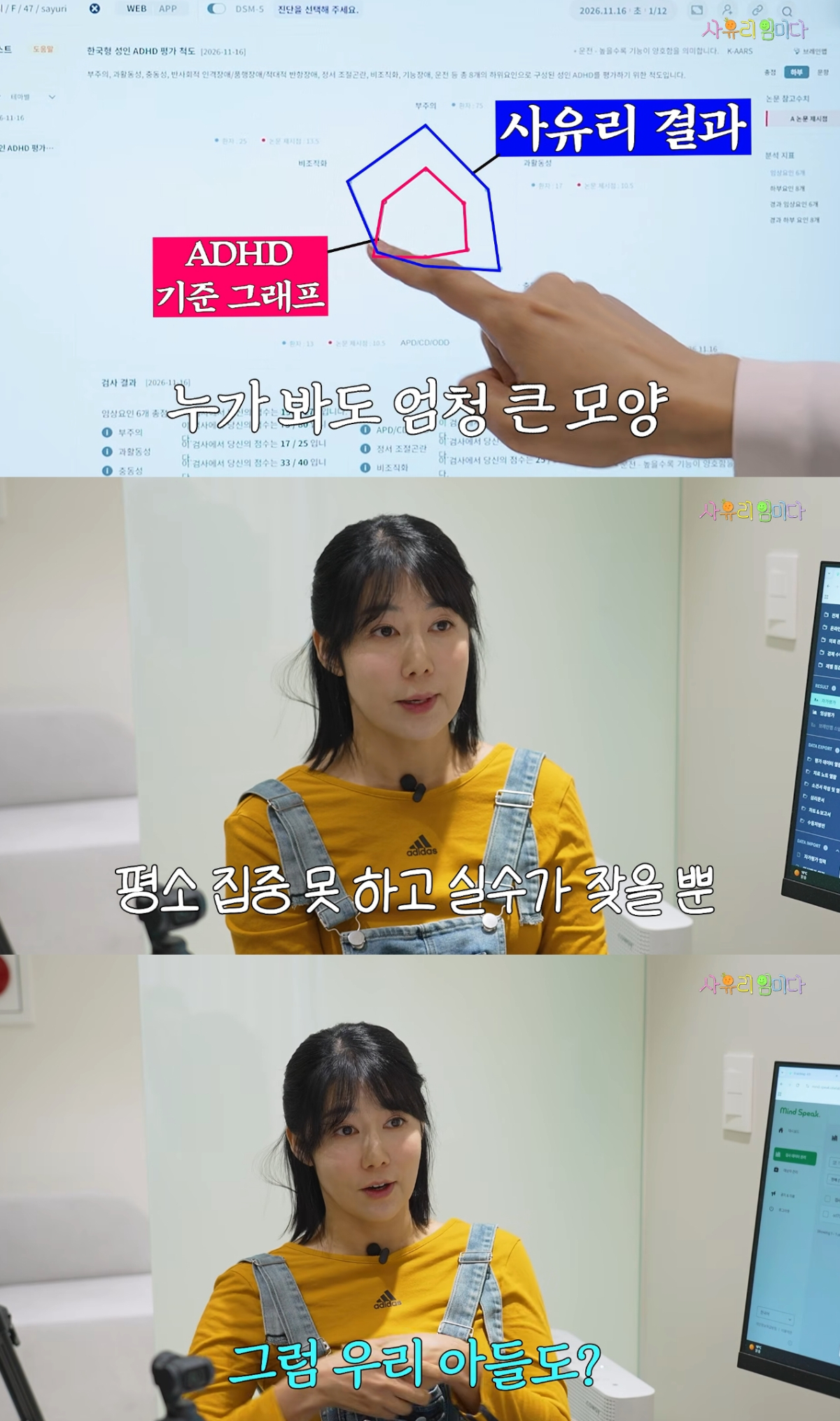
Hearing this, Sayuri reacted by saying, "So I have had many problems since the old days." Dr. Oh said, "You chose your profession well," and Sayuri confessed, "I don't think I could be anything other than an entertainer. If I worked a part-time job, I'd be fired in a week."
In response, Dr. Oh drew attention by saying, "There are many people with ADHD among entertainers."
Sayuri asked about the heritability of ADHD, saying, "Then the most curious thing is 'Is our son too?'"
Dr. Oh said, "The possibility is high, but it cannot be said to be 100%," and added, "You just need to observe carefully." He stated, "Mainly, teachers at kindergarten tell us about it. It shows up during open classes. For example, looking back the entire hour. In such cases, it is good to receive consultation. It is not acquired; one can be born with a weak frontal lobe congenitally."
Regarding ADHD treatment, Dr. Oh said, "You can take medication that improves frontal lobe function or receive treatment that stimulates the frontal lobe using magnetic fields called TMS. Medication is the most convenient. It is covered by health insurance and involves taking one pill daily, so it is simple." He added, "However, having ADHD does not mean you must unconditionally receive treatment."

 in ENTERTAINMENT

