

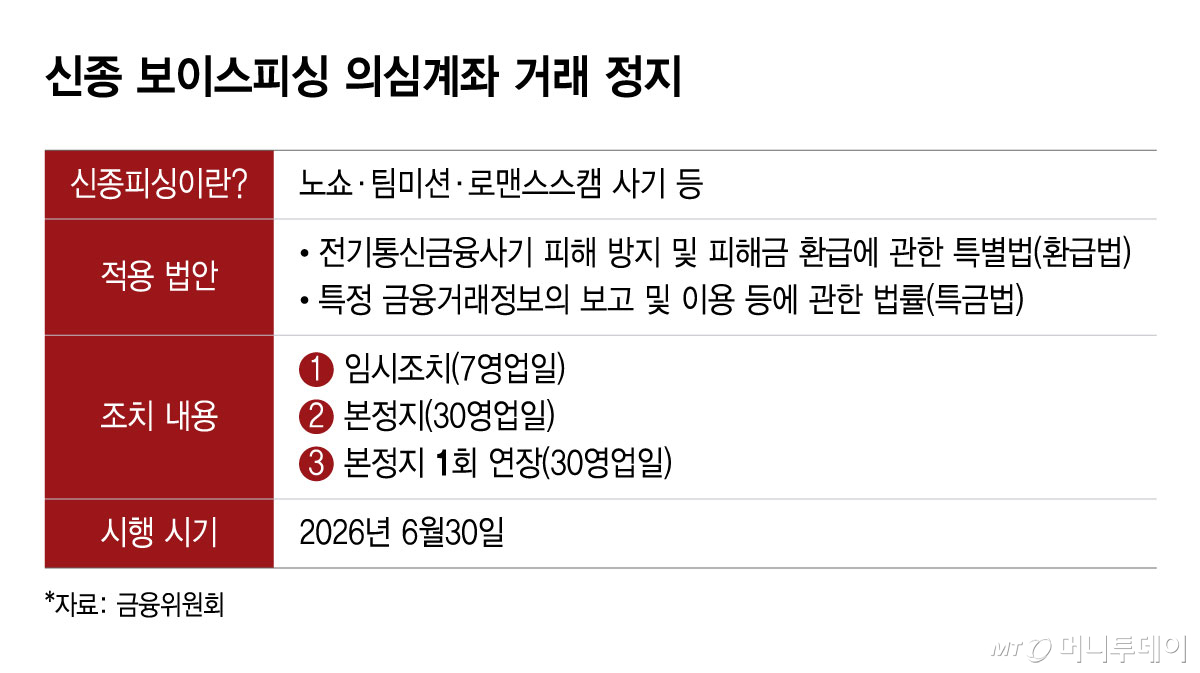
Victims of new-type voice phishing schemes, such as "no-show" fraud, have been found to have virtually no way to recover their money. While victims of traditional voice phishing can undergo victim relief procedures such as refunds, these procedures do not apply to new-type scams. Accounts involved in new-type voice phishing are subject to transaction suspension for a maximum of 67 business days, raising concerns that fraudsters may withdraw the funds after this period.
According to financial industry sources on the 11th, Lee Mo (66), who runs a self-employed business at Gwangjang Market in Songpa-gu, Seoul, lost 10.9 million won to "no-show" (proxy purchase) fraud last August. No-show fraud is a new-type voice phishing method in which perpetrators impersonate military bases, public institutions, or corporations to reserve bulk purchases of goods, then induce specific companies (accomplices) to prepay for the items before disappearing. Lee fell victim to fraudsters who impersonated "Korea National Sport University."
Upon receiving a report, the Yeonmu Branch of NH NongHyup Bank took temporary measures to suspend the accounts involved in the fraud. This became possible after the Financial Information Unit (FIU) under the Financial Services Commission improved its system on June 30 to allow for the suspension of transactions in accounts linked to new-type phishing.
However, Lee is in a situation where there is no clear path to recovering the damaged amount. This is because the procedures under the "Special Act on Prevention of Telecommunications Financial Fraud and Refund of Damaged Funds" (Refund Act), which allow voice phishing victims to recover swindled amounts, do not apply to new-type phishing.
Under the Refund Act, when a voice phishing victim applies for relief, the Financial Supervisory Service initiates the debt extinguishment procedure for accounts involved in the fraud. After two months have passed, the Financial Supervisory Service extinguishes the depositor's deposit claim and determines the refund recipient and amount within 14 days. Financial institutions must pay this to the victim without delay.
A source from financial authorities explained, "Methods that disguise transactions of goods or services do not fall under the definition of voice phishing in the Refund Act, making it difficult to apply refund procedures to no-show fraud and similar cases."
Ultimately, victims of new-type voice phishing have no choice but to catch the fraudsters and file lawsuits for unjust enrichment return or damages to recover their money.
Financial institutions are also aware of this. In fact, materials prepared by financial institutions for internal staff distribution even state that "new-type phishing is not a target for victim relief, so it is unnecessary to mention related content to victims."
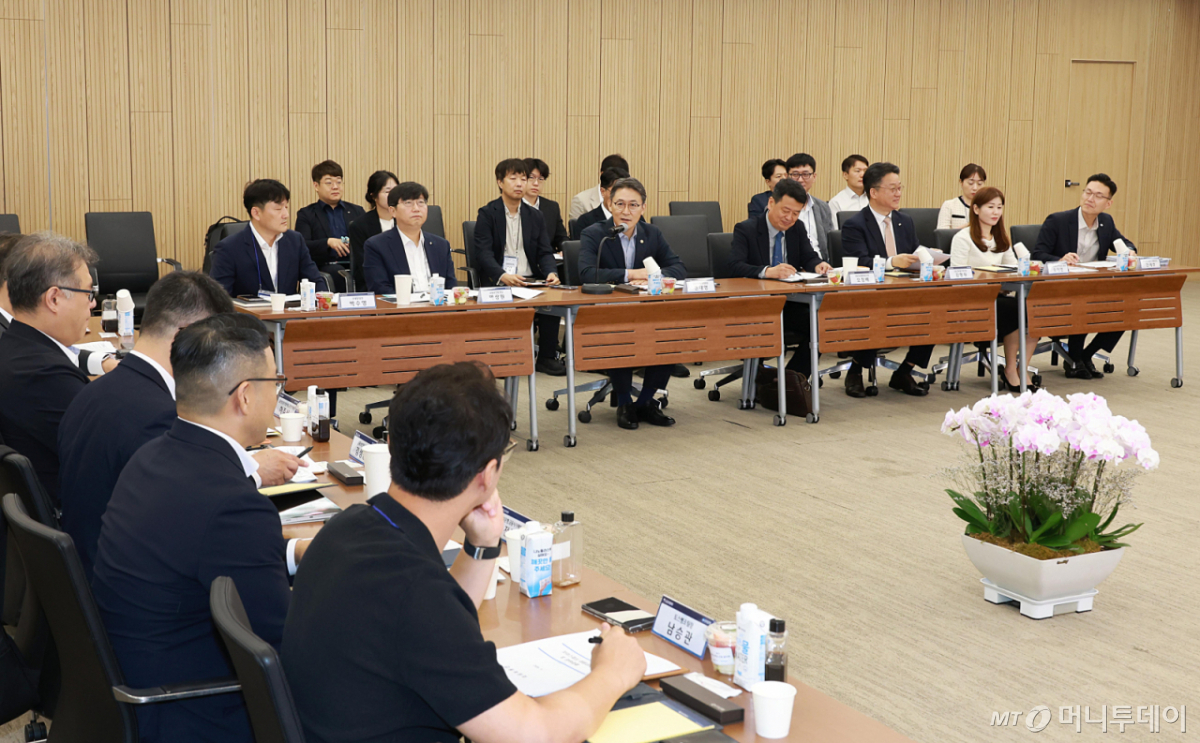
Another issue is that accounts involved in new-type phishing cannot be kept suspended indefinitely. In traditional voice phishing cases, transaction suspension is maintained until the debt extinguishment procedure by the Financial Supervisory Service is completed and victim refunds are finished, or until it is confirmed that the account was not involved in fraud.
In new-type phishing cases, accounts involved in fraud can be temporarily frozen for 7 business days, followed by a transaction suspension of 30 business days. This can be extended once for an additional 30 business days. Accounts can only be suspended for a maximum of 67 days, and there are no explicit measures in place after this period.
In Lee's case, NH NongHyup Bank has kept the accounts involved in fraud frozen since initiating temporary suspension last August. The extended transaction suspension period will end by mid-next month. Once the transaction suspension on the account is lifted, fraudsters could potentially withdraw the money.
To prevent this, victims of new-type phishing have no choice but to directly request financial institutions to continue maintaining the transaction suspension. Fortunately, NH NongHyup Bank is reportedly planning to continue maintaining the transaction suspension on the accounts involved in the fraud.
The Financial Services Commission has stated its intention to supplement the system through an amendment to the "Act on Reporting and Use of Specific Financial Transaction Information" (Specific Financial Transactions Act). A source from financial authorities said, "Financial authorities cannot force financial institutions to maintain transaction suspension for longer periods; it is up to financial institutions to judge autonomously, so it depends on negotiations between victims and financial institutions," adding, "We are pushing for an amendment to the Specific Financial Transactions Act to clarify transaction suspension for accounts suspected of new-type phishing."

 in FINANCE

