

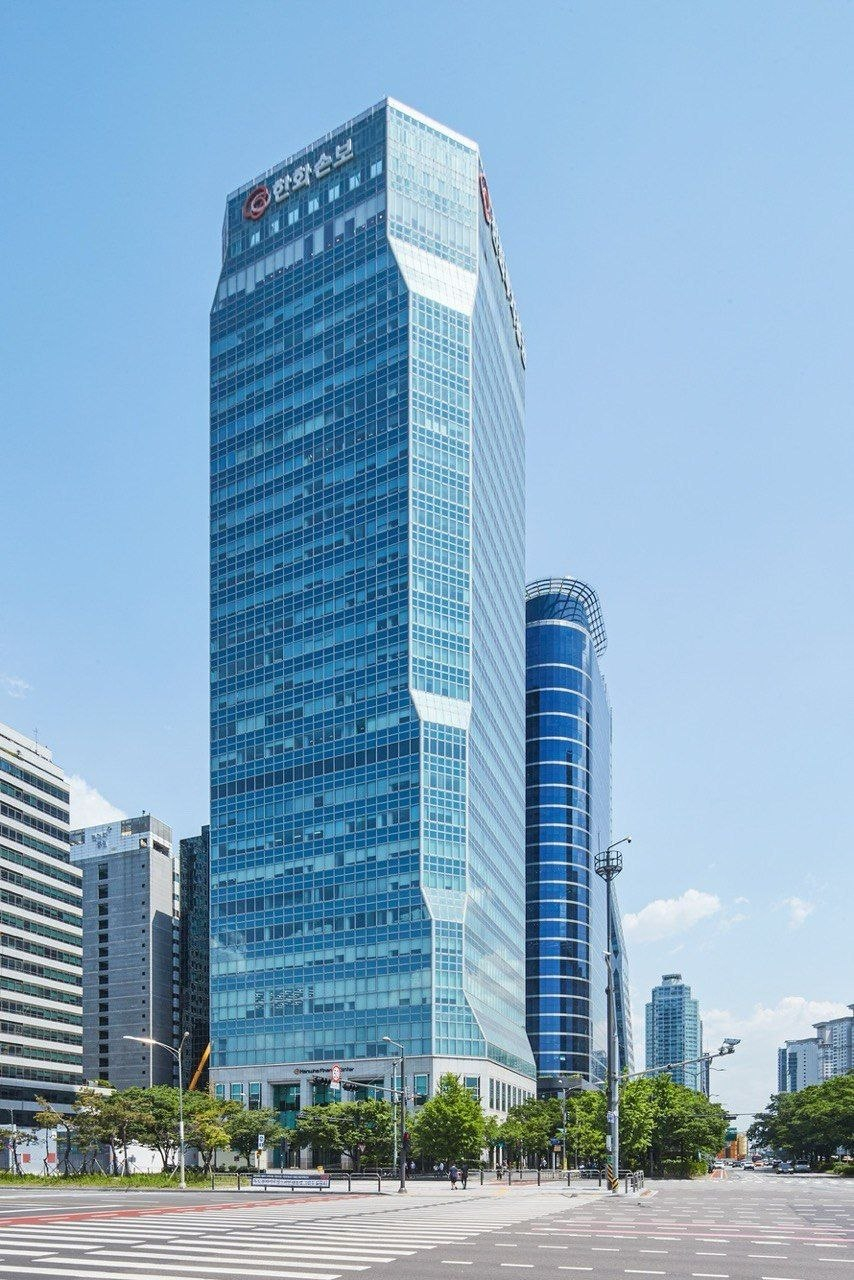
Hanwha General Insurance recorded a net profit exceeding 310 billion won through the third quarter of this year, driven by improved underwriting profits.
Although investment profits declined, overall performance was lifted by double-digit growth in underwriting profits, resulting from improved loss ratios in long-term insurance and stable loss ratios in auto and general insurance.
According to Hanwha General Insurance on the 12th, cumulative net profit for the first three quarters of this year reached 311.4 billion won, a 5.8% increase from 294.2 billion won in the same period last year. Standalone net profit for the third quarter was 96.1 billion won, up 34.1% from the same period last year.
Improved profitability in core insurance operations drove overall performance growth. Cumulative underwriting profit for the first three quarters of this year reached 313.7 billion won, a 14.5% increase year-on-year. In contrast, investment profit fell by 9.9% to 401.6 billion won. Despite weakness in the investment segment, improved underwriting profits allowed cumulative net profit to maintain an upward trend.
This trend was clearly evident in third-quarter results as well. Third-quarter underwriting profit surged 196.7% year-on-year to 132.1 billion won, compared with 44.5 billion won in the same period last year.
Conversely, investment profit decreased by 38.3% to 96.2 billion won, down from 156 billion won in the same period last year. The increase in underwriting profit outweighed the decline in investment profit, resulting in higher overall net profit.
The recovery in long-term insurance profitability contributed significantly to improved underwriting profits. Third-quarter long-term insurance profit rose 103.0% year-on-year to 136.7 billion won. Cumulative long-term insurance profit also increased by 16.9% to 344.3 billion won.
In particular, the improvement in the difference between expected and actual insurance claims for long-term insurance had a substantial impact.
The third-quarter claim variance turned positive at 2.3 billion won, reversing from a loss of 46.6 billion won in the same period last year. As losses stemming from actual claim payments exceeding expectations decreased, this contributed to improved underwriting profits.
Underwriting improvements were also seen in auto and general insurance. Third-quarter auto insurance posted a loss of 9.7 billion won, narrowing the deficit compared with a loss of 16.6 billion won in the same period last year. General insurance profit turned positive at 5.1 billion won, shifting from a loss of 6.3 billion won in the same period last year. This result reflects profitability management focused on high-quality contracts and a reduction in accidents, which led to improved loss ratios.
In contrast, the investment segment was affected by increased financial market volatility. Despite stable interest and dividend income, investment profits declined due to bond disposal and valuation losses resulting from rising interest rates.
In particular, with the standalone investment profit decline rate reaching 38.3% in the third quarter, cumulative investment profit also decreased year-on-year.
Contractual Service Margin (CSM), a key indicator of future earnings, continued its growth trend. New contract CSM for the first three quarters of this year reached 306.6 billion won, an 8.0% increase from 284.1 billion won in the same period last year. This was driven by strengthened sales of high-value products with strong profitability, such as women's insurance.
Accordingly, CSM held at the end of September reached 4.6225 trillion won, an increase of 361.8 billion won from 4.2607 trillion won in the same period last year. The year-on-year growth rate was 8.5%, representing an increase of 202.1 billion won compared with the end of the previous quarter.
The solvency ratio (K-ICS), a key capital adequacy indicator, was estimated at 186% as of the end of September before transitional measures were applied. This represents a 1.3 percentage point increase from 184.7% at the end of the previous quarter. The K-ICS ratio after applying transitional measures was recorded at 231%.
An official from Hanwha General Insurance stated, "We expect profitability to continue improving through strengthening our sales portfolio centered on high-value products such as women's insurance." The official added, "We will continue to improve expense efficiency and actively expand the inflow of high-quality contracts into year-end and next year, focusing even more on underwriting improvement."

 in FINANCE
