

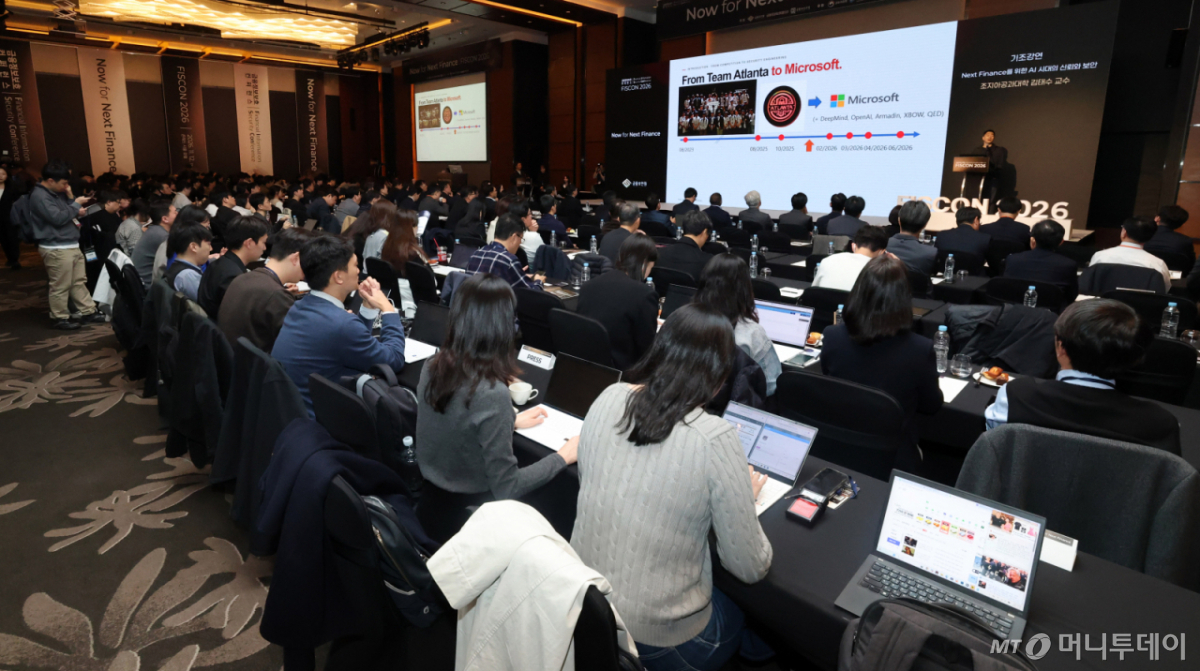
As AI emerges as a tool for cyberattacks, warnings have been issued that the security systems of the financial sector must undergo a fundamental transformation. It has been pointed out that existing security frameworks are limited in their ability to respond, given that hacking leveraging AI is being refined to an expert level and attack speeds are accelerating. Diagnoses characterizing the recent string of hacking incidents in the financial sector as a 'cyber pandemic' have also been raised.
Huh Se-kyung, Deputy Director of the Financial Security Institute, stated this at the 'Financial Information Protection Conference (FISCON) 2026' held on the 12th at the Conrad Hotel Seoul Yeouido, saying, "Next year, AI will change the methods of both attack and defense, and the financial sector environment will change rapidly as it embraces AI."
In a presentation titled "Outlook for Digital Financial Security Issues in 2027," Deputy Director Huh emphasized the threat of cyberattacks utilizing AI. He stated, "AI is both a tool for attacks and a target of attacks," explaining that frontier AI, represented by Anthropic's next-generation frontier AI model Mythos, possesses expert-level cyberattack capabilities, enabling it to easily identify vulnerabilities and launch simultaneous attacks.
In particular, he expressed concern that the speed gap between AI-driven attacks and existing defense systems could widen further. Deputy Director Huh said, "The core issue is the gap. While attacks are shifting to machine speed, if defense remains at its current level, the asymmetric gap between attack and response will widen," emphasizing, "We must transition our current security system into an AI threat response framework."
To this end, he recommended that financial institutions automate security controls and shorten vulnerability inspection cycles. Deputy Director Huh explained, "In the prevention stage, security controls should be automated; in the detection stage, vulnerabilities and anomalous behaviors should be continuously monitored to shorten inspection cycles," adding, "In the response and recovery stages, operational resilience must be tested considering the characteristics of AI attacks."
The expansion of Application Programming Interfaces (APIs) during the digital transformation process of financial institutions was also identified as a major security risk. Deputy Director Huh stated, "As external connections via APIs increase, the risk of data leakage is growing," saying, "APIs handling sensitive information or exposed externally should be managed with higher priority, and API authentication and authorization must be controlled." He explained that a management officer should be designated for each API, and pre-deployment security test results should lead to actual system improvements.
He also emphasized the need for separate security controls for Agent AI, which financial institutions are increasingly adopting. Deputy Director Huh stated, "Through AI red-teaming, verification must be conducted not only on input manipulation such as prompt injection and data leakage, but also on inappropriate execution using excessive agent privileges and abnormal behavior through memory manipulation," adding, "In emergencies, control mechanisms allowing human intervention need to be in place."
He warned that preparations are needed for supply chain attacks via external vendors connected to financial institutions. Deputy Director Huh advised, "Recently, rather than directly attacking highly secure financial institutions, attackers target relatively vulnerable supply chains," recommending that Software Bill of Materials (SBOM) be managed on a continuous basis to identify vulnerabilities.
Kim Jin-hwi, Senior Executive Vice President of Naver Cloud, who delivered a special lecture on the day, compared the recent hacking incidents in the financial sector to a 'cyber pandemic,' expressing a sense of crisis. Mr. Kim stated, "We are calling the current situation of successive hacking incidents a cyber pandemic," adding, "Most Chief Information Security Officers (CISOs) I know are so anxious that they cannot sleep properly at night." He further revealed that Naver affiliates are also exposed to numerous cyberattacks and that the company is making every effort to respond so that no IT assets remain in management blind spots.
Meanwhile, the event was held immediately after a hacking incident occurred at the Financial Security Institute. Some disruptions occurred at the event, including the cancellation of the morning VIP program.
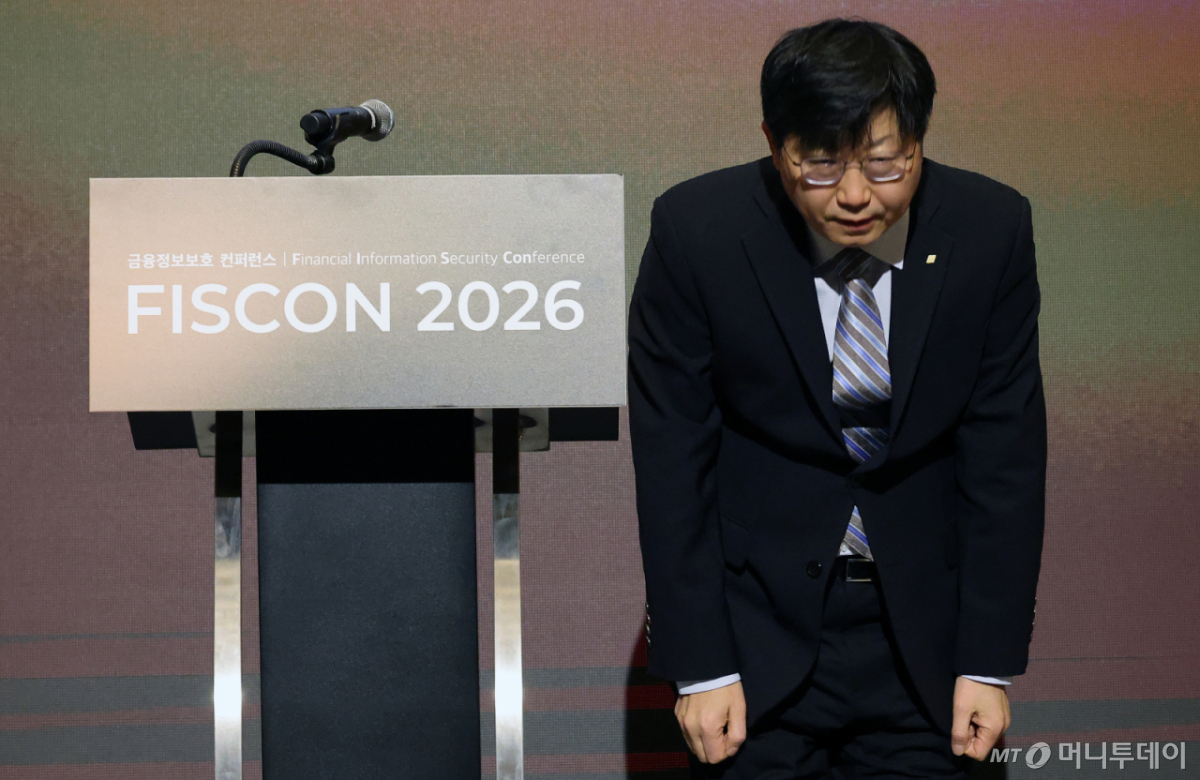
Prior to the event, Director Park Sang-won of the Financial Security Institute apologized, stating, "As a specialized financial security institution, we should have maintained a high level of security, but I deeply regret that this incident occurred." The Financial Security Institute detected abnormal access in its information protection continuous evaluation system on the 9th and estimates that approximately 130 files from 48 financial institutions were leaked. Director Park stated, "We are thoroughly investigating whether there is any additional leakage and the cause of the incident," adding, "We will conduct a comprehensive inspection of the entire security institute system and formulate fundamental measures to prevent recurrence."

 in FINANCE

