

[For more diverse corporate information on the startups mentioned in this article, please visit the Unicorn Factory big data platform 'Data Lab'.]
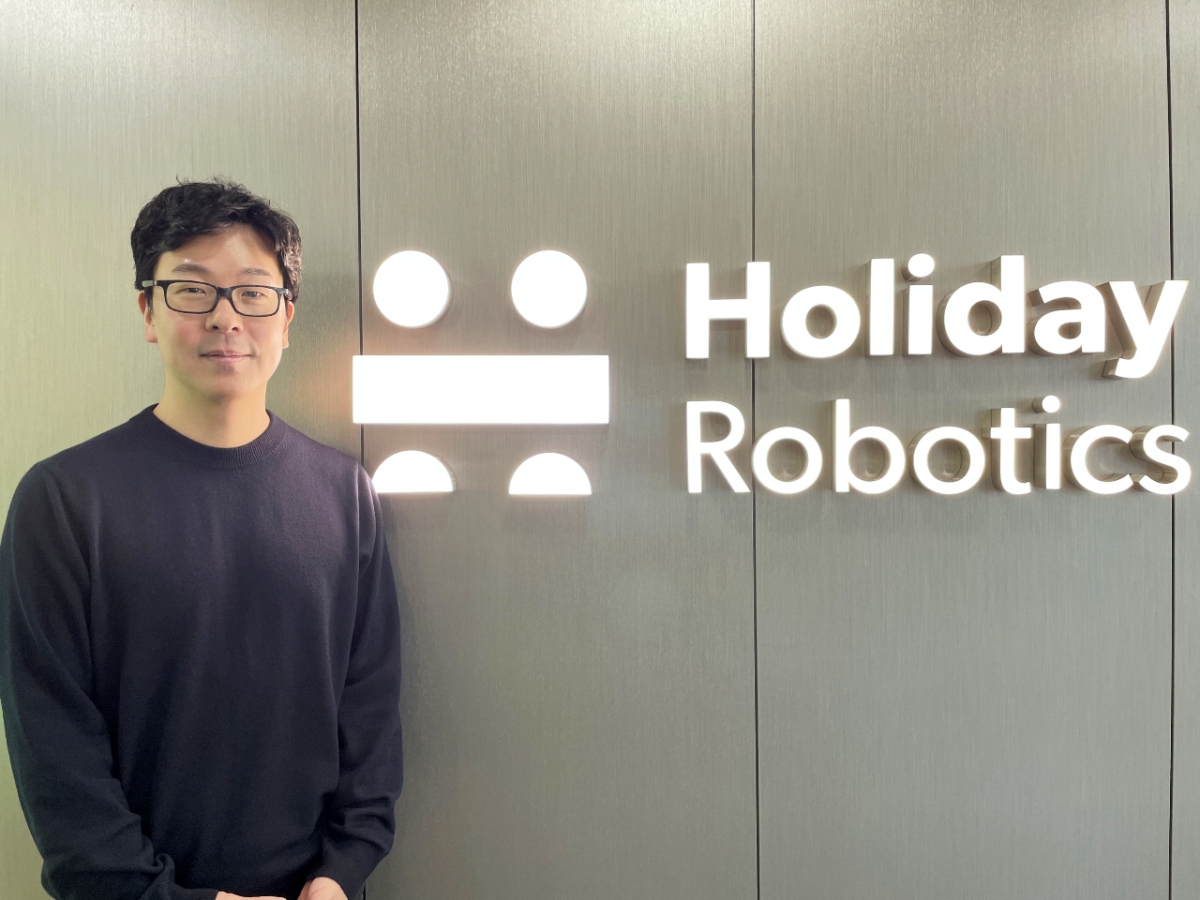
"I once thought that artificial intelligence (AI) and robots would completely change the world. It feels like I am finally starting to do what I have dreamed of for a long time."
Song Gi-yeong (CEO), who set a record for the largest M&A (mergers and acquisitions) in the domestic technology startup sector by selling Suar Lab, has returned to the entrepreneurial front. The company he founded in 2013, Suar Lab, is a specialist in 'AI machine vision' that uses deep learning technology to automatically detect product defects on manufacturing floors. Recognized for its ability to replace human eyes, it was acquired by Cognex of the United States in 2019 for approximately 230 billion won (195 million dollars).
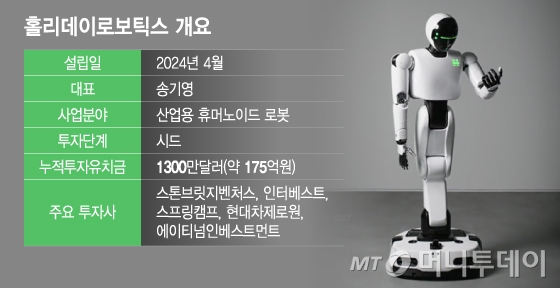
Song (CEO) decided to restart his venture in the AI and robotics fields, which he had always dreamed of during the four-year mandatory employment period following the sale of Suar Lab. Immediately after completing his mandatory tenure at Cognex, he established Holiday Robotics. Song (CEO) stated, "If we saw the potential of industrial AI at Suar Lab, now we aim to challenge 'moving intelligence' that implements that intelligence in physical space."
"Moving beyond data dependency to self-learning"
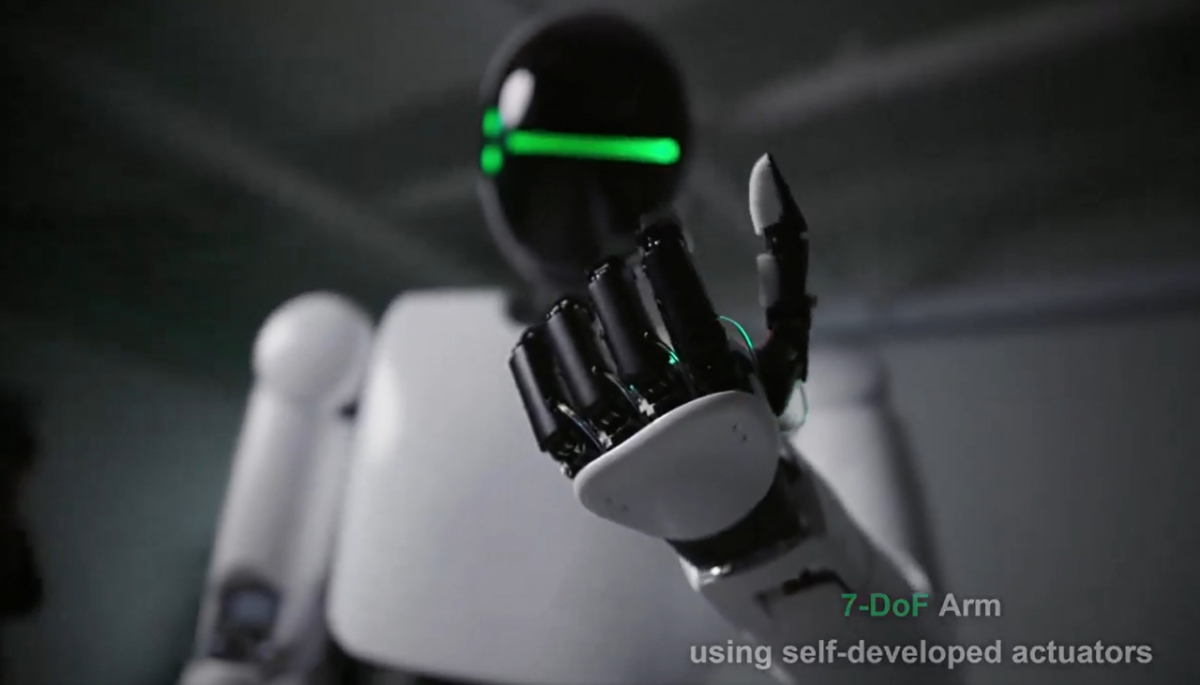
The main focus of Holiday Robotics is 'Mobile Manipulators'. Unlike robots fixed to the floor, these are robots capable of moving like humans and picking up and carrying objects.
Holiday Robotics' technical differentiation lies in its learning method. The mainstream 'Imitation Learning' in the existing robotics industry involves a person directly operating a robot to collect data and then making the robot mimic it. However, this method has drawbacks: it is costly to collect data, and it cannot cope with unexpected situations that have not been learned.
He chose 'simulation-based reinforcement learning' as an alternative. Song (CEO) explained, "Just as AlphaGo Zero learned Go without a board, robots learn movements on their own by going through tens of thousands of trials and errors in a virtual environment (simulator) that is identical to reality." To achieve this, more than half of the entire development workforce was filled with simulator experts.
The robot's control structure is also differentiated. Instead of the recently popular 'VLA (Vision-Language-Action)' model, it is developing its own unique 'VLS (Vision-Language-Skill)' model. The core lies in separating perception and action.
Song (CEO) said, "When pouring water into a bottle, the Vision model determines 'where to pour', while a separate motor skill (Skill) handles 'what force and at what angle to tilt'." He added, "This is how robots can flexibly respond to various situations." He calls this an 'adaptive manipulator'. It operates in a way where the robot's arm detects the strength or impact of an object and adjusts its force, similar to how human feet feel the ground condition while walking.
"UX is the entry barrier"... Global challenge through ecosystem preemption
The business strategy focuses on ecosystem expansion. Rather than directly entering factories to install robots via SI (system integration) projects, it has adopted a B2B strategy of supplying robots and software that anyone can easily control to existing SI companies.
Song (CEO) said, "As more SI companies become familiar with our software and UX (user experience), this ecosystem itself will become a strong entry barrier for latecomers." He also presented a concrete roadmap. Currently, it is conducting PoC (proof of concept) projects to introduce robots and logistics warehouses to major domestic manufacturers, aiming for commercialization within the year. Starting with annual production of 100 units at a pilot factory in Seongsu-dong, Seoul, it plans to build a system capable of producing 1,000 units by 2026 and 10,000 units by 2027 in Yangsan.
Although Suar Lab was sold to a global company, Holiday Robotics' direction is different. Song (CEO) stated, "The humanoid market will be larger than the automotive industry and even greater than the combination of smartphones and AI," adding, "This time, instead of a short-term sale, we aim to grow into a global company through an initial public offering (IPO)."
The company name 'Holiday' embodies its vision. It means that robots will replace repetitive labor and provide humanity with more 'holidays'. Song (CEO) said, "We will be the first in the world to practically commercialize humanoid robots and directly prove the process of robots changing the industrial landscape."
[MoneyToday startup media platform Unicorn Factory]

 in FUTURE


