

[For more diverse corporate information on startups, visit 'Data Lab' on the Unicorn Factory Big Data platform .]
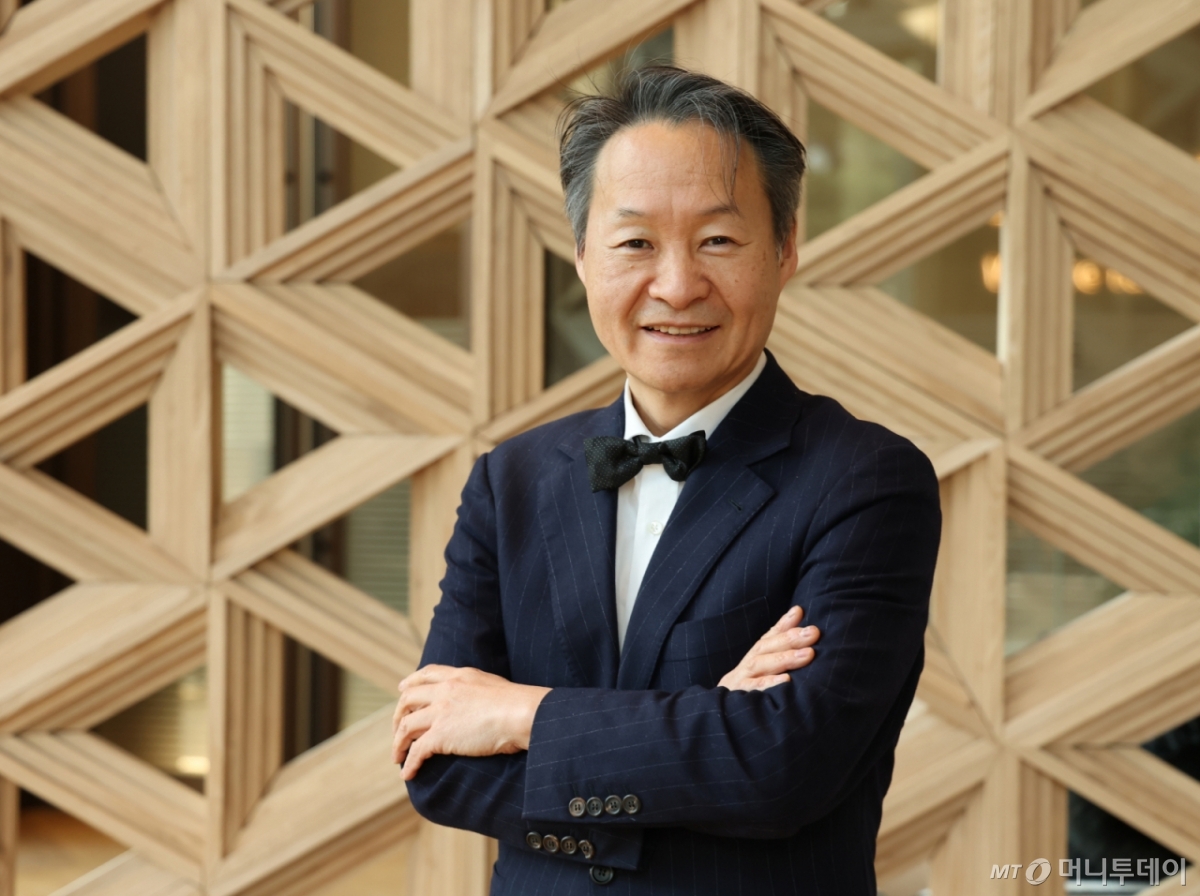
Seoul National University is transforming from an ivory tower of academia into a 'forward base for entrepreneurship' in South Korea. At the heart of this transformation lies the Seoul National University Startup Support Center. The center consolidates fragmented entrepreneurial capabilities across individual colleges and serves as the central control tower for the university's startup ecosystem.
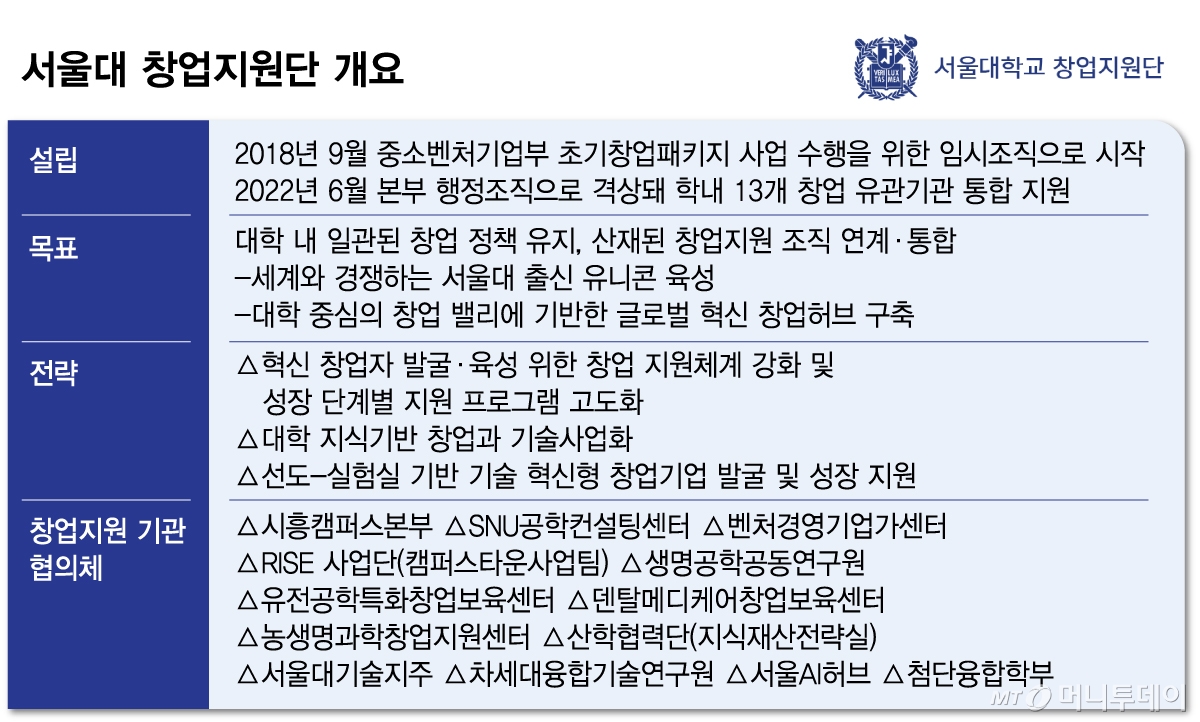
Established in September 2018 as a temporary organization to execute the Ministry of SMEs and Startups' Early-Stage Startup Package Program, the center was elevated to a full administrative unit within the university headquarters in June 2022. It now serves as the central hub integrating support for 13 related startup institutions across campus.
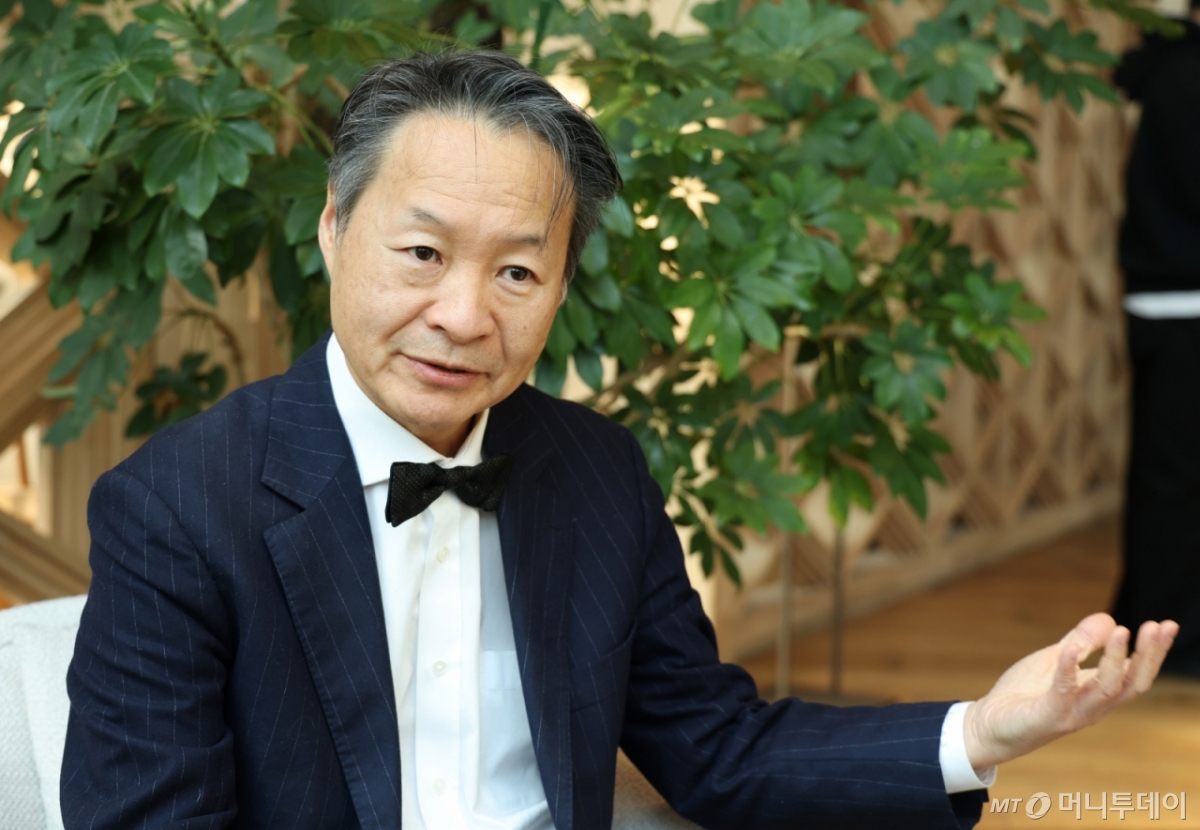
Kang Geon-wook, Director of the Seoul National University Startup Support Center (also a professor at Seoul National University Hospital), stated, "Previously, each college operated its own startup programs independently, leading to severe information asymmetry. Students could only find opportunities on bulletin boards within their own buildings." He added, "Now, we have established a 'Startup Calendar' system that allows students to view all university-wide startup programs at a glance." This signifies that consolidating scattered information and support capabilities into one place was the most urgent task for the center. Additionally, the center has reformed academic regulations by introducing a 'Startup Leave System' and recognizing actual entrepreneurial activities as academic credits. Director Kang explained, "We have expanded the startup leave period from the previous four semesters (two years) to six semesters (three years), enabling students to focus on entrepreneurship without academic burdens."
Strengthening Matching Systems Between Investors and Entrepreneurs
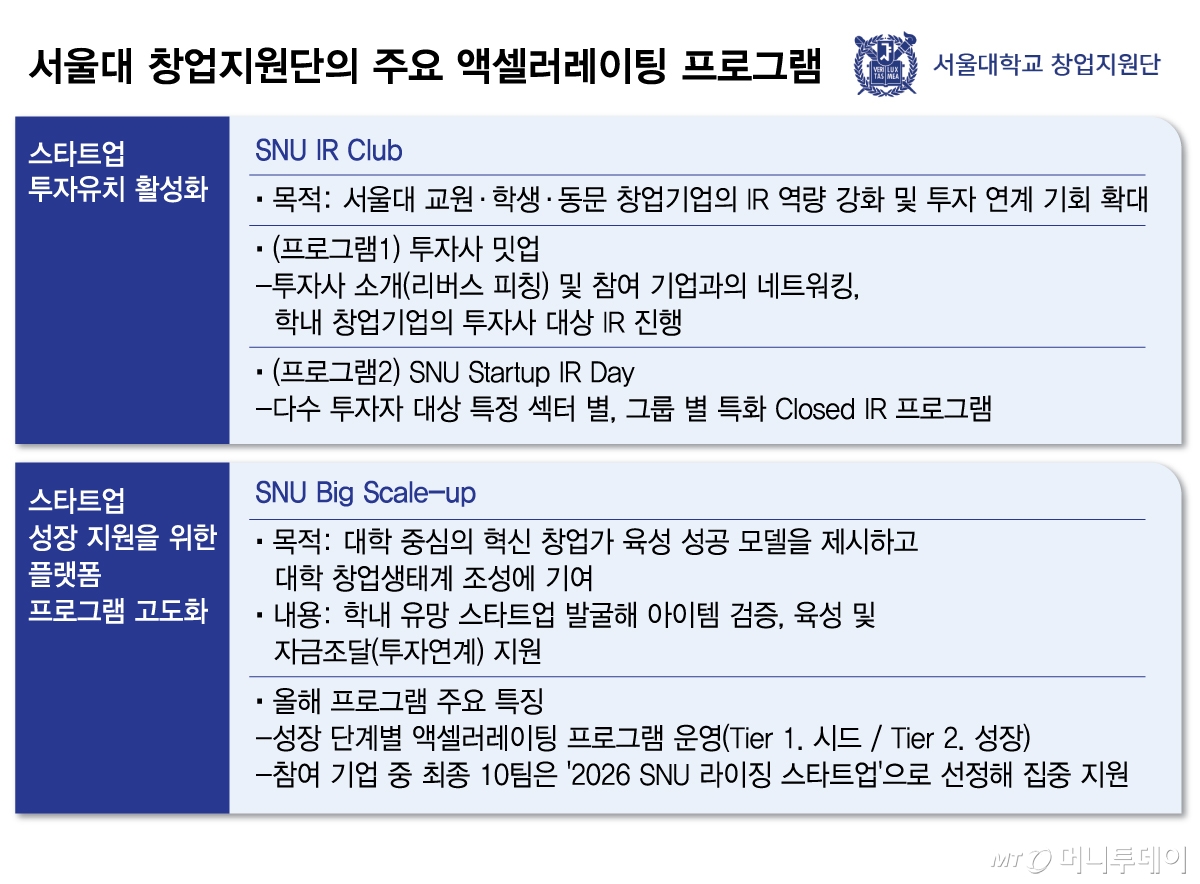
Last year, the Startup Support Center focused intensively on strengthening its matching system connecting investors and entrepreneurs. Its flagship program, 'SNU IR Club,' has shifted from large-scale events to bi-monthly small-scale sessions, focusing on practical investment connections. Notably, it introduced a 'Reverse IR' format where investment firms first present their investment directions and areas of expertise, allowing suitable startups to participate in one-on-one meetings. Director Kang explained, "One-on-one meetings have a higher success rate than one-off events, leading to many more actual investment cases."
Last year, the SNU IR Club held 30 sessions with participation from 137 companies. Four closed-door IRs focused on specialized fields such as semiconductors, robotics, biotechnology, and healthcare connected 38 startups with investors. Additionally, through its 'VIXX Scale-up' program in collaboration with six accelerators (ACs), which provided three months of intensive mentoring, six companies secured 4 billion won in direct investments. On a total participation basis, follow-on investments totaling 10 billion won were secured.
Focused Support for 'SNU Rising Startups'
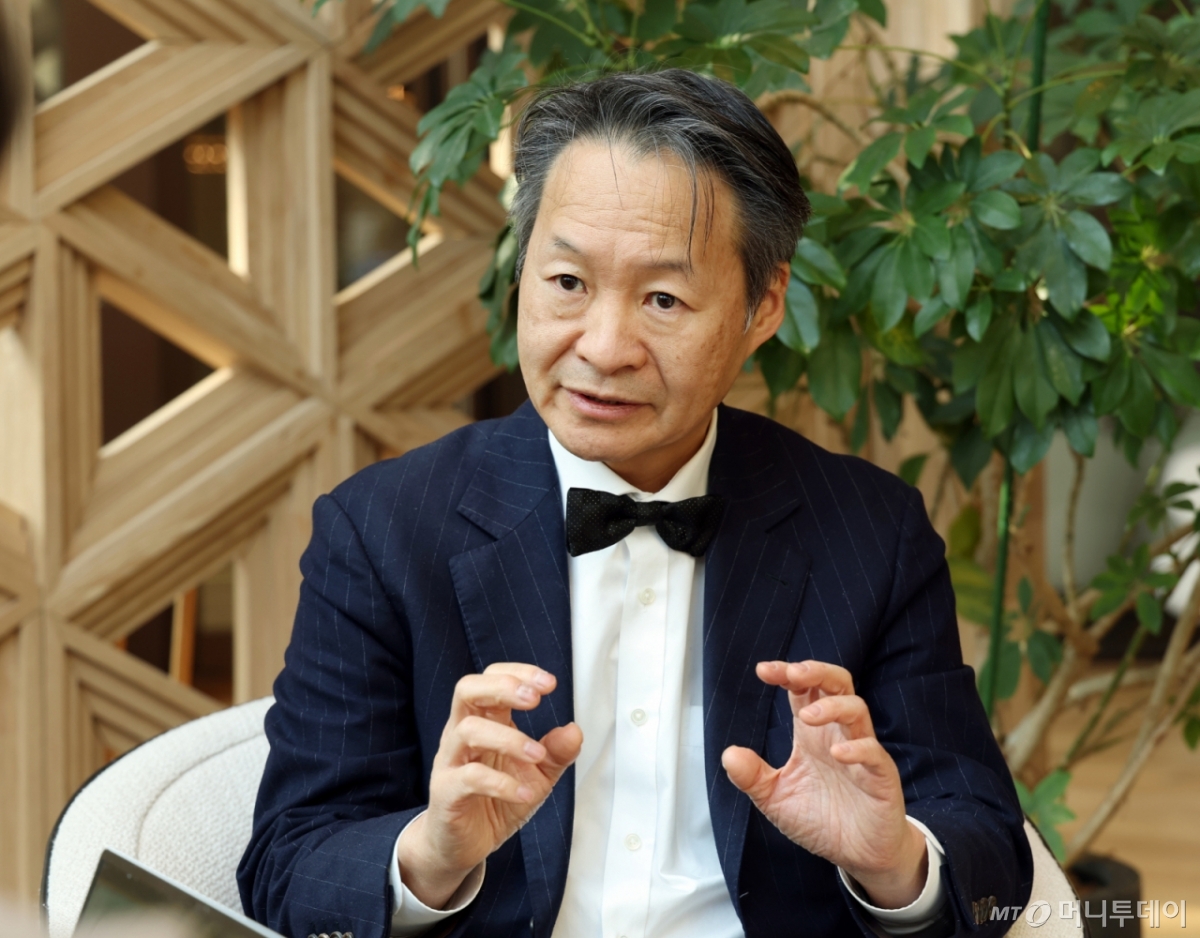
Director Kang plans to further refine the operational direction of the Startup Support Center this year. The core strategy involves dualizing startup stages into 'Pre- and Early-Stage Startups' (Tier 1 Seed Group) and 'Growth-Stage Startups' (Tier 2 Growth Group) for systematic management.
Starting this year, the center will operate collaborative programs (Tracks A–E) involving not only accelerators but also venture capital firms (VCs), supporting startup companies in smoothly securing Series A and B funding. Simultaneously, it aims to broaden growth foundations by strengthening connections between global large- and mid-sized corporations and university startup support institutions.
Director Kang stated, "While establishing a business model is crucial during the early stages of entrepreneurship, securing investment becomes essential after two years." He added, "We will partner with major domestic investment firms to select 4–6 teams per track and provide specialized growth programs at each stage. Through this initiative, we plan to ultimately select 10 companies as 'SNU Rising Startups' for concentrated support."
University Designs Team Building to Global Strategies Alongside Entrepreneurs
Leveraging Seoul National University's strength in possessing a hospital, the Startup Support Center plans to further bolster the global competitiveness of biotechnology startups. Director Kang himself co-founded the drug development startup 'Clickchem Bio' and is preparing for expansion into Boston, USA, actively advising junior entrepreneurs on team building and global strategies.
He emphasized, "Professors can make excellent CTOs (Chief Technology Officers), but Mo Deun (Prof.) cannot necessarily become good CEOs (Chief Executive Officers)." He added, "For technology to flourish in the market, it requires a professional manager capable of refining business models and leading organizations." He further noted, "We are strengthening a model that connects professional managers with faculty-led startup teams equipped with technical expertise. From the team-building stage onward, the university provides coaching and matching support, accelerating company growth."
The Startup Support Center also supports alumni companies in operating promotional booths at international platforms like CES and runs programs that directly assist with financial and accounting needs, as well as local networks required for overseas expansion into countries such as Japan and Singapore.
Director Kang stressed, "In the past, the economic structure was dominated by large corporations, but in the future, startups must sustain the nation's future." He concluded, "Seoul National University will take the lead to ensure a day comes when more than half of South Korea's top 10 companies by market capitalization are startups."
[MoneyToday startup media platform 'Unicorn Factory']

 in FUTURE


