

[For more diverse company information on startups mentioned in this article, please visit the Unicorn Factory Big Data Platform 'Data Lab'.]
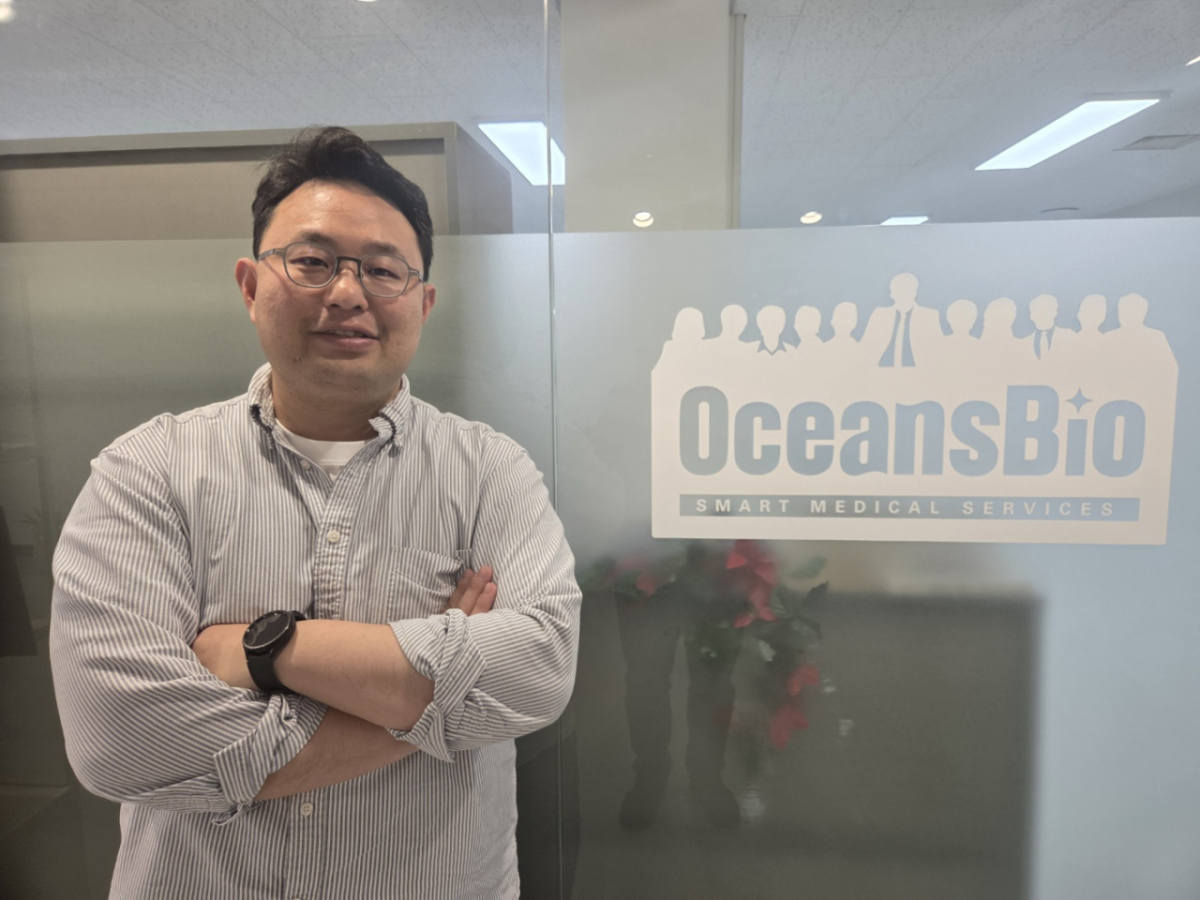
"I saw a psychiatrist friend blaming himself. He said it was truly painful when a severe patient he regularly treated suddenly stopped coming and made an extreme choice. He expressed regret for not being able to look into the matter more closely."
Social awareness of mental illnesses such as depression has improved significantly compared to the past. Seeking treatment at a department of psychiatry is no longer something to feel self-conscious about. However, with only a limited number of medical staff, it is difficult to care for all the sharply increased patients. In particular, there is insufficient time to care for severe patients.
Lee Hyun-woong, CEO of Oceans Bio, stated, "Even if we can reduce the number of hospital visits from three or four times to just once, doctors will be able to care for many more patients." He added, "I believed that medical devices capable of providing treatment outside the hospital are necessary for both depression patients and medical staff."
Emotional Regulation Through Electrical Stimulation Instead of Chemical Drugs
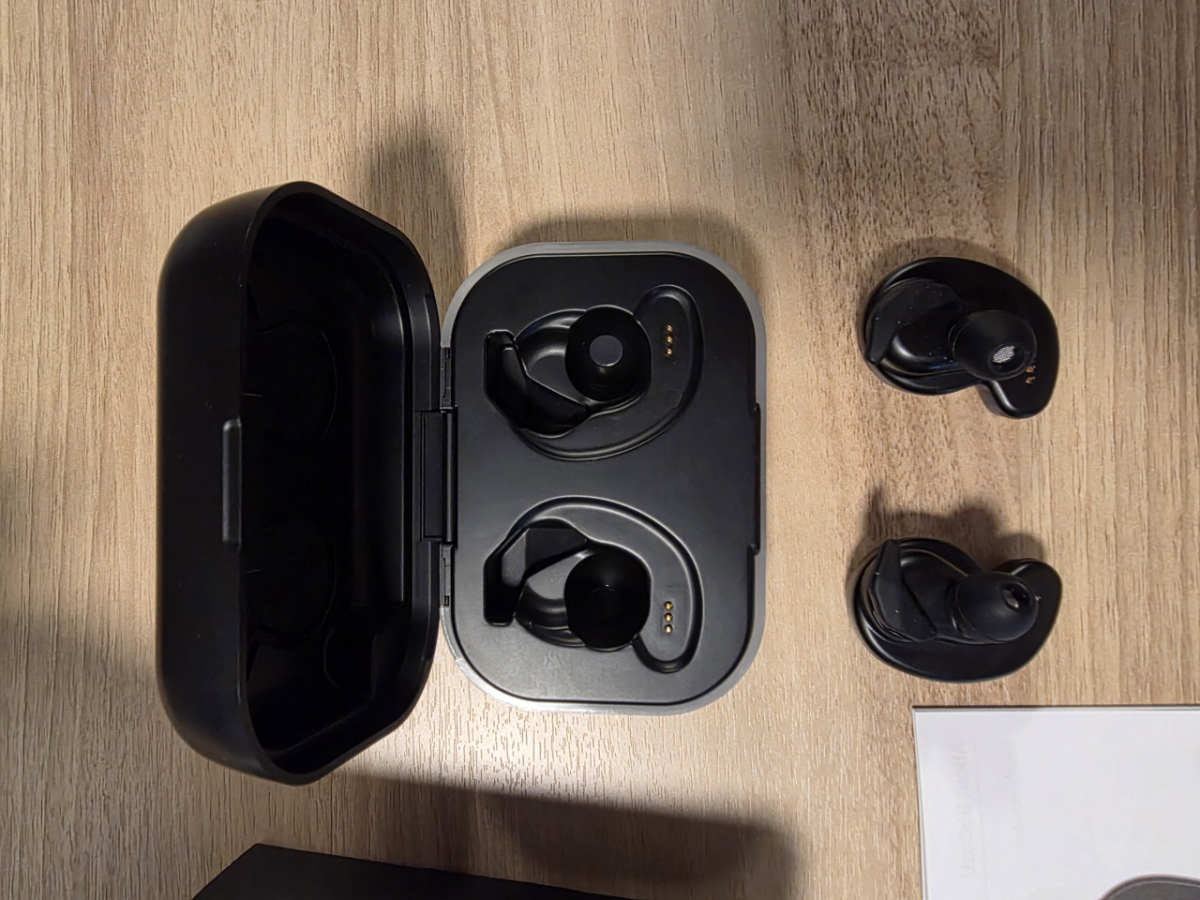
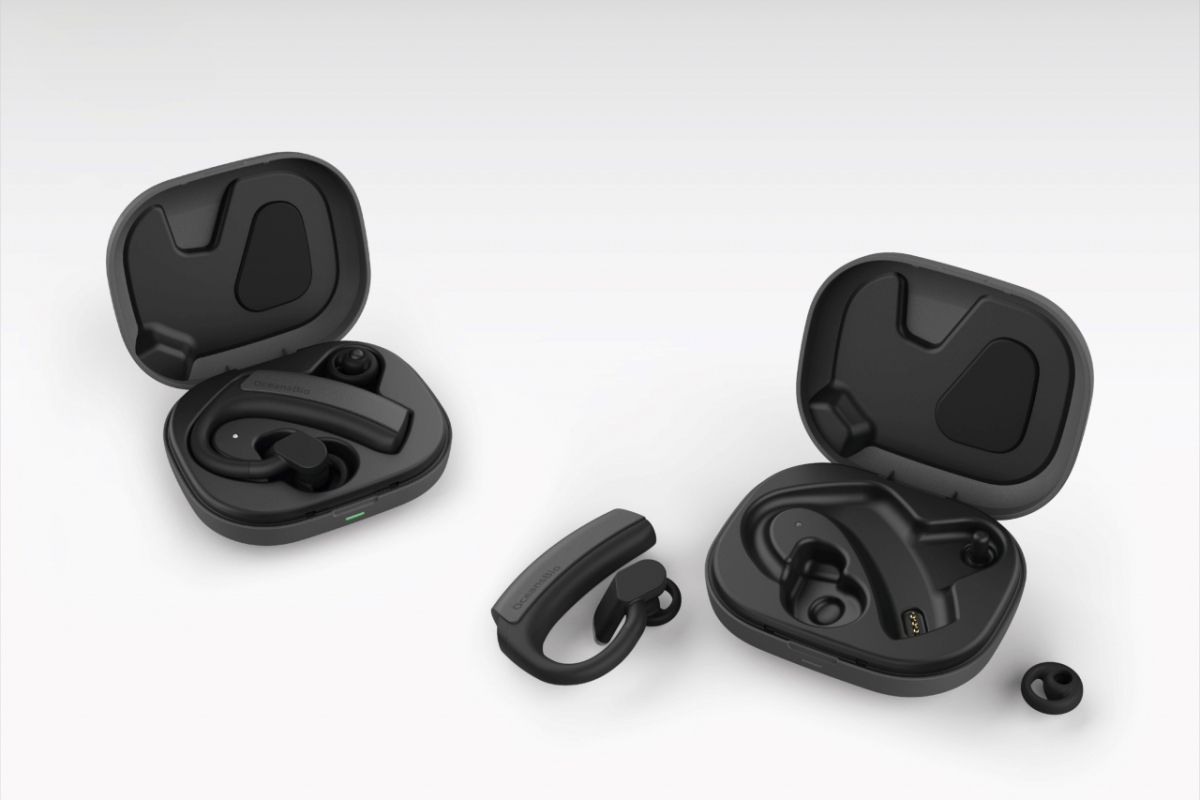
Oceans Bio chose electroceuticals. This approach improves side effects such as liver burden associated with existing drug therapies while using electrical signals to stimulate specific nerves, aiding the secretion of happiness hormones like 'serotonin.' The current electroceutical TaVNS, which is undergoing clinical trials with the U.S. FDA, takes the form of a Bluetooth earbud worn in the ear. Similarly, BeCozU, a device for improving sleep disorders scheduled for release in the first half of this year, follows the same concept.
It does not stop at simply providing electrical stimulation. By incorporating an AI algorithm that measures and learns from the user's heart rate in real time, it can determine the optimal pulse cycle for each individual. This allows for the creation of customized electronic drugs tailored to each patient.
Oceans Bio's AI-based electronic drug monitoring and control technology is also applied to implantable electronic drugs, iVNS. When prodromal symptoms of epilepsy appear, iVNS delivers customized electrical stimulation within a pre-prescribed range by a doctor to suppress seizures. In its technical value assessment report last year, NICE Information Services estimated that Oceans Bio's relevant technology would generate approximately 1.2156 trillion won in revenue by 2036.
Global Electronic Drug Market Projected to Reach 80 Trillion Won by 2035
This sales forecast is largely driven by the rapidly growing global electronic drug market. According to Insight Ace Analytics, a deep-tech market research firm, the global electronic drug market, which was approximately 24 billion dollars (about 36 trillion won) last year, is expected to expand to about 53 billion dollars (approximately 80 trillion won) by 2035.
There are various reasons why electronic drugs exceed the growth rate of the general pharmaceutical industry. There is a sharp increase in patients with neurological disorders requiring long-term treatment, including epilepsy and depression, as well as diabetes and hypertension. Furthermore, while 'invasive treatments' involving surgical implantation of devices were predominant in the past, non-invasive devices that attach to the ear or skin, such as Oceans Bio's TaVNS, are now developing rapidly.
Lee Hyeon-ung (CEO) stated, "Thanks to the advancement of AI, we have been able to create intelligent electronic drugs that analyze patients' biological signals in real time and deliver optimal stimulation." He added, "By applying customized technology, clinical treatment effects have improved dramatically." He further noted, "BeCozU was also confirmed in clinical trials to have sleep disorder improvement efficacy comparable to existing chemical treatments."
"To Become the New Standard for Global Electronic Drug Companies"
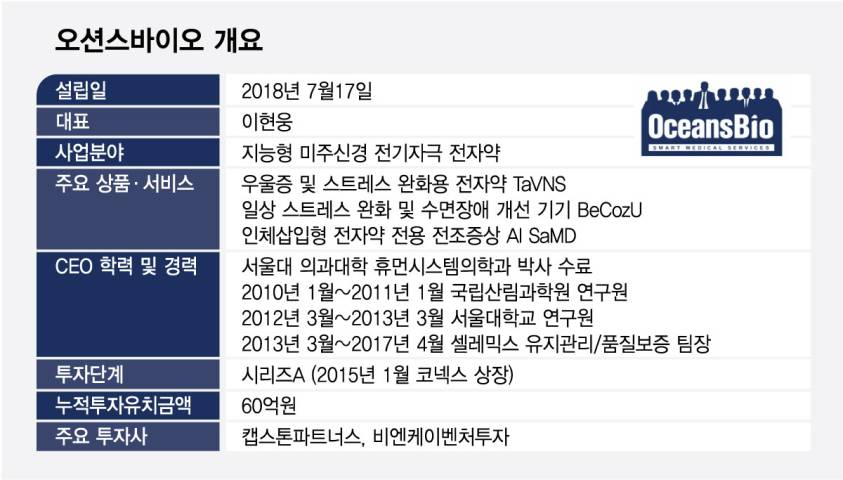
Thanks to the market outlook for electronic drugs and the originality of their technology, favorable evaluations continue from both domestic and international sources. Oceans Bio was selected for the Ministry of SMEs and Startups' 'Scale-up Tips' last year, receiving up to 1.2 billion won in R&D (research and development) funding over three years. At the '2025 Venture Startup Promotion Merit Awards,' In Jeong-bat-a (Prime Minister) received an award for strategic technology development and market expansion efforts.
At the 'Startup Co-prosperity Future High-Level Talent Startup Competition' hosted by Yantai City, China last year, Oceans Bio secured first place in Korea. This competition was held by Yantai City to identify Korean startups with superior technology and assist them in entering the Chinese market. As a result of winning first place, Oceans Bio has established a foundation to target the local market in Shandong Province, China. Additionally, it has signed MOUs (memorandums of understanding) with various Chinese companies and plans to supply TaVNS worth tens of billions of won annually starting this year.
Lee Hyeon-ung (CEO) stated, "As we advance AI-based core technologies and improve the accuracy of treatment models, we will solidify our foundation for entering global markets such as the U.S. and China." He added, "This year will be the first year that Oceans Bio generates substantial revenue." He further remarked, "Based on data obtained from clinical trials, we will find solutions for various diseases beyond depression and epilepsy in the future. We will strive to land smoothly in local markets and aim to become a 'benchmark company' for global electronic drug enterprises."
[MoneyToday Startup Media Platform Unicorn Factory]

 in FUTURE


