

[For more diverse corporate information on startups, visit the Unicorn Factory Big Data platform Data Lab.]

Located in Yongin, Gyeonggi Province—a key logistics hub for the Seoul metropolitan area—Ace Cold Storage's warehouse is bustling with refrigerated trucks constantly arriving and departing. While it may appear indistinguishable from a typical cold storage facility at first glance, stepping inside reveals its identity as an 'advanced cold chain platform.'
Its most distinctive feature is that Ace Cold Storage directly operates meat processing facilities certified under HACCP (Hazard Analysis and Critical Control Points) standards within the warehouse. Previously, livestock products had to be transported to other factories for processing after customs clearance; however, Ace Cold Storage now enables immediate trimming, processing, and packaging without any movement.
Through this approach, customers can reduce lead time—the duration from order placement to delivery—by 20% and cut overall logistics costs by 15%. Kim Jong-pyeong emphasized, "Blocking physical distance and time risks is the core of cold chain quality management."
The three cold storage facilities established in the Yongin area serve as key hubs for livestock logistics in the Seoul metropolitan region. With total cold storage capacity reaching 60,000 tons and an annual cargo handling volume of 500,000 tons, the facilities leverage their strategic proximity to major highway interchanges to enable rapid logistics and distribution.
Kim Jong-pyeong stated, "When imported livestock products from countries like the United States or Australia arrive at Ace Cold Storage via Busan Port, quarantine and customs clearance are conducted immediately on-site." He added, "Our core competitiveness lies in our specialized one-stop service tailored to livestock logistics, which accounts for 80–90% of total cargo volume."
Moving Beyond Simple 'Warehousing': Evolution Through Data and Distribution Integration
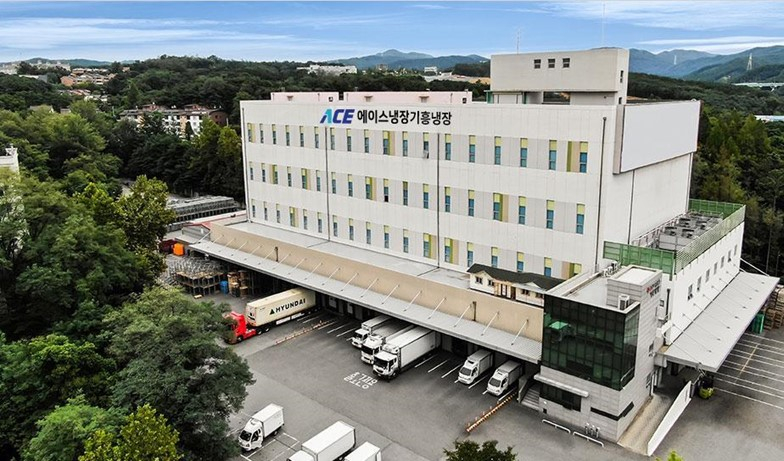
Established in 1989 as a core asset of AJ Total, Ace Cold Storage was acquired in 2021 by private equity firm Stone Bridge Capital. Since then, Stone Bridge has moved beyond the traditional warehousing model of simply storing goods and charging storage fees, launching a transformation into a cold chain platform integrating data, technology, and distribution.
Stone Bridge did not limit itself to mere oversight; instead, it deployed key executives, including Kim Jong-pyeong—a real estate, distribution, and logistics expert—directly to the site to implement an 'execution-type PMI (Post-Merger Integration Strategy)' that actively restructured operations, organization, and business models.
Kim Jong-pyeong explained, "In the past, cold storage facilities were primarily real estate rental businesses focused on storing goods and leasing space, making performance highly dependent on import volumes, exchange rates, and economic conditions." He continued, "To break away from this structure, we are expanding our business into distribution and consumption sectors to secure new growth drivers."
Ace Cold Storage has secured over 2,000 clients, ranging from large-scale food ingredient companies to small and medium-sized shippers. By integrating IT into traditional logistics operations, the company enables shippers to monitor inventory levels and inbound/outbound status in real time through its proprietary Warehouse Management System (WMS) and mobile platform.
Additionally, Ace Cold Storage has established a 24-hour real-time temperature monitoring system using IoT sensors and a central control center to strictly maintain optimal temperatures of -18°C. In the future, it plans to further enhance operational efficiency by introducing 'HYBE-led automation' featuring autonomous guided vehicles (AGVs) and conveyor systems.
Full-Time Employment for All Employees: Realizing High-Quality, People-Centric Logistics
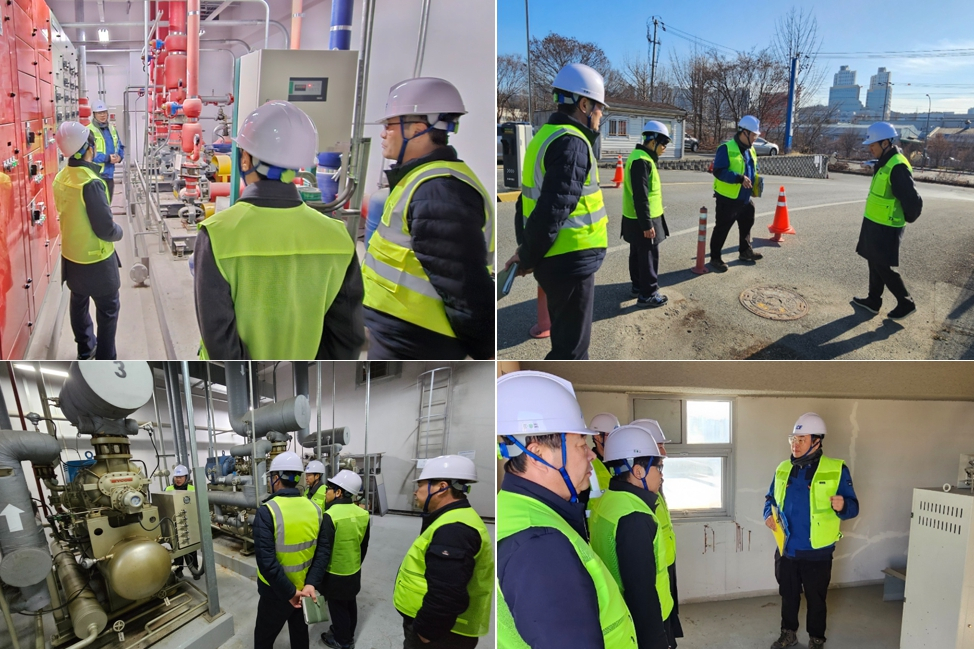
Beyond technological advancement, Ace Cold Storage has established a high-quality logistics service system centered on people by converting all employees to full-time status. Kim Jong-pyeong stated, "Through a structure where technology and people grow together, we aim to set a new standard for livestock logistics in South Korea."
Ace Cold Storage's employee welfare is recognized as industry-leading. To support senior workers and foreign laborers operating in extreme environments at -18°C, the company provides high-quality down parkas and regularly stocks various health functional foods in break areas to assist with health management.
The 'Hometown Visit Program' for foreign employees also draws attention. Foreign employees who have worked for over one year are allowed to visit their home countries for a month. Although this creates temporary staffing challenges when skilled workers leave, the company considered that long-term benefits include higher employee focus and productivity.
Supporting foreign employees extends from meal planning to providing essential living supplies. Kim Jong-pyeong noted, "Since human resources are the essence of service industries, creating an environment where employees feel pride and can work effectively is our top priority."
Expansion from B2B to B2C: Entering the Food Brand Space
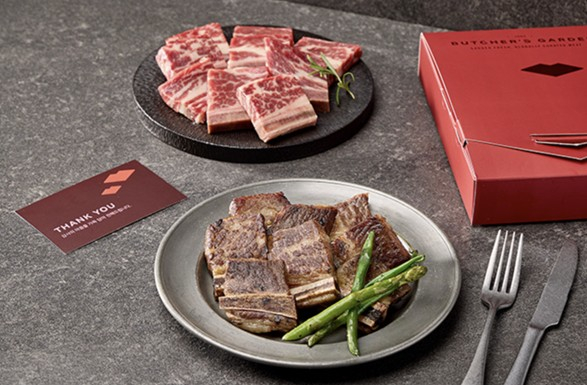
Ace Cold Storage has expanded its business into the B2C sector by launching a premium meat brand called 'Butcher's Garden.' The brand promotes a 'Meat Express' concept, delivering freshly cut meat directly to consumers immediately after processing.
To target year-end and New Year gift-giving demand, the company introduced a gift set named 'Jjokjjok Galbi,' beginning sales through the 'Remember' business platform's gifting feature to broaden consumer engagement. Jjokjjok Galbi differentiates its quality by selecting only No. 6, 7, and 8 Choice-grade U.S. boneless short ribs and applying a manual fat-removal process.
Thanks to this strategy, the meat processing and distribution sector generated 60 thousand won in new revenue last year, establishing itself as a new growth axis. The company aims to reach 15 billion won this year. Its core strategy involves not merely storing goods but integrating upstream industries that import and distribute high-quality raw meat with downstream industries that directly engage consumers.
Kim Jong-pyeong remarked, "Currently, the livestock distribution structure is fragmented across stages, generating unnecessary costs and time delays." He added, "Our goal is to integrate these fragmented processes to improve efficiency and ultimately deliver better prices and quality to consumers."
He further stated, "In the future, we will expand beyond livestock to become a platform encompassing various food products and manufactured goods," adding, "We aim to evolve into a 'Comprehensive Cold Chain Hub' where all temperature-sensitive goods pass through."
[MoneyToday Startup Media Platform 'Unicorn Factory']

 in FUTURE


