

[For more diverse company information on the startups mentioned in this article, visit Unicorn Factory’s big data platform 'Data Lab'.]

Once, advertising and marketing costs were a "black box." Even with significant spending, tracking the process leading to sales was difficult. Thus, "performance marketing" emerged as an alternative. After placing digital ads on online platforms, the entire process is followed: how many people viewed the ad, clicked on it, and completed a purchase.
Countless AI tools have evolved to measure numbers across all stages of ad execution and display them in graphs. However, determining "what actions to take next" based on this data remains a human responsibility.
Kang Sung-ju, CEO of Light AI, stated, "To leverage general-purpose AI for analyzing vast datasets and proposing precise follow-up marketing strategies, it must overcome the 'wall of on-the-ground knowledge.' The experience accumulated in the e-commerce and marketing industries, or 'industry wisdom,' has become the intermediary that connects these elements."
"Even when folding a single box, cost is scrutinized… so why not for advertising?"
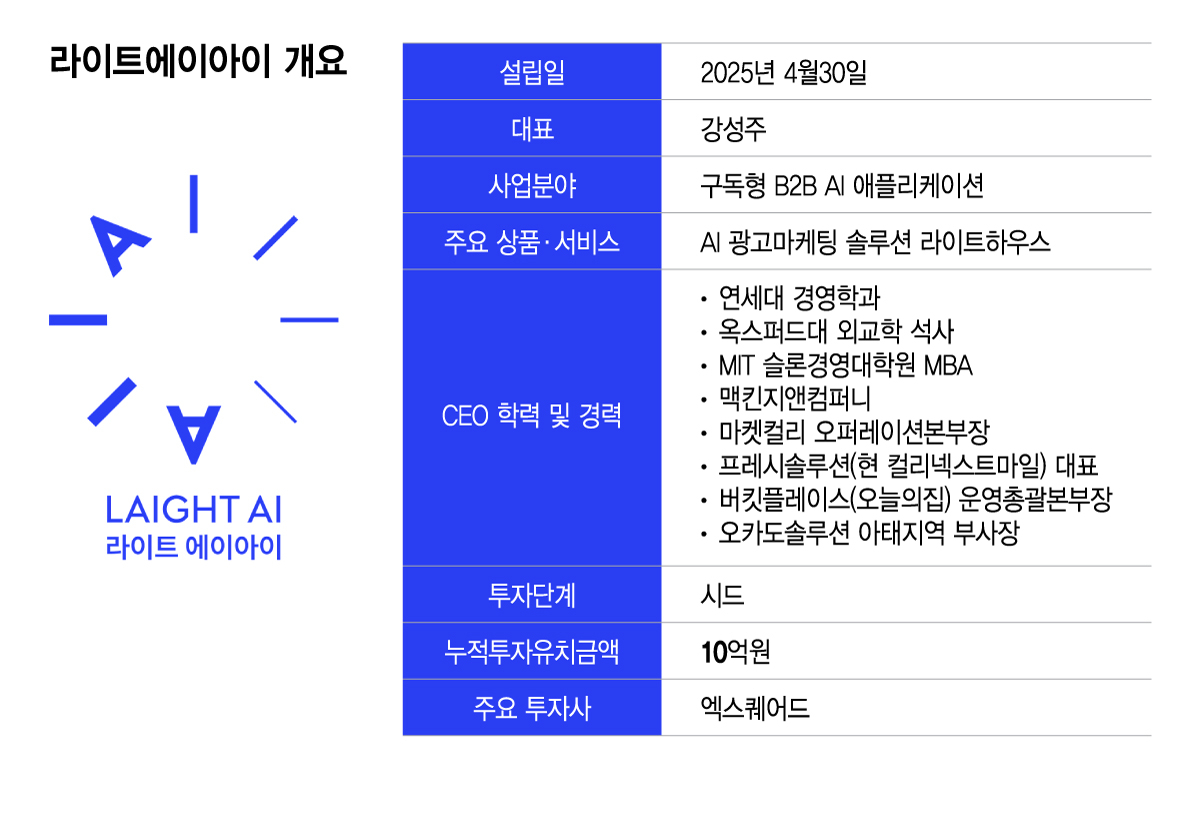
Kang (CEO) witnessed numerous cost execution processes while working at major e-commerce startups such as Market Kurly and Bucket Place (Today's Home). As CEO of Market Kurly’s logistics subsidiary, he meticulously examined even the unit cost of packaging paper boxes.
Kang (CEO) remarked, "When purchasing a single box-folding machine, we thoroughly evaluated efficiency differences compared to manual folding and calculated costs rigorously. It was surprising that existing brand advertising and marketing campaigns costing hundreds of millions of won were simply executed based on 'intuition,' hiring celebrities or influencers without detailed cost analysis."
Performance marketing offered a solution to such concerns. Every stage—from ad exposure, consumer clicks, store traffic, to payment—is quantifiable. A/B testing is also easy: platforms like Facebook and Google allow different ad creatives to be tested simultaneously to gauge reactions. Adjusting strategies swiftly to identify more efficient ads is equally straightforward.
Countless accumulating data… explanation remains a "human" task

Data acquired through performance advertising accumulates endlessly, yet leveraging it presents another challenge. There is a lack of tools to identify the root cause of why specific factors influenced marketing outcomes.
Kang (CEO) noted, "When executing digital ads, hundreds of metrics are measured and reported. Merely organizing this data and converting it into graphs has limitations. Ultimately, we see potential in explaining analysis results in 'language humans can understand' and guiding what images or videos should be created next."
This is the background behind Kang, who spent over a decade in the e-commerce industry, co-founding Light AI with Kim Woo-sang, a co-founder rich in performance marketing experience across various consumer goods. In its first year, the company handled marketing for Namyang Dairy Products and K-beauty brand Sater Day Skin, refining its solutions by working with real-world marketing data.
Marketing strategy formulation and ad creatives achieved with a single "click"
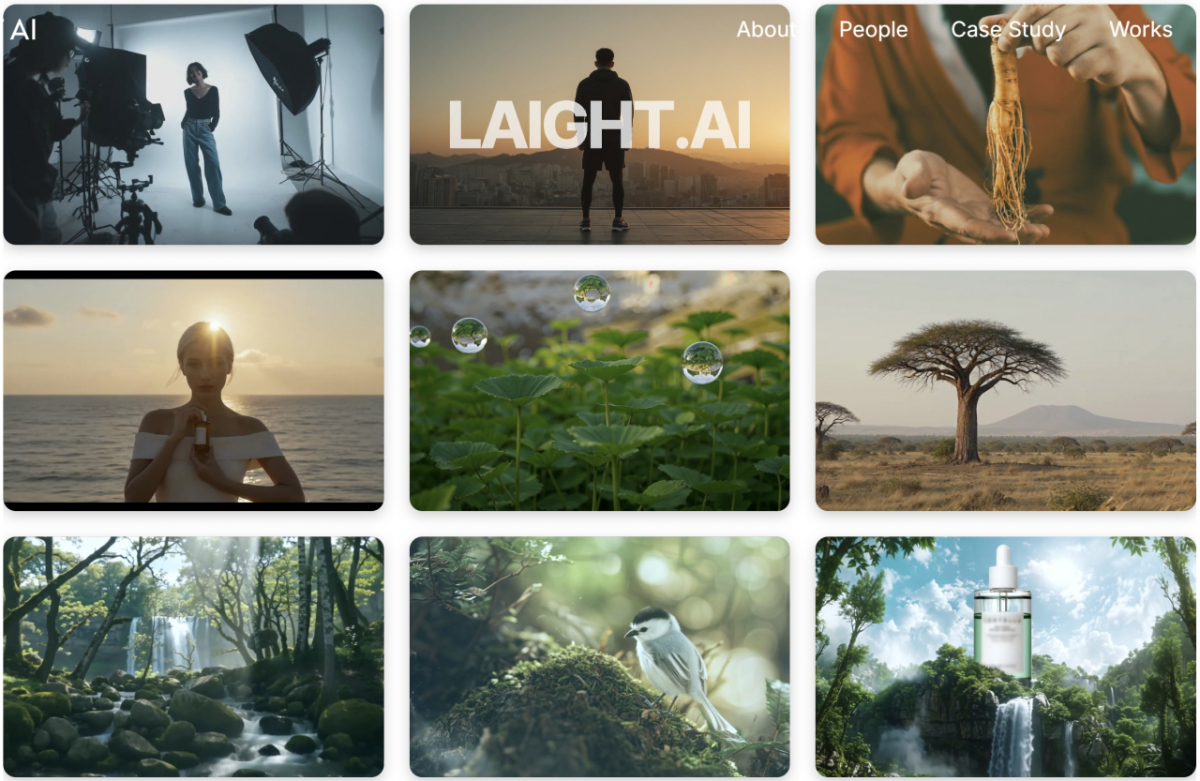
What emerged from this is Light AI’s B2B (business-to-business) AI marketing agent, "LightHouse." Created by founders with extensive industry experience, this technology instantly provides answers for data analysis, interpretation, and the next steps in marketing actions. Additionally, when users provide only basic product images, specifications, or features via simple text or visuals, LightHouse leverages its accumulated "industry trends" and "competitor ad landscape" to generate effective ad creatives.
Kang (CEO) stated, "This will greatly assist small and medium-sized consumer goods companies with limited marketing capabilities. For enterprises that previously over-invested in marketing, it can not only boost sales but also prevent waste of costs and human resources." He further emphasized, "We will enhance the solution to allow users to pre-select 'today’s marketing tasks' after completing daily data analysis."
[MoneyToday startup media platform Unicorn Factory]

 in FUTURE


