

[For more diverse corporate information on the startups mentioned in this article, please visit Unicorn Factory's big data platform 'Data Lab'.]
The domestic insurance industry is not free from the problem of 'information asymmetry.' Consumers pay premiums without knowing in detail how much their insured insurance will pay for specific diseases or surgeries. From the perspective of insurance agents, it is difficult to properly explain coverage due to complex policy terms.
Comparing and analyzing insurance products from other companies is even more difficult. While advertisements such as '100 million won paid upon cancer diagnosis' are familiar, in reality, there are many cases where insurance benefits are paid differently from the advertisement depending on detailed conditions contained in the policy terms. It is virtually impossible for consumers to grasp these differences on their own.
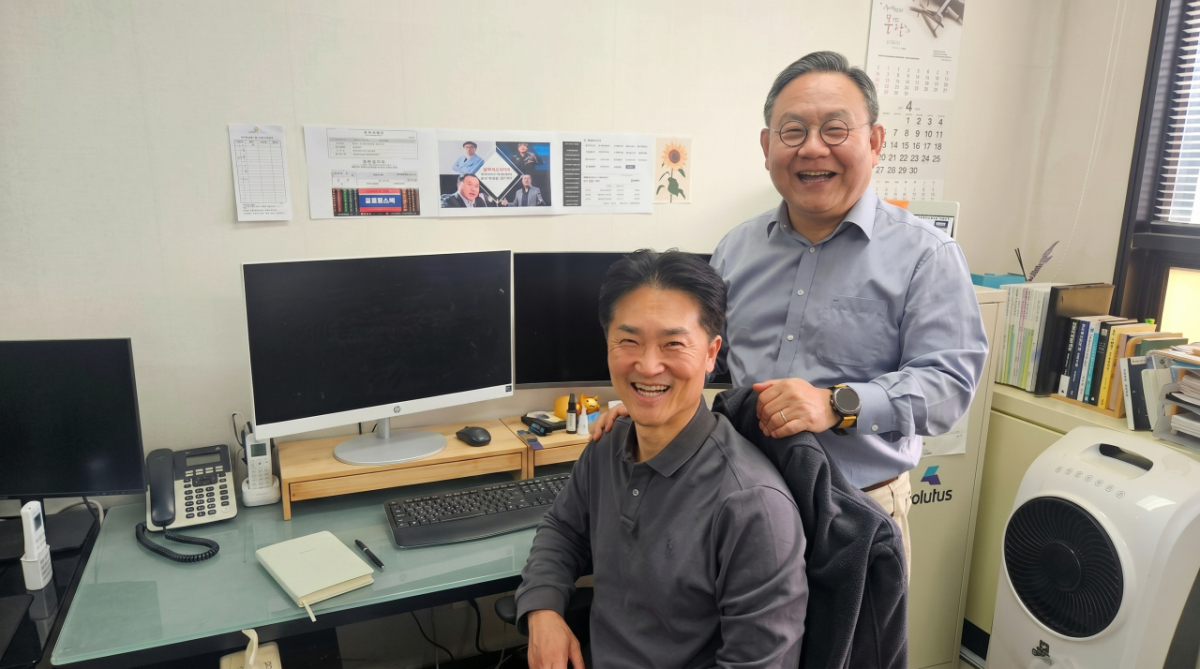
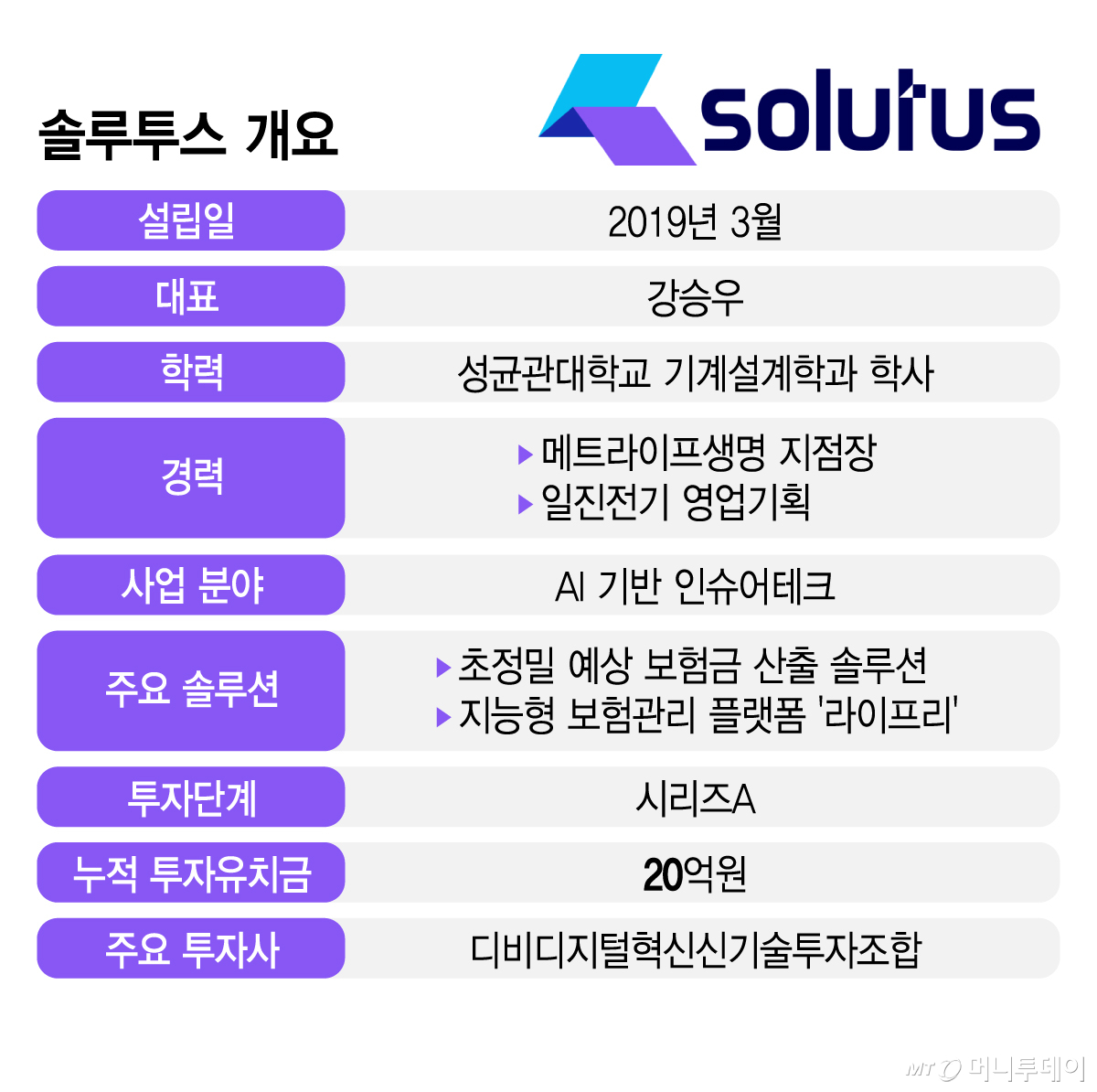
To solve this problem, a startup that has built 'insurance-specialized vertical AI (artificial intelligence)' has attracted attention. This is 'Solutus', founded by Kang Seung-u (CEO), a veteran insurance expert who started as an insurance agent at MetLife and worked his way up to manager and branch manager.
Kim Hong-il, CEO of K-Unicorn Investment, said about Kang Seung-u (CEO), "When you think of a startup, you usually imagine elites from top universities, but Kang (CEO) is different." He added, "Based on the problem awareness gained by working hands-on in the insurance industry for over 10 years, he created an insurance-specialized vertical AI."
Replacing difficult terms in insurance policies with consumer language
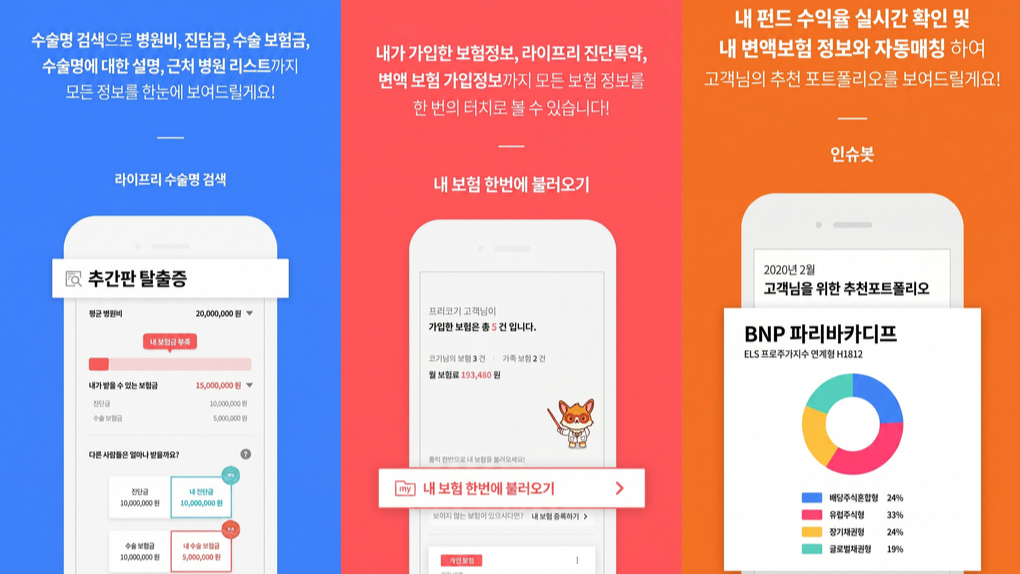
Solutus operates 'Lifree,' an intelligent insurance management platform based on big data. The service name is a portmanteau of Life (life) and Free (freedom), embodying the philosophy of enjoying freedom in life through insurance.
Lifree operates for both insurance consumers (B2C) and agents (B2B). The consumer version of Lifree is a free app service that retrieves all insured policies, allows users to check actual expected insurance benefits for diseases and surgeries, and provides a virtual claims experience.
Its most significant feature is that it uses everyday words instead of difficult terms found in insurance policy terms, allowing consumers to check the insurance benefits they can receive in advance.
Kang (CEO) said, "Existing insurance policies use difficult medical terms such as 'colonic polyp' written as 'colon benign tumor' or 'rectal polyp,' making it difficult for consumers to recognize whether they are eligible for insurance claims." He added, "Lifree matches these terms so that searching only for 'colonic polyp' immediately shows the expected insurance benefit."
Unlike existing coverage analysis that simply displays amounts like '30 million won for cancer diagnosis,' Lifree breaks down benefits by disease and surgery, such as 'how much for breast cancer' or 'how much for gastric resection surgery,' calculating precise amounts tailored to each consumer's situation.
The insurance agent version is a paid service in the form of a monthly subscription. It supports insurance agents by providing clear insurance analysis reports based on data when dealing with customers who hold complex products from multiple insurance companies, thereby enhancing the professionalism of consultations.
Entry barriers built through manual work… 66,000 'Lifree Special Clauses'
Solutus's core asset is a structured database (DB) that includes 550,000 insurance policy terms from 37 domestic insurance companies, 650,000 insurance products, 700,000 special clauses, and 13 million enrollment records, as well as approximately 32,000 disease information items based on the Disease Classification Code (KCD) and 40,000 to 50,000 surgery information items.
These were integrated and organized into 66,000 'Lifree Special Clauses' according to internal standards. Kang (CEO) emphasized, "We started the work in 2017 and trained a total of 1.92 billion pieces of big data. It went through a manual process of matching every policy term and hundreds of thousands of special clause information items one by one with disease and surgery information."
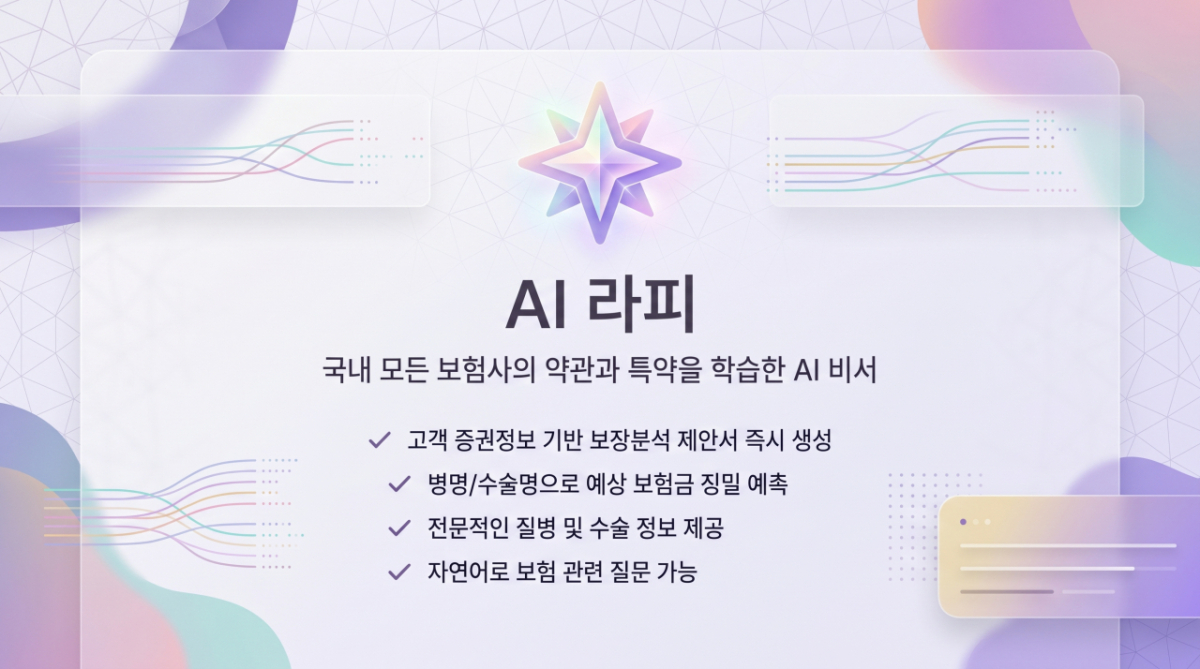
The AI that learned this structured data is Solutus's chatbot 'Lapi.' Lapi is not just a simple chatbot but an insurance-specialized AI agent embedded in Lifree, playing a central role in the service by guiding not only result values but also the specific processes and grounds for calculating insurance benefits.
Solutus is also expanding its business to provide its insurance-specialized AI engine to insurance company systems in API form. Currently, it has signed API contracts with eight major insurance companies: △Samsung Life Insurance △Samsung Fire & Marine Insurance △DB Insurance △Lotte Insurance △Hanwha Insurance △Kyobo Life Planet △Shinhan Life △Hanwha Life.
Kang (CEO) explained, "It is a method of connecting Solutus's engine to the coverage analysis programs or customer service platforms operated by insurance companies." He added, "To use an automobile analogy, insurance companies provide the already built car body (system), while Solutus supplies the powerful engine (DB) that makes the car run."
"Finding the Lost Rights of Insurance Customers"
Although Solutus has now established itself as a key player leading AI transformation (AX) in the insurance industry, the process of integrating unstructured data into standardized Lifree special clauses was not smooth.
When Kim Hong-il (CEO) asked how they endured such a long time, Kang (CEO) replied, "We received investment proposals of 100 to 200 million won from various places in the early stages but rejected them all." He explained, "If we had accepted investment, we would have been forced to create metrics, which would have prevented us from doing the work we truly needed to do (building the DB)."
He added, "Instead, we cultivated self-reliance by undertaking government support projects and were able to simultaneously build the DB and develop technology. Through this, we built a powerful entry barrier that no one could easily challenge. Later, we received strategic investment (SI) from DB Insurance."
Kim (CEO) said, "This case is one of the points that younger entrepreneurs should learn from." He pointed out, "There is no need to ignore government support policies. Flashy external investment funds often blur the essence of the business."
Solutus plans to continuously enhance Lapi as its insurance-specialized AI engine. Kang (CEO) stated, "Currently, we operate by overlaying our data on big tech's LLMs (large language models)." He added, "Insurance companies are wary of such cloud structures. We will directly embed our own engine, Lapi, within the insurance companies."
Global expansion is also gaining momentum. He said, "LLMs themselves are not dependent on language." Regarding the first entry point, he noted, "We are looking at Vietnam. Since our investor DB Insurance has already expanded to Vietnam, our goal is to conduct market tests there, expand into Southeast Asia, and establish ourselves as a global standard."
Kang (CEO) said, "For those who have already purchased insurance or will do so in the future, we aim to make it common sense that 'everyone should check through Lifree.'" He added, "We will build a new sales paradigm that establishes a deep trust relationship between agents and consumers."
He further stated, "Insurance is an intangible product, but when an accident occurs, it must be a useful presence that appears like a ghost to provide help." He concluded, "By digitizing the entire process from insurance contract signing to review and payment, we will create a world that 'finds the lost rights of customers.'"
[MoneyToday startup media platform 'Unicorn Factory']

 in FUTURE


