

[For more diverse corporate information on startups mentioned in this article, please visit Unicorn Factory's big data platform Data Lab.]
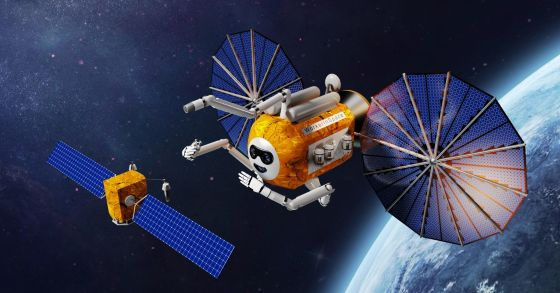
"The era is here where the surge in space objects shortens satellite lifespans due to accident risks and fuel depletion. Just as cars were discarded after accidents in the 1910s but are now commonly towed and repaired, a similar transformation is just beginning in space."
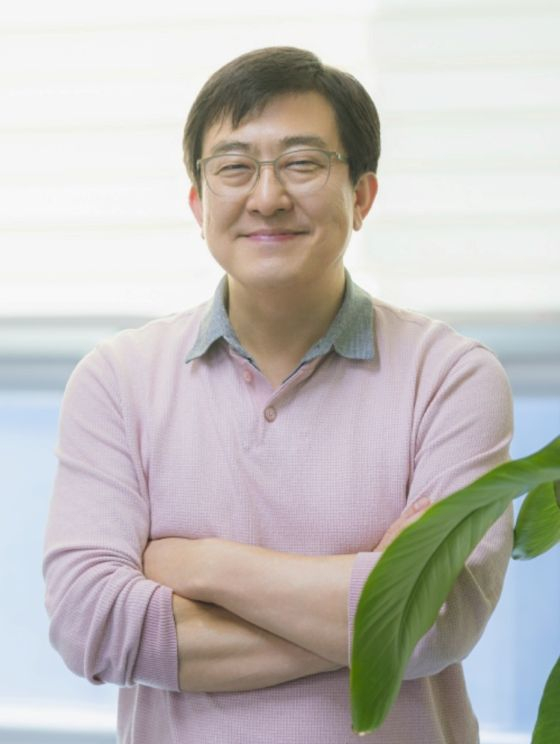
Gimhae-dong Walker Space CEO (Kyungnam National University Aerospace__) frequently uses this 'car analogy' when explaining the space industry. He became an entrepreneur at age 52 as a latecomer. Starting with the development of the control system for Korea's first practical satellite, 'Arirang-1', he worked for 23 years at the Korea Aerospace Research Institute (KARI) as a planetary exploration technology developer, satellite ground station engineer, and space debris researcher. In 2022, he moved to academia but returned two years later to steer his life's course in Jinju, Gyeongnam, establishing Walker Space.
The startup idea originated from China's 2007 anti-satellite missile test. Kim (CEO) said, "I began considering this business concept after the incident where China launched a missile from Earth to destroy an artificial satellite." He added, "Rather than eliminating space debris, I felt it was more urgent to ensure satellites do not become debris themselves and are used for as long as possible."
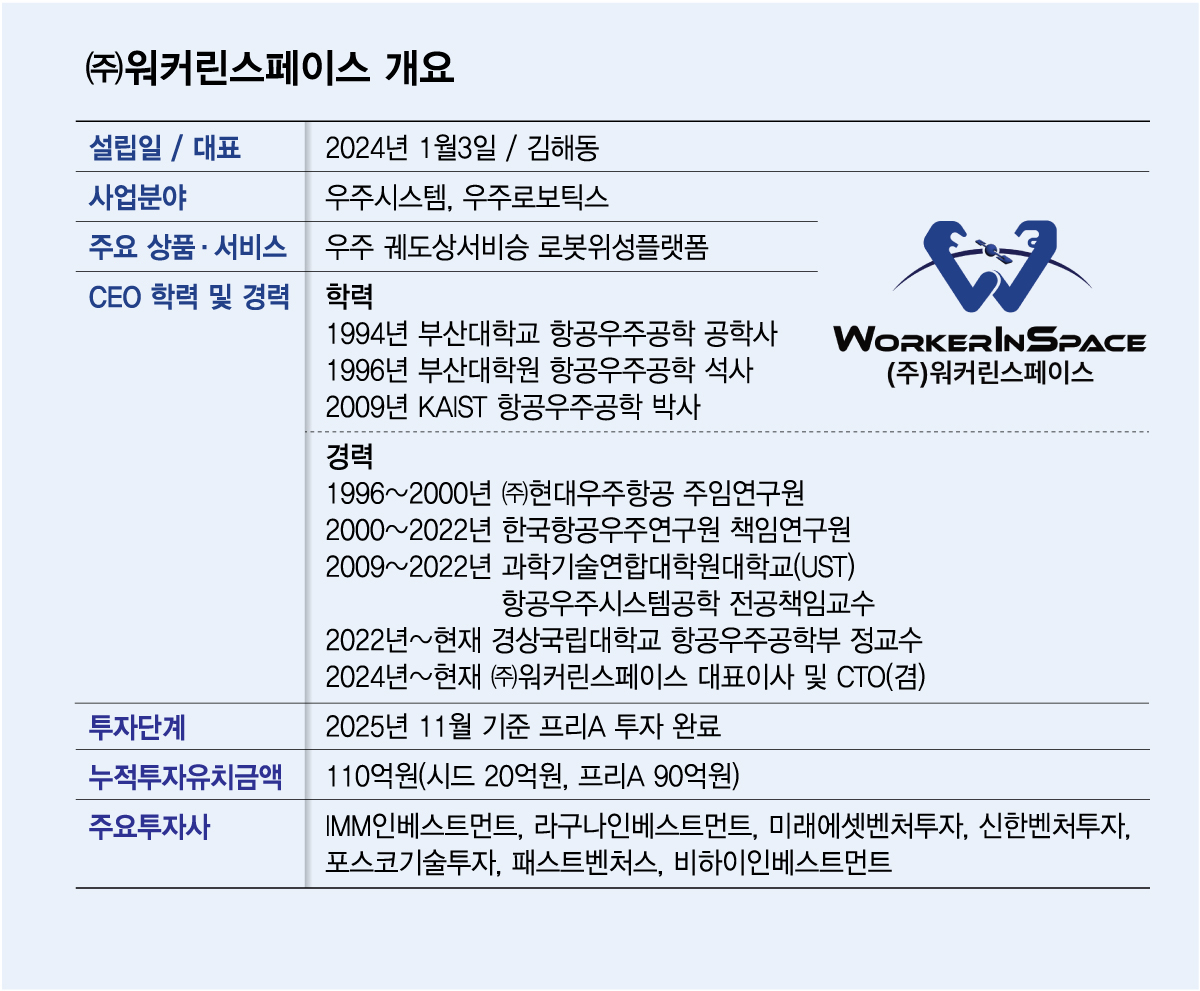
Walker Space is Korea's only company specializing in On-Orbit Servicing (OOS) and space manufacturing, assembly, and production. Simply put, it is a maintenance station in space. The core of its business is providing 'satellite AS' services in space, such as refueling satellites, repairing or replacing faulty components, and deorbiting end-of-life satellites for disposal.
Explaining the background behind this venture, Kim (CEO) stated, "As the space environment has become more complex, the likelihood of satellite failures has increased, and fuel consumption has also risen during maneuvers to avoid debris." He continued, "For these reasons, I believe there is significant growth potential in businesses that refuel and repair satellites in space." He further added, "In fact, Northrop Grumman, which successfully commercialized the world's first on-orbit service, receives 190 billion won annually for extending the lifespan of its Intelsat satellite by five years. If a satellite worth hundreds of billions of won can be saved, surely spending tens of billions is justified."
The core technology is 'VEROS', a multi-purpose robot satellite equipped with dual-arm robotic arms. Using AI (artificial intelligence) and digital twin technologies, it can perform refueling, repair/component replacement, orbital towing, and inspection all within a single robot satellite.
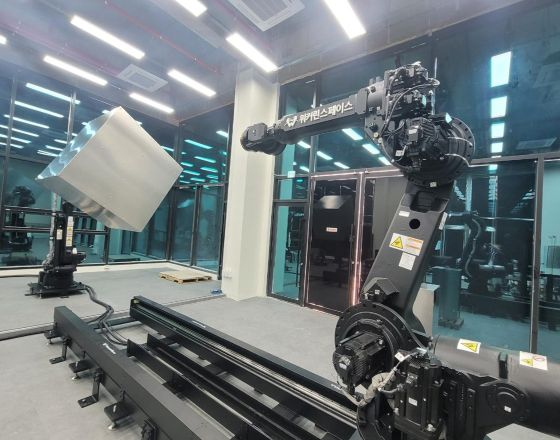
Walker Space opened a research institute covering approximately 260 pyeong in Jiphyeon-dong, Sejong City. In May last year, it became the first private Korean company to complete a 'three-dimensional microgravity simulation ground test facility'. Starting this year, it will begin full-scale production of flight models (PFM), with plans to complete the commercial demonstration satellite 'VEROS-1' by 2029 and conduct actual technology verification in the space environment.
Walker Space has sequentially secured contracts including: Hanwha Systems' ultra-small greenhouse gas satellite development project; Korea Automotive Technology Institute's localization of rover drive components for planetary exploration; Aerospace Agency SBIR (Small Business Innovation Research); Ministry of SMEs and Startups Tips and Deep Tech Challenge; and Space Agency Space Challenge refueling technology development projects. In May last year, it also signed a Letter of Intent (LOI) with KT SAT.
This technological capability and business expansion are supported by a solid management team. Alongside Kim (CEO), the executive team includes Technical Advisor Baek Hong-ryul (former KARI Director and former Agency for Defense Development Director), VP&CSO Kim Dong-wan (former Hanwha Aerospace__), all of whom are experts in defense and space fields.
However, the investment-raising process after company establishment was not smooth due to the unfamiliar business model. Kim (CEO) recalled, "From May to August 2024, for three months, I worked alone without any employees in Jinju. After finishing classes, I would pack my bag and travel back and forth between Seoul Gangnam's Teheran-ro to conduct investor relations (IR) presentations." He noted, "Investors responded well to familiar items like launch vehicles, CubeSats, and ultra-small satellite data processing, but the atmosphere would immediately drop when I introduced in a 30-page IR document that building one servicing satellite required a project costing 100 billion won. Ultra-small satellites only cost tens of billions, so suddenly changing the unit made everyone hesitate."
As he was growing exhausted after three months, he attended the formal IR session of Laguna Investment, which was reviewing seed funding, and achieved the expected results. He reflected, "Laguna means 'oasis in the desert.' If that day's investment had not materialized, I truly would have considered quitting."
He determined that a large-scale VC (venture capital) firm was necessary and contacted IMM Investment. Future Asset Venture Investment, Shinhan Venture Investment, and POSCO Technology Investment subsequently joined, securing follow-on funding. The cumulative investment amount currently stands at 11 billion won.
The company plans to proceed with Series A fundraising of at least 20 billion won in the second half of this year. It has included Series B in 2028 and an IPO in 2030 on its roadmap. Separately, it also plans to secure additional funding of approximately 50 billion won through government R&D (research and development) projects.
Kim (CEO) stated, "While Northrop Grumman satellites utilize a gripper method, we will combine humanoid robotic arm technology with satellites, enabling more sophisticated operations." He added, "This is a venture I started with confidence. My first goal is to demonstrate that the business model I have researched for 10 years can actually become a reality."
[MoneyToday startup media platform Unicorn Factory]

 in FUTURE


