

Korean companies will be able to enter China independently without forming joint ventures with Chinese partners. Korean travel agencies will also be allowed to sell travel packages to China-based Chinese and foreign residents for trips to Korea.
Korean films and online games will be subject to the principle of non-discrimination. The move effectively marks the lifting of China's ban on Korean cultural content, known as the Hallyu ban.
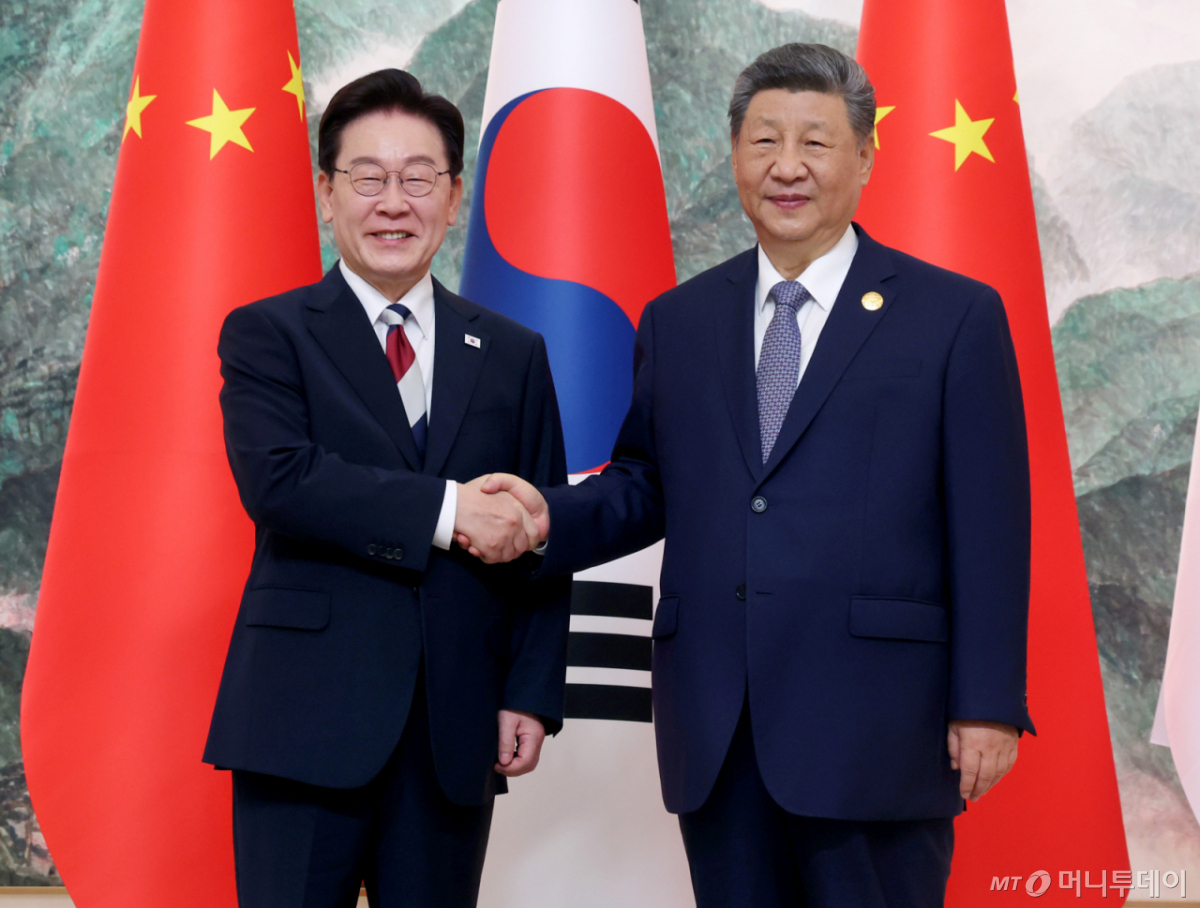
The Ministry of Trade, Industry and Energy said on Wednesday that South Korea and China had declared the conclusion of substantive negotiations on the follow-up talks for the services and investment chapters of their bilateral free trade agreement (FTA), on the sidelines of the Asia-Pacific Economic Cooperation (APEC) summit.
The agreement is significant because it raises the level of market opening and regulatory standards in the services and investment sectors beyond those set out in the original FTA, creating an institutional foundation for expanding cooperation between the two countries. Bilateral trade in goods stands at about $270 billion, while services trade amounts to around $38.8 billion.
Regarding access to China's K-content market, Beijing pledged to grant Korean companies most-favored-nation treatment in areas such as films and games, ensuring they are not treated less favorably than companies from third countries.
On procedural matters, China also agreed to apply the principle of non-discrimination in pre-screening reviews of content, including online games and films. These provisions are being included in a trade agreement with China for the first time.
The two countries also agreed on an annex on audiovisual co-production, expanding the scope of joint productions beyond films, which were the only category covered by the original FTA, to include dramas, animation, variety shows and documentaries.
The agreement also creates opportunities for Korean companies to enter China's outbound tourism market. It stipulates that Korean travel agencies established in 23 regions across China may arrange overseas travel for Chinese nationals and foreign residents living there.
This will allow Korean travel agencies to recruit Chinese group tourists directly and sell a range of independent travel packages. They will be able to develop new products linked to K-pop, beauty and food, as well as tours highlighting the distinctive attractions of different regions in Korea.
In the retail sector, China agreed to allow Korean companies seeking to operate more than 30 stores in the country to do so independently, without forming joint ventures with Chinese businesses. This is expected to give Korean retail, fashion and beauty companies opportunities to expand their local presence while maintaining their K-brand identities.
In construction, the agreement removes restrictions under the original FTA on the types of construction projects Korean companies can participate in, opening all projects to them. The change is expected to expand opportunities for Korean businesses in China's construction market, which is worth about $4 trillion annually.
In financial services, the two countries agreed to apply future most-favored-nation treatment. In legal services, they agreed to expand the regions where Korean law firms can establish offices and work jointly with Chinese law firms beyond the Shanghai Free Trade Zone to include the Tianjin Free Trade Zone, Qianhai Free Trade Zone and the entire Hainan Free Trade Port.
In return, South Korea also pledged to open several sectors, including legal services, retail and audiovisual content, to China at a level beyond that of the original FTA, within the scope of domestic laws and existing regulations.
For example, the agreement allows business partnerships between Korean and Chinese law firms and incorporates existing regulations in areas not covered by the original FTA, including construction equipment leasing and rental services and film screening services.
"With the conclusion of these follow-up negotiations, we have established a stable institutional foundation for Korean companies to enter the Chinese market in areas where they have strengths, including K-content, tourism, finance and retail," Trade Minister Kim Jung-kwan said. "We hope this will further expand services trade and investment between the two countries and serve as an opportunity to take Korea-China economic cooperation to a new level."

 in ECONOMY
