

[For more diverse information on startups mentioned in this article, visit the Unicorn Factory Big Data Platform 'Data Lab'.]
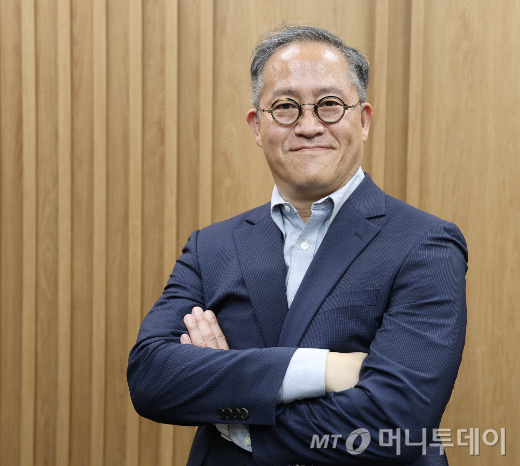
In the New Space era, where rockets are launched into space every 1–2 days, Choi Young-wan, CEO of CSO (Cognitive Space Optics), explained that humanity's relentless drive to reach space stems from "the need to better understand Earth."
"Many people associate the space industry with launch vehicles or satellite platforms. While these form the foundation of the industry, they are merely infrastructure for delivering value. Customers do not pay to own satellites; they pay to better understand Earth and make informed decisions. Agricultural companies want to understand crop conditions, port operators seek insights into logistics flows, and governments aim to grasp disaster and security situations more rapidly."
Choi (CEO) believes that 'observation' lies at the starting point of this value chain. For the past 35 years, he has dedicated himself to satellite cameras. At KAIST's Satellite Research Institute and Setrak-AI, he designed 17 satellite cameras, including Our Star, DubaiSat, and KalifaSat. Since founding CSO in 2023, his company has developed ultra-small, high-resolution optical cameras capable of being mounted on everything from CubeSats to small satellites.
"Satellite cameras are also consumer goods": CSO's strategy
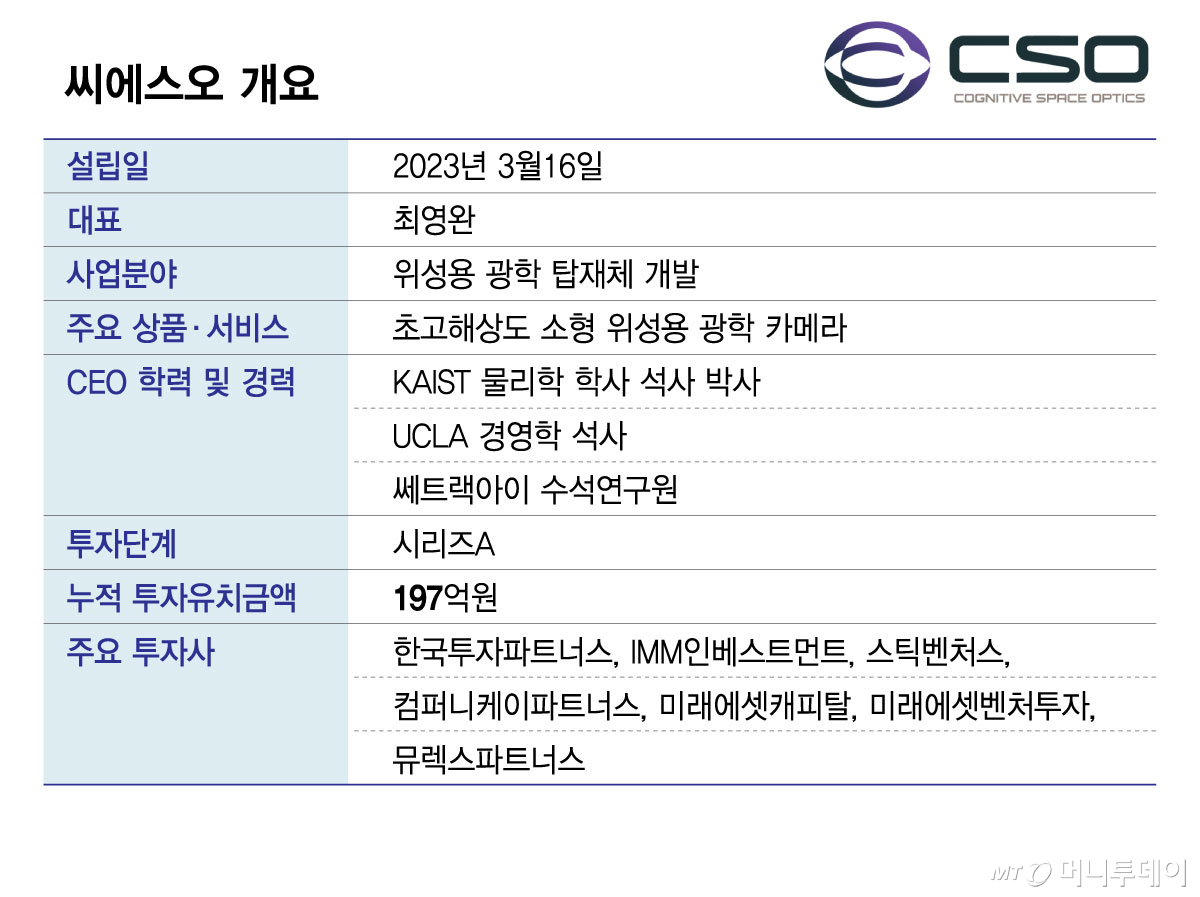
Traditional satellite optical cameras were large, highly reliable systems requiring dedicated launch vehicles. CSO has adopted a camera strategy focused on rapid deployment: quick launches, easy replacement upon failure, and model upgrades when performance improves. The solution lies in optimizing size and weight for 'ride-share' missions—where satellites hitch rides on other spacecraft—along with a 12–18 month delivery timeline.
Choi (CEO) explained, "Companies like Setrak-AI or Airbus produce long-life, top-quality video cameras. In contrast, CSO develops 'commercial-grade high-performance cameras' with comparable performance. Unlike consumer goods that are used quickly and discarded, our cameras offer superior practicality by enabling customers to rapidly acquire large volumes of the information they need."
CSO's product lineup consists of three main models: the CSO-20 for CubeSats, weighing 9.5 kg with 1-meter resolution; the CSO-60 for small satellites, targeting 30 cm resolution; and the CSO-110, aiming for sub-10 cm resolution. The core technology is a four-mirror optical design based on proprietary patents. By precisely arranging multiple mirrors, it achieves performance close to that of large telescopes within a compact volume.
Choi (CEO) noted, "Following the mass retirement of optical experts during the pandemic and the defense industry's shift toward synthetic aperture radar (SAR) demand, only a handful of companies—ourselves, Venter, Airbus, and Setrak-AI—retain the capability to design high-resolution optical cameras from scratch. While structural design, thermal control, assembly, and calibration are handled by other teams, I personally remain responsible for all optical design work."
6 million USD contract with Kazakhstan; Nuri rocket's 5th launch… Validation begins
Market validation has already begun. CSO signed a contract worth approximately 6 million USD (about 90 billion won) with Ghalam, under Kazakhstan's Space Agency, to supply six satellite cameras for agricultural and forestry observation. This marks the second satellite optical camera export achievement by a Korean company, following Setrak-AI. The Kazakhstan project carries significance beyond mere supply; it serves as a stepping stone toward expanding domestic control over core technologies—from optics to detectors—through the development of next-generation Earth observation cameras.
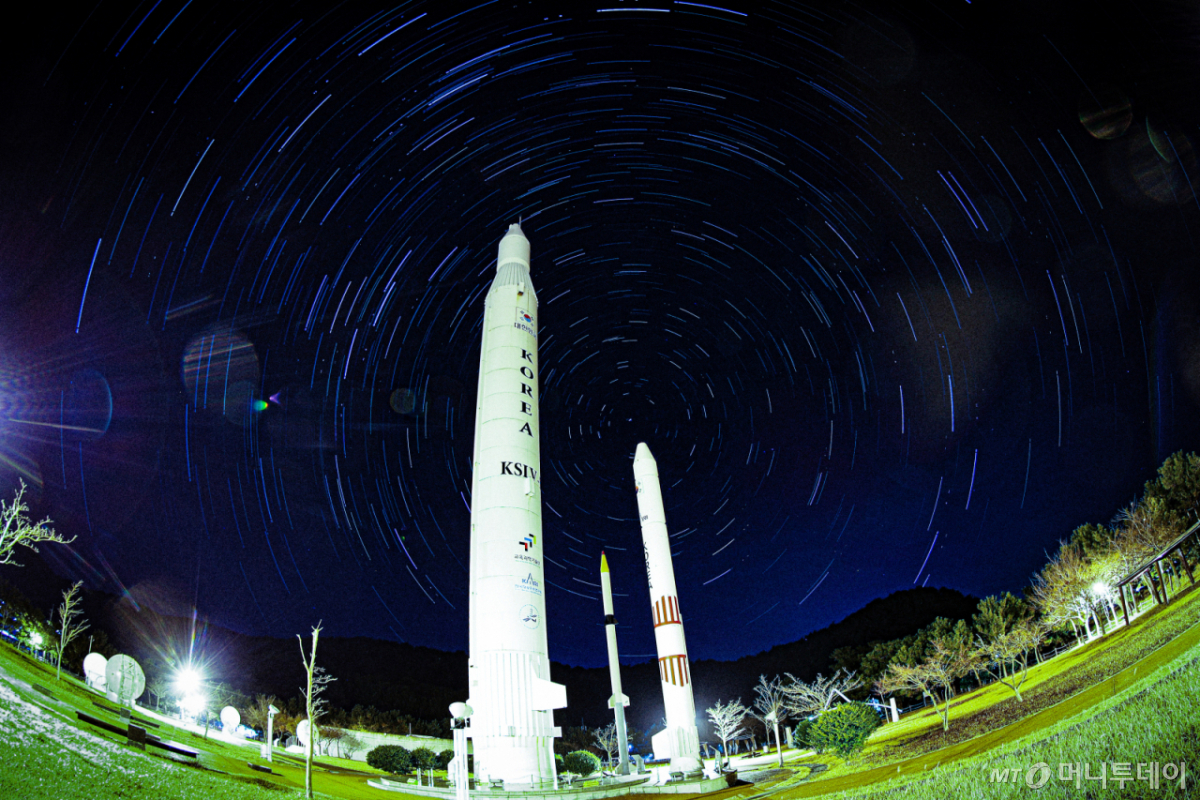
Space validation is imminent. CSO will deliver its CSO-20 camera for Daejeon City's ultra-small satellite 'DaejeonSat,' scheduled for launch aboard the 5th Nuri rocket in the third quarter of this year. The only remaining step is to demonstrate that design capabilities proven on the ground yield identical results in actual orbit. If the camera withstands launch shock, achieves orbital insertion, maintains focus amid temperature fluctuations, and successfully transmits data, it will secure 'Flight Heritage'—a key competitive advantage globally recognized in the space industry.
Choi (CEO) stated, "Successful validation on DaejeonSat means high-resolution imagery can be obtained not only through expensive, large satellites as before, but also via cost-effective platforms like ultra-small satellites."
"Space data is a mine… Selling 'decision-making capability' beyond cameras"
Ultimately, CSO aims to become an "Earth Intelligence Company," moving beyond merely selling cameras and the data they collect. Choi (CEO) explained, "Satellite data is like raw ore mined from a mine. Just as mined ore must be sorted into useful and useless portions, satellite-collected data must be filtered before being transmitted to Earth." He added, "What matters is not how much is extracted, but how much valuable information is derived. From the initial design stage, we configure optical systems to generate data that AI can easily analyze."
The future CSO envisions aligns with Elon Musk's concept of a 'space data center.' In this model, each satellite carries AI computing capabilities; unprocessed data is relayed to a data center in orbit, where only necessary information is extracted and transmitted back to Earth.
Choi (CEO) emphasized, "I envy someone who owns only a simple point-and-shoot camera but captures excellent photos at precisely the right moment more than someone with an expensive Leica camera. Similarly, CSO aspires not merely to capture clear images, but to become a company that delivers the most valuable information exactly when customers need it most."
[MoneyToday startup media platform 'Unicorn Factory']

 in FUTURE


