

[For more diverse corporate information on the startups mentioned in this article, visit Unicorn Factory's big data platform Data Lab.]
The padlock icon to the left of an internet browser's address bar. It refers to an SSL (Secure Sockets Layer) certificate that encrypts the connection between a website and its users, preventing information leaks and data tampering or alteration.
This certificate became a de facto necessity for virtually all websites after Google began displaying "Not Secure" warnings on sites without HTTPS in its Chrome browser starting in 2018. More than 99% of domestic websites and over 85% of global websites now operate under SSL environments.
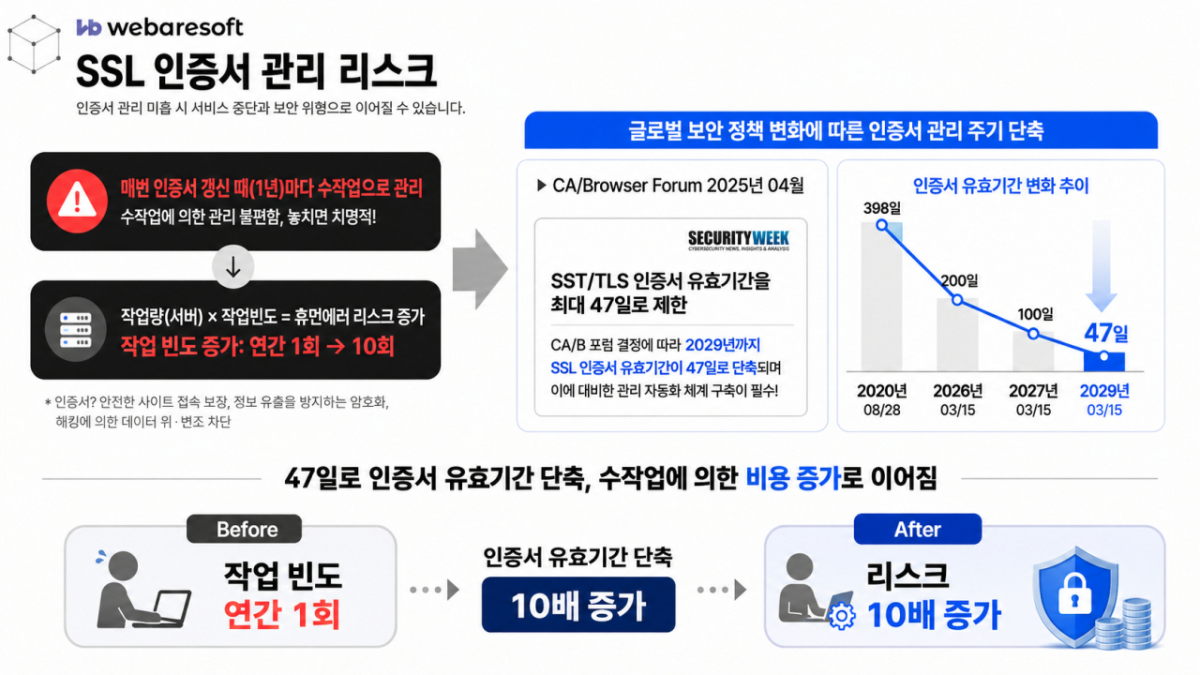
While this small indicator goes unnoticed by users, it has become a major headache for corporate IT managers. This is because the validity period of SSL certificates has been drastically shortened. The global certification authority and browser consortium known as the CA/Browser Forum resolved in April last year to gradually reduce certificate validity periods.
As a result, the certificate renewal cycle, which previously required only an annual update, will be reduced to 100 days by 2027 and further shortened to 47 days starting in 2029. While manual management of certificates was once feasible, establishing an automated system has now become essential.
A domestic startup seized this change as a business opportunity. Jang Yeong-hwi (CEO), formerly of TmaxSoft, co-founded Webearsoft in June 2021 with two researchers he had worked alongside.
18 years specializing in middleware... "API management determines corporate fate"
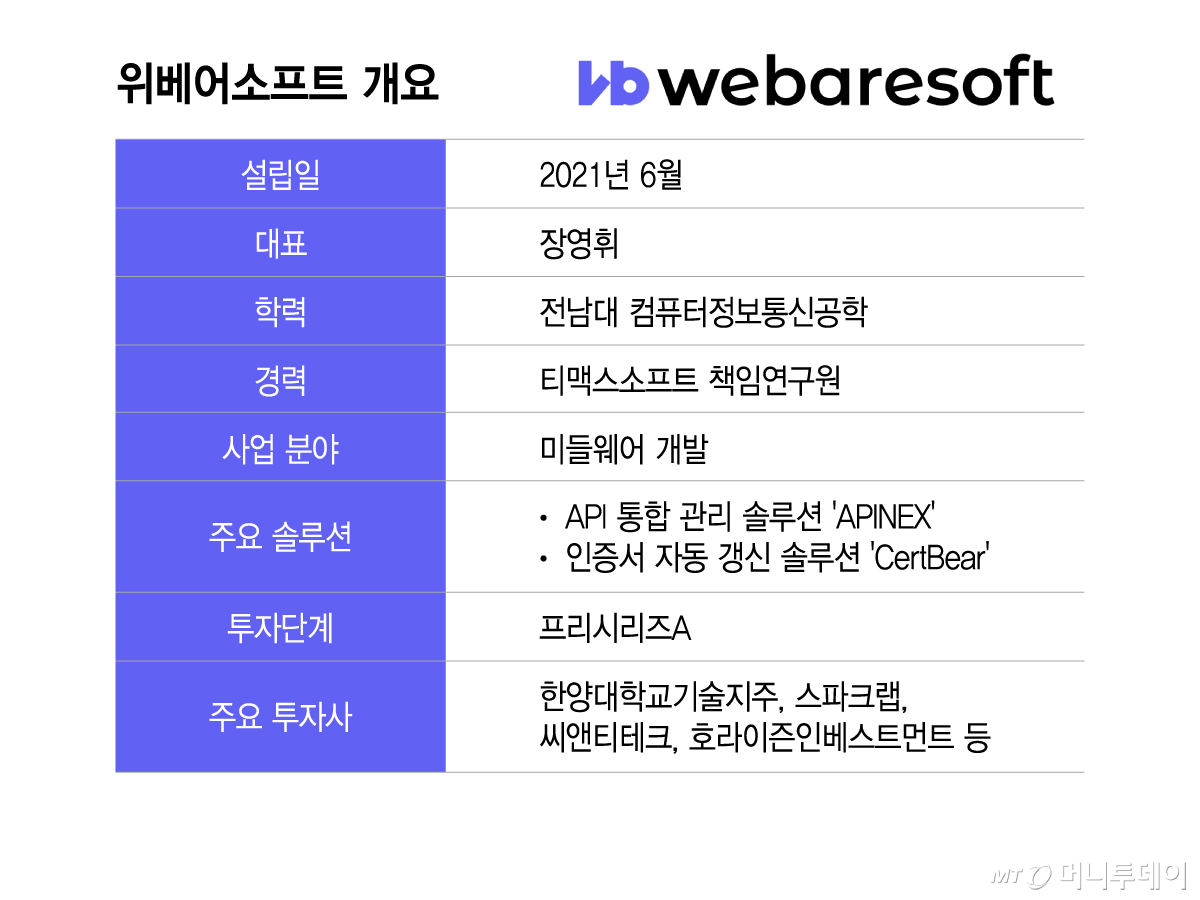
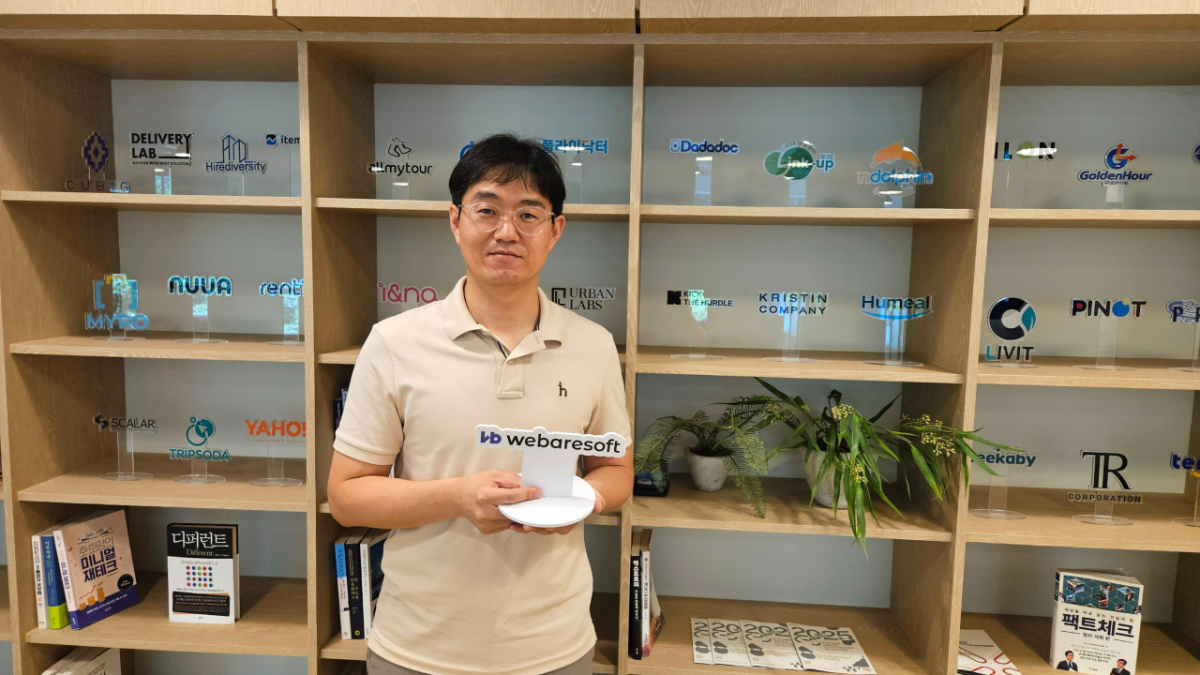
Jang Yeong-hwi (CEO) has 18 years of experience in middleware development. He spent over 13 years at TmaxSoft's Middleware Research Division and led the development of the web server product 'WebtoB,' which was selected as a KOTRA Next-Generation World-Class Product in 2020.
The company name Webearsoft is a combination of "web" and "middleware." Jang (CEO) stated, "Middleware is the layer that connects hardware, operating systems, and applications. It has traditionally been an area handled only via command lines on black console screens." He added, "We aimed to make it easily accessible to everyone through the web."
The company's first product is the API gateway 'APINEX.' He explained, "APIs function like gateways connecting different programs. All processes, such as retrieving location data from delivery apps or fetching account information from banking apps, are carried out via APIs."
He further noted that with the advent of the AI era, the importance of APIs has grown even more. Unlike most domestic products that use Java as their programming language, APINEX differentiates itself by using 'Rust,' a language renowned for its superior memory safety and security.
Jang (CEO) remarked, "Rust is not easy to learn; developers must spend several months studying it. However, it is a language whose stability has been verified by global big tech companies and even recommended by the U.S. White House." He added, "We accepted this learning curve for the sake of efficiency and security."
He continued, "How stably you manage APIs determines a company's fate. When outages occur, questions arise about who is responsible and how to resolve them. We provide foundational technology that solves exactly such problems."
Overcoming manual limitations, cutting certificate management costs by 80%
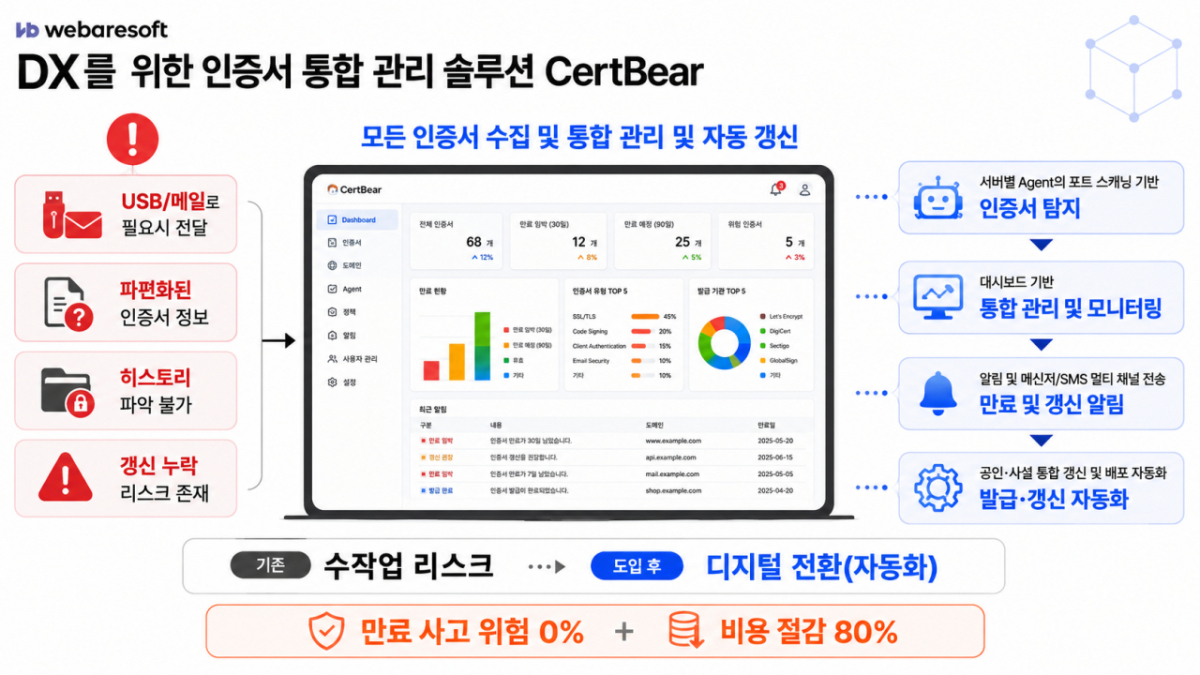
Webearsoft's key battleground is its second product, 'CertBear.' This solution automatically detects, renews, and deploys SSL certificates. Market demand for it has exploded since the second half of last year, as most companies still handle this renewal process manually.
Jang (CEO) warned, "Missing a renewal cycle can completely block access to websites. In fact, one credit card company suffered losses worth tens of billions of won when payments halted due to certificate expiration." He added, "When public institution websites go offline, it cannot simply end with an apology message."
He explained, "For a company managing 100 servers, five people must dedicate a full month for each renewal. The labor cost alone amounts to 50 million to 100 million won. If the renewal cycle shrinks to 47 days, this cost could rise to 500 million won annually. By adopting CertBear, only maintenance costs are incurred, saving over 80% in labor expenses."
Although competing products have been launched, he emphasizes that their technical starting point differs. He stated, "Most solutions currently on the market are created by certificate-issuing institutions, focusing on 'easy issuance.' In contrast, we started from technology developed for building web servers where certificates are applied, giving us a fundamentally different perspective."
CertBear fully automates the certificate renewal and deployment process. An agent installed on servers scans ports to locate scattered certificates and monitors the overall status via a dashboard. It sends expiration notifications to responsible personnel through messaging apps and SMS, handling everything from issuance to deployment for both public and private certificates.
Jang (CEO) said, "The market response to CertBear has been intense." He added, "In just the past two or three months, we received 83 inquiries about adoption. Inquiries come in at a rate of two or three per week across all industries, and revenue generation has officially begun."
The target market size is measured in trillions of won. He projected, "There are over 2,000 listed companies on KOSPI and KOSDAQ alone. Including mid-sized and SMEs (small and medium-sized enterprises), the number exceeds 10,000 domestically. If each client spends an average of 50 million to 100 million won, this could become a trillion-won market."
"Focusing on major references this year... preparing for Series A next year"
Webearsoft's growth over its six-year history has not been smooth. Jang (CEO) recalled, "It wasn't until our fifth year that we gained client references, leading companies to invite us to bid. Before that, we only received business proposals." He shared, "We even had no money to pay salaries and sold wedding rings and diamond rings."
Having completed a pre-Series A funding round last April, Webearsoft is preparing for a Series A round early next year. This year, the company plans to focus on securing major references rather than simply increasing revenue volume.
Global market expansion is already underway. Targeting Southeast Asia as the primary market, the company is conducting PoC (proof of concept) projects with Thailand's National Police Agency and Indonesia's National Police Agency, and has also completed a U.S. patent application.
Jang (CEO) stated, "Overseas, technical capability and stability matter more than whether a product is domestic or foreign." He added, "Since we designed our architecture with the global market in mind from the start, we will gradually expand into North America and Europe."
His ultimate vision is AI agent infrastructure. Beyond API management, he is preparing for the 'A2A (Agent to Agent)' era of communication between AI agents. The goal is to build a digital nervous system in an age where AI has become part of daily life.
Jang (CEO) explained, "When AI agents need to exchange information with dishwashers or humanoid robots and coordinate household tasks, middleware that consolidates and securely connects their complex communications will be absolutely necessary." He concluded, "This is the vast market we aim to enter."
[MoneyToday startup media platform 'Unicorn Factory']

 in FUTURE


