

[For more diverse corporate information on the startups mentioned in this article, please visit Unicorn Factory's big data platform 'Data Lab'.]
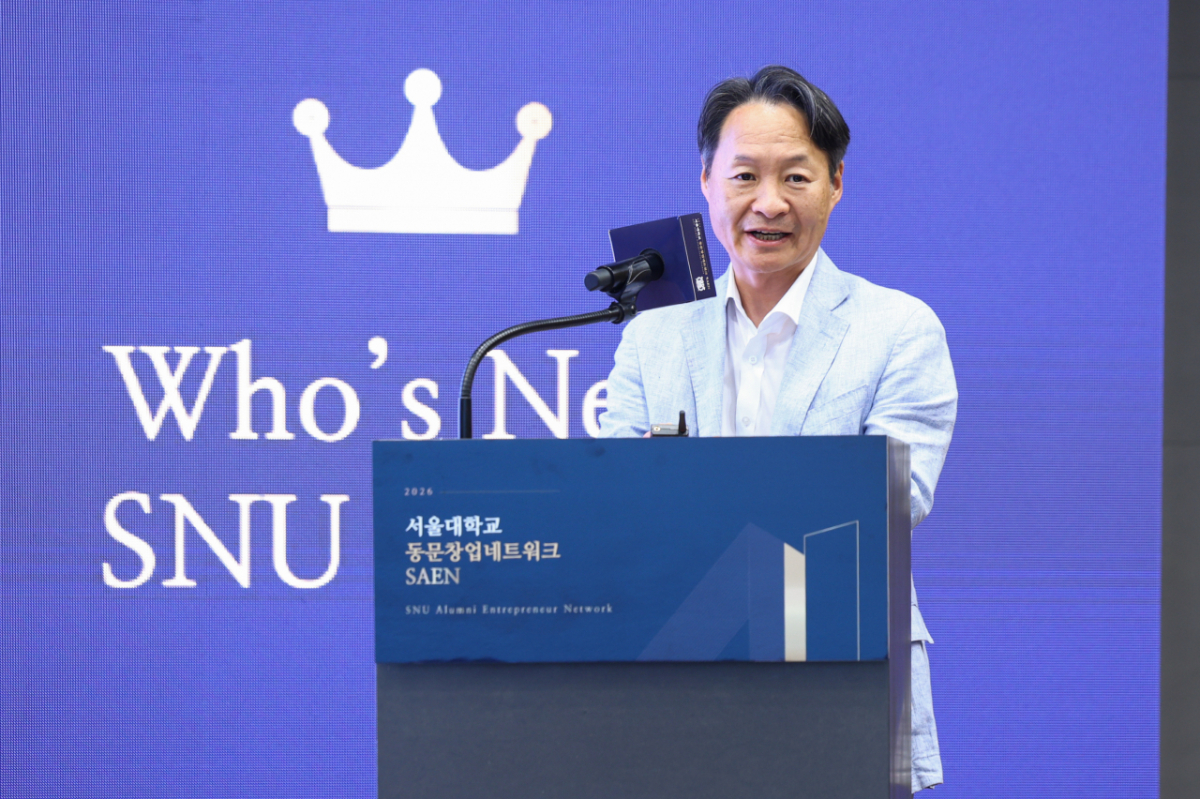
"The Seoul National University Startup Support Center has served as the command tower, with self-organized councils established across colleges and research institutes engaging in regular exchanges and holding their own competitions. As a result, promising companies directly identified and verified by each institutional investor have now taken the stage to compete today."
Kang Geon-wook, Director of Seoul National University Startup Support Center, emphasized these achievements at the '2026 Seoul National University Alumni Startup Network (SAEN)' held on the 2nd at the Seoul National University Global Engineering Education Center. He explained that beyond the self-reliant startup model that previously relied solely on individual entrepreneurs' capabilities—like Naver and Kakao—the university is now systematically nurturing future unicorns (private companies with a corporate valuation of over 1 trillion won) by organically combining its foundational research outcomes, alumni networks, and capital. The event, sponsored by the Gwanak Economic Association, was attended by approximately 200 people, including alumni entrepreneurs, venture capitalists (VCs), and prospective startup teams.
The event began at 3 p.m. with one-on-one mentoring sessions between VC investment screening experts and prospective startup teams. This was followed by welcome remarks from Kim Ju-han, Seoul National University Executive Vice President for Research; congratulatory speeches by Mok Seung-hwan, Director of the Startup and Venture Innovation Office at the Ministry of SMEs and Startups; an introduction to Seoul National University's startup status and councils by Kang Geon-wook, Director of the Startup Support Center; a company presentation by Cha In-hwan of Gi Sul-ji-ju (CEO); and a keynote address by Jeon Byeong-gon, CEO of FriendlyAI.
The highlight of the event was the final IR (company presentation) program 'Next SNU Crown,' where five deep-tech startups that passed through recommendations from 13 Seoul National University-affiliated startup support institutional investors and rigorous document screening took the stage.
Evaluation was conducted across five categories—problem recognition and market viability, originality and feasibility of business ideas, suitability of startup team composition, growth potential and commercialization strategy, and connectivity with Seoul National University and potential contribution to the ecosystem—each worth 20 points for a total of 100. Final rankings were determined by combining 70% from judges' evaluations and 30% from on-site audience voting.
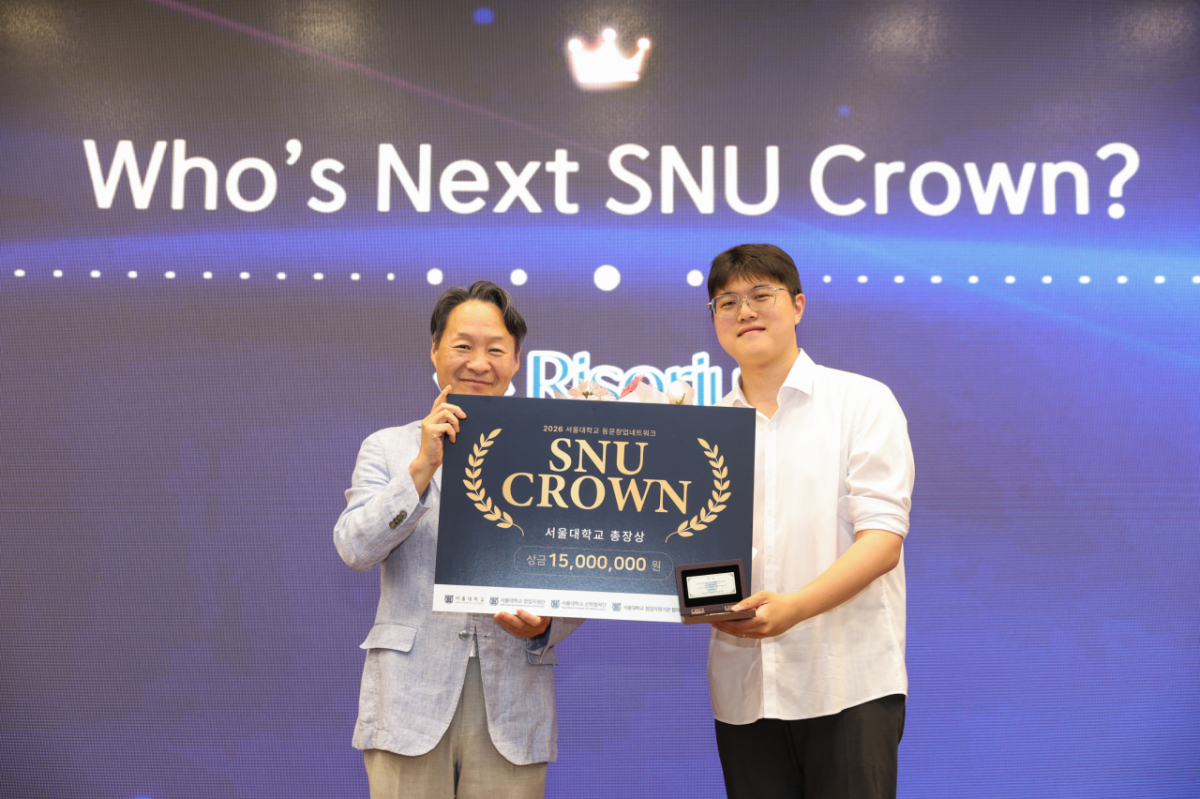
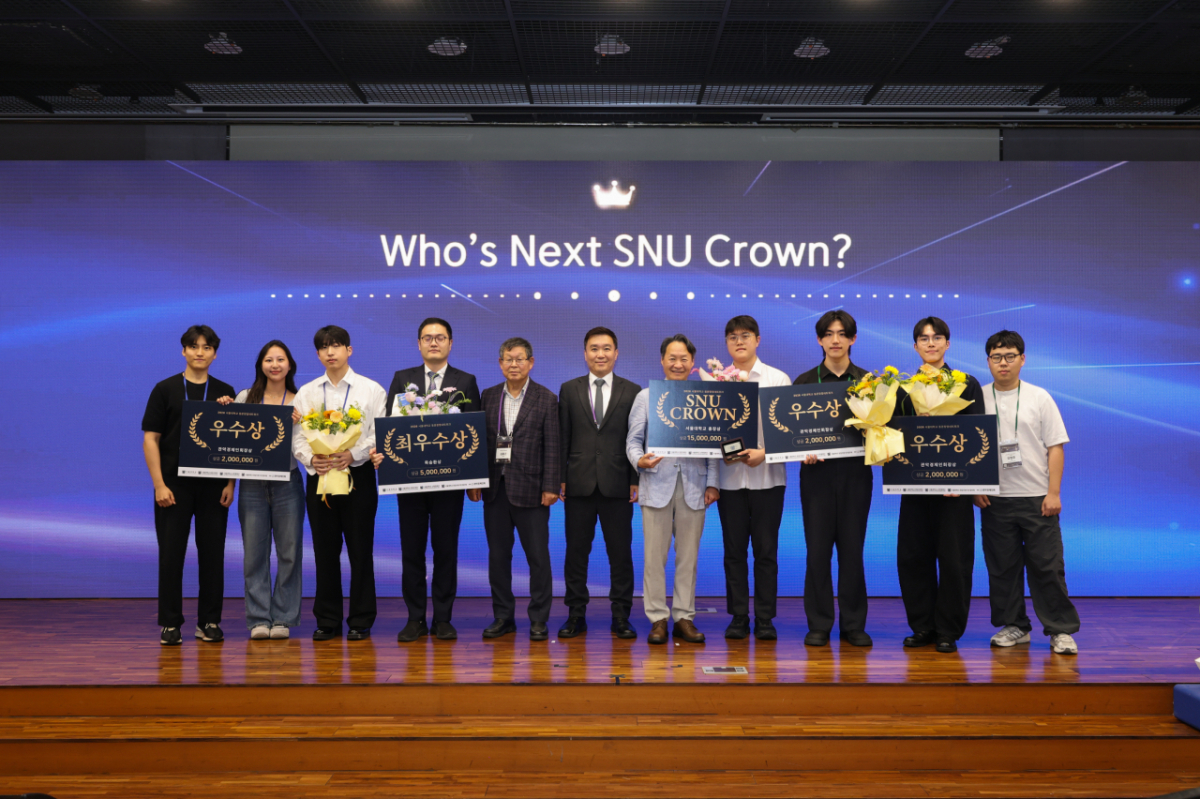
After fierce pitching competition, the Grand Prize was awarded to brain science AI (artificial intelligence) startup Lysolius, which was nominated by the Anchor Project Team's Campus Town Business Division. Founded by Bae Sang-yun (CEO) while enrolled in the integrated bachelor's and master's program at Seoul National University College of Medicine, the company set a goal to "create AI scientists who study the brain."
Lysolius focused on the paradox that while patient numbers are rising, productivity in developing new central nervous system (CNS) drugs is declining, and recently developed drug therapies fail to improve patient prognosis. As a solution, it proposed processing hospitals' foundational data into formats AI can learn from, training its own models, and connecting this to B2B (business-to-business) research collaborations with pharmaceutical companies and B2C (business-to-consumer) services for patients with intractable or incurable diseases. The company is currently collaborating with Samsung Electronics, LG, Shinpoong Pharmaceutical, and overseas pharmaceutical firms and is conducting a seed investment round totaling 10 billion won.
Choi U (수상) was awarded the Excellence Prize by the Venture Management Entrepreneurship Center for medical imaging AI startup ReadX. Led by Kang Dong-ho (CEO), a former spine specialist at Samsung Seoul Medical Center, ReadX targeted the limitations of primary clinics lacking MRI facilities. It introduced two services: one that automatically extracts 23 points from lateral cervical X-rays to generate clinical reports, and another that predicts stenosis risk levels by segment. The processing time is just 0.33 seconds—faster than a specialist's reading (2–5 minutes)—and its measurement consistency indicator (ICC) of 0.97 exceeds the average for specialists (0.67).
Other Excellence Prize winners included 'Cureit,' which develops dental AI solutions (recommended by the Advanced Convergence Department); 'Boji Ventures,' which produces caffeine-free alternative coffee based on molecular replication technology (recommended by the Agriculture, Life and Biotechnology Startup Support Center); and 'StableR', which developed an industrial indoor autonomous flight drone capable of inspecting narrow spaces without GPS, such as underground pipelines or tunnels (recommended by the Venture Management Entrepreneurship Center).
Meanwhile, as of 2025, Seoul National University faculty-founded startups have cumulatively reached 189 and continue to grow annually. As of 2024, the university secured 2,002 intellectual property rights (including 856 registrations) and achieved 6.5 billion won in technology transfer income from 69 contracts. The Seoul National University Startup Support Fund (SNU LEAP), established in 2023, has accumulated donations totaling 615.85 million won. Meanwhile, the Seoul City Anchor Project Team is investing a total of 23 billion won by 2030 to expand Gwanak S-Valley infrastructure. Through the Campus Town Business Division, approximately 80 companies are being incubated free of charge in the Daehak-dong and Nakseongdae area near the university.
[MoneyToday startup media platform Unicorn Factory]

 in FUTURE


