

[For more diverse corporate information on the startups mentioned in this article, please visit 'Data Lab' on the Unicorn Factory Big Data Platform .]
"Multi-rotor drones typically have a flight time of only 15 to 20 minutes. We believed that extending this time could significantly increase drone utility and mission success rates. Currently, we can achieve up to two hours with gaseous hydrogen and up to 14 hours with liquid hydrogen."
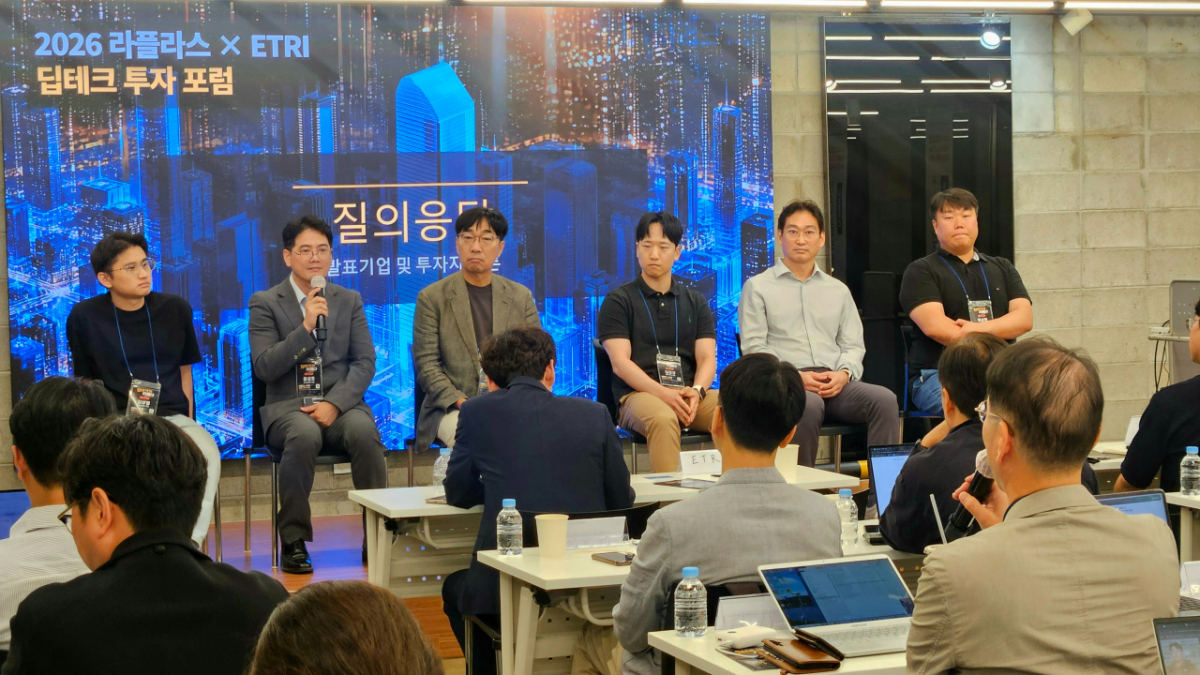
Hong Sung-ho, CEO of Hogreen Air, stated at the '2026 Laplace×ETRI Deep Tech Investment Forum' held at Maru180 in Seoul Gangnam-gu on the 14th regarding the background of developing hydrogen fuel cell drones: "We chose hydrogen to overcome the short flight time of battery-powered drones."
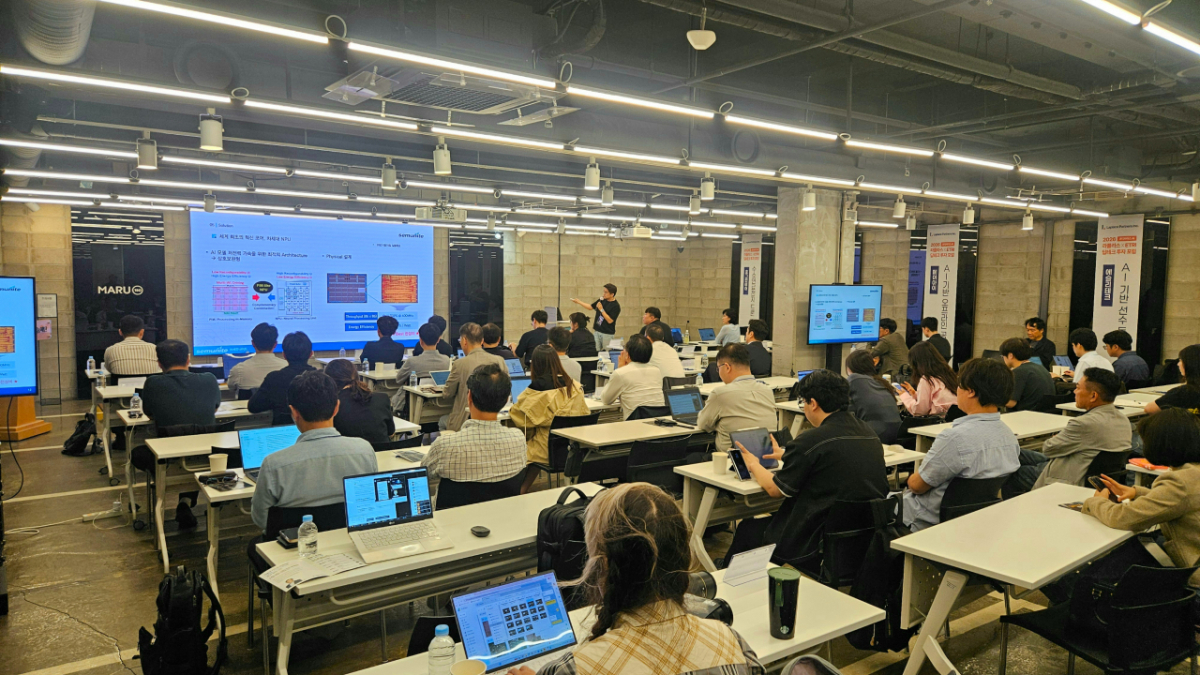
The forum was hosted by VC (Venture Capital) Laplace Partners and supported by the Electronics and Telecommunications Research Institute (ETRI). This is the second event held following last year, featuring six deep tech companies in advanced materials, AI (artificial intelligence), semiconductors, and mobility sectors presenting their investment IR (Investor Relations) sessions.
Companies appearing on the IR stage include Hogreen Air, along with △Nano Solution △Mei Ai △Aslee Tech △Semynite △Hits. Attending investors included △SGC Partners △The Wave Capital △Hanwha Investment & Securities △Capstone Partners △K-Ground △Seoul Investment Partners △Gyeongnam Venture Investment.
Hogreen Air has independently developed a power pack mounted on liquid hydrogen drones. This device integrates fuel cells, air supply, thermal management, and cooling systems into one unit, applicable not only to drones but also to unmanned transport vehicles (AGVs), robots, and autonomous mobility solutions.
Hong Seong-ho (CEO) stated, "The principle of generating electricity by introducing hydrogen can be applied not only to drones but also to power generation." He added, "We are creating a structure where the seasonal demand fluctuations in drone operations are complemented by hydrogen power generation businesses."
Hogreen Air is currently conducting a Series A investment round of 5 billion won based on a corporate valuation of 20 billion won. The funds will be utilized for securing raw materials, expanding production facilities, and recruiting research and production personnel.
Nano Solution is a nanomaterials company that processes carbon nanotubes (CNT) according to customers' manufacturing processes and product characteristics. After successfully commercializing materials for automotive displays, it secured approximately 16 billion won in investments, established a production plant in Iksan, Jeollabuk-do, and listed on KOSDAQ last July.
While CNTs exhibit excellent electrical conductivity and strength, their tendency to clump strongly requires technology to evenly disperse them in solvents for actual product application. Nano Solution can design materials tailored to customers' coating methods such as spray or inkjet, as well as thermal curing and ultraviolet (UV) curing conditions.
Kim Hyung-yeol of NaNoh Sol-ru-syeon (CEO) said, "By combining the desired materials, solvents, and coating/curing processes for customers, we can create tens of thousands of solutions." He added, "We plan to invest in single-wall CNTs in Yangsan by 2028 and aim for a KOSDAQ listing in the second half of the same year."
Video processing AI company Mei Ai analyzes visitor behavior using existing CCTV cameras installed in stores. This is equivalent to implementing Google Analytics, which analyzes clicks and movement paths online, into offline spaces.
The core technology is 'multi-camera tracking,' which identifies the same person moving between multiple CCTV cameras. Even if a customer disappears from one camera and reappears in another, the system connects their path by analyzing appearance information such as hairstyle and clothing.
Kim Chan-kyu, CEO of Mei Ai, stated, "There is no need to install separate AI cameras or sensors, so implementation costs and construction burdens are low." He added, "By analyzing CCTV footage, we can calculate visitor counts, gender and age demographics, dwell time, products of interest, consultation status, and purchase conversion rates."
Sports tech company Aslee Tech developed 'FieldWith,' which analyzes injury risks by combining athletes' movement data with pain and fatigue information. When an athlete inputs pain in a specific area the day after training, AI analyzes movement data captured the previous day to show which movements are related to the pain.
Coaches can use this information to decide on player participation or training intensity. Aslee Tech conducted a two-year PoC (Proof of Concept) with Woori Card Pro Volleyball Team. Overseas, it has signed business agreements with Hamburg SV and AFC Bournemouth Academy to discuss service adoption.
Choi Sang-hyeop, CEO of Aslee Tech, stated, "While existing services only analyzed data after training or matches, FieldWith quickly detects risk signals on-site and explains their causes." He added, "We aim to make data-driven decision-making the new standard in sports fields."
AI semiconductor fabless company Semynite has developed low-power, low-cost NPUs (Neural Processing Units) for use in automobiles, robots, and home appliances. Instead of high-performance general-purpose NPUs handling all functions, chips are designed to suit specific AI models required by products, such as voice recognition.
Kim Sang-yeop, CEO of Semynite, stated, "What home appliance companies want is not expensive NPUs with excessive performance but components that implement necessary AI functions affordably." He added, "We will reduce both price and power consumption by utilizing legacy processes like 28nm and 14nm along with flash memory."
Hits, an AI drug discovery platform company founded in 2020 by Professor Kim U-yeon (CEO) of the Department of Chemistry at KAIST, operates 'HyperLab,' which connects the entire drug development process—from candidate compound design to synthesis, verification, and analysis—into a single AI workflow.
Hits has signed an agreement with the National Cancer Center to begin building an AI-based cancer research system dedicated to the center. Recently, it also signed a contract with a U.S. food and beverage company for sweetener development, expanding its technology beyond drug discovery to analyze interactions between protein structures and compounds across various fields.
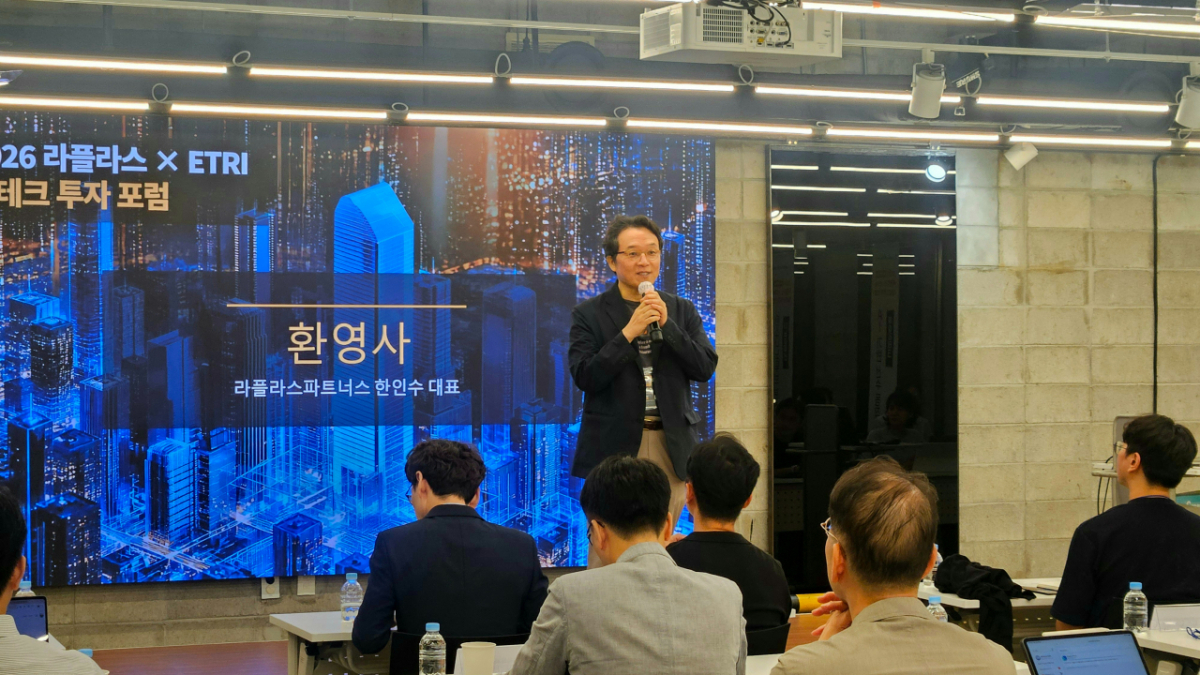
Han In-soo, CEO of Laplace Partners, stated, "Deep tech requires a long time for technology development, but once established in the market, it can achieve sustained growth based on high entry barriers." He added, "This is the right time to convert the original technologies accumulated by research institutional investors over a long period into actual commercialization results as they move into the private market."
Kang Hyun-seo, Head of ETRI Headquarters, emphasized, "We are conducting joint research with five of the companies announced today." He stated, "ETRI operates an 'infinite liability system' that takes responsibility not just for technology transfer but until it leads to commercialization and sales."
[MoneyToday startup media platform 'Unicorn Factory']

 in FUTURE


