

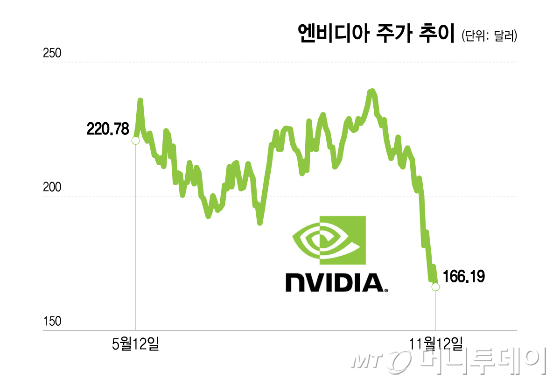
Analysts say AI companies could face difficulties securing funding following the resignation of Nvidia CEO Jensen Huang. The concern stems from the possibility that companies that have grown with the help of Nvidia's massive investments and financial backing may struggle to attract further funding under new leadership.
Some also predict that AI companies could seek new opportunities by choosing products from Nvidia's competitors instead.
Nvidia announced on Thursday (local time) that CEO Jensen Huang had immediately stepped down from his roles as chief executive officer and board member.
This follows suspicions that CEO Huang had extramarital relationships with two individuals, including an Nvidia executive and a woman suspected of ties to Chinese intelligence agencies. NVIDIA appointed Colette Kress, Chief Financial Officer (CFO), as interim CEO and began searching for a successor.
Domestic securities firms forecast that Nvidia’s financial support for its customers may decrease following CEO Huang’s departure. According to KB Securities, Nvidia invested $42.4 billion in customer equity over the six months through July 26 and disclosed guarantees worth $108.5 billion in its quarterly report.
In August, investors, concerned about risks, reduced the guarantee size for OpenAI data centers from the initially discussed $250 billion to less than $120 billion.
Kim Il-hyuk, a researcher at KB Securities, analyzed, “Guarantees had already decreased due to investor checks even while the founder led the company, so the pace of new guarantees may slow further with a change in management.”
The emergence of affordable AI semiconductors that can replace NVIDIA’s GPUs is also a burden. Bloomberg Intelligence assessed that Google’s Tensor Processing Units (TPUs) are about 30% cheaper than Nvidia GPUs while offering similar processing capacity.
In fact, Oracle plans to provide Google TPUs to cloud customers starting next year, in addition to Nvidia and AMD chips, and equipment from Cerebras, which develops inference semiconductors, starting in the first half of next year.
Researcher Kim projected that GPU leasing companies will find it difficult to rely solely on Nvidia chips as they have in the past. He said, “CoreWeave funds itself through loans repaid with revenue from customer contracts and loans secured by Nvidia chips, rather than unsecured bonds,” adding, “If inference workloads, which run trained models, shift to cheaper chips and GPU rental fees drop, the collateral value will also decrease.”
He further predicted, “Combined with a slowdown in Nvidia’s new guarantees, it will become difficult for GPU leasing operators to purchase GPUs without alternative chips.”
Conversely, there is also a possibility that competitors may benefit from the situation. Nam Dae-jong, a researcher at Daol Investment Securities, cited AMD’s Instinct GPUs, Google’s TPUs, and Amazon’s Trainium as products capable of replacing Nvidia GPUs.
Researcher Nam explained, “The expansion of competitors was already underway before CEO Huang’s resignation, but uncertainty in NVIDIA’s management could accelerate the diversification of Nvidia’s CUDA ecosystem and new orders in the medium to long term.”
However, he viewed the prominence of competing products as separate from memory demand. Researcher Nam said, “One should be cautious about interpreting this as meaning that demand for memory semiconductors centered on High Bandwidth Memory (HBM) will decrease.”
With Nvidia’s earnings release scheduled for the 18th, attention is focused on its future management direction. Given that CEO Huang pushed forward equity investments in the AI ecosystem despite controversies over circular financing, it remains to be seen whether such an ecosystem will continue.
Hwang San-hae, a researcher at LS Securities, said, “It will be difficult to fill the void left by Jensen Huang, who continuously provided an AI vision and played a role in attracting a kind of market liquidity, and this may be interpreted as disappointment.”

 in STOCK
