

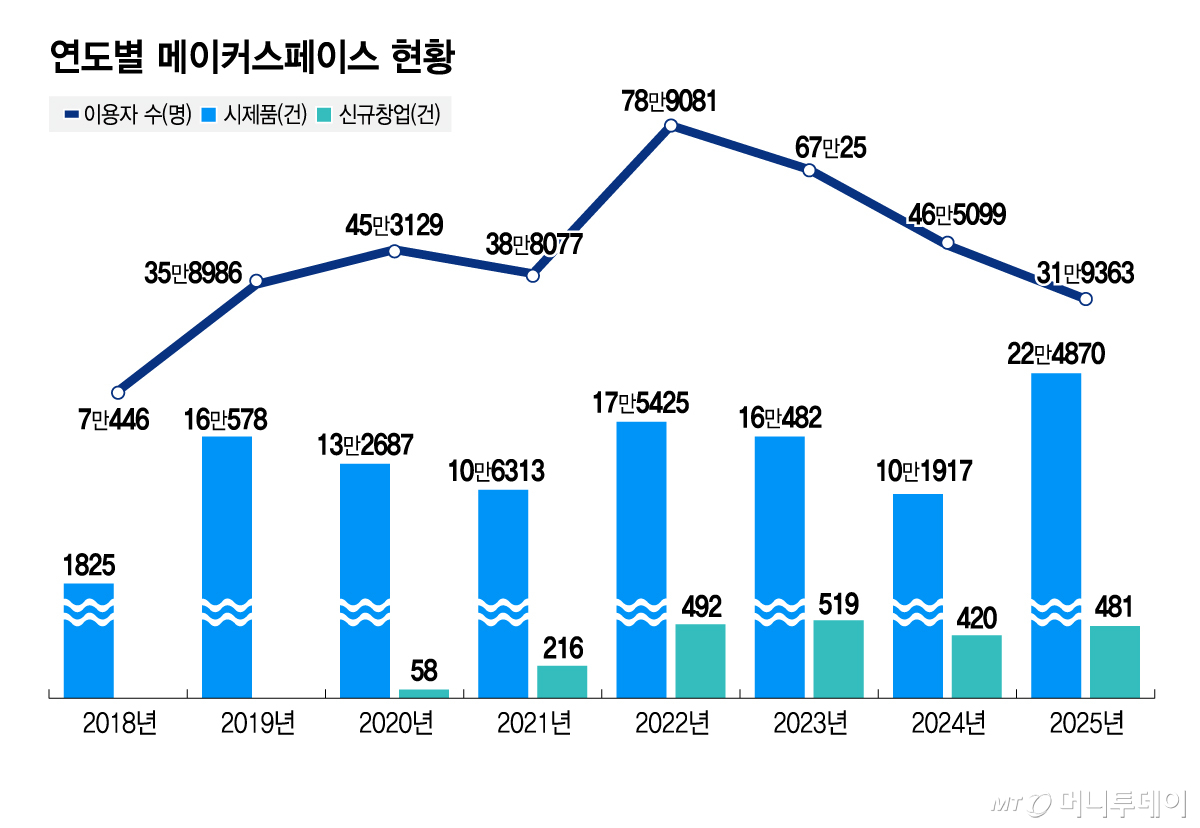
The background behind the maker spaces, which promised to enable manufacturing startups for all citizens, having declined after eight years of operation, is analyzed to be the global waning of the '3D printer fever.' When the maker space project began in 2018, the concept was simple: if workshops equipped with 3D printers and laser cutters were established in every neighborhood, anyone with an idea could create prototypes and proceed to startups.
Then-U.S. President Barack Obama called 3D printing a 'third industrial revolution' in his 2013 State of the Union address, stating it would "bring innovation to almost all product manufacturing methods." The Korean government also jumped on this trend. In 2014, the Ministry of Science and ICT investigated maker movement cases domestically and abroad and studied 'ways to activate maker culture.' In July 2017, multiple ministries jointly proposed 'plans to expand the Korean-style maker space to build a foundation for participatory innovation startups.' The vision was to create a startup foundation open to all.
High schools and libraries also have 'maker spaces'
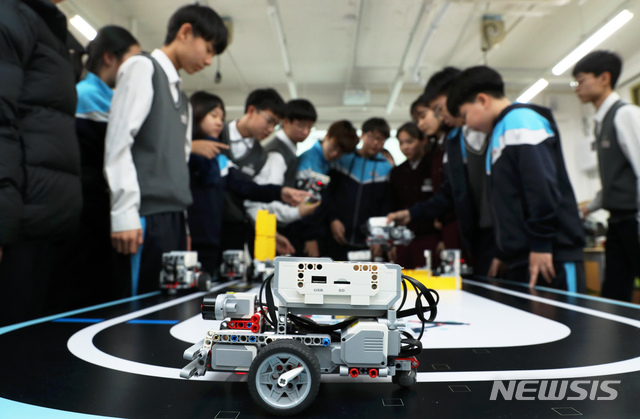
The initially selected institutional investors actively reflected this purpose. According to data received by Rep. Oh Se-hee of the Democratic Party of Korea's office (National Assembly Industry, Trade and Energy Small and Medium Venture Company Committee) from the Ministry of SMEs and Startups on the 16th, when the maker space project began in 2018, it did not select only university-industry cooperation centers and technoparks. General high schools such as Yeongdeungpo High School and Yeosu Technical High School were selected, and Norwon Youth Center, Goyang Children's Museum, and the Lacquer Woodworking Experience Tourism Cooperative also made the list. These were places closer to living spaces than startup support institutions.
However, results fell short of expectations. According to the Korea Entrepreneurship Agency's 'Performance Survey on Maker Space Construction and Operation Projects,' among the 65th sites built in the first year, only 21 had records of producing startup companies. The remaining 44 sites produced none.
In May 2021, the government released 'Efficiency Measures for Maker Spaces to Activate Startups' and changed direction. It began expanding specialized labs with participation from manufacturing companies and significantly reducing general labs open to ordinary citizens. From this point on, budgets for specialized labs began to surpass those for general labs.
The limitations of the once-popular '3D printers'
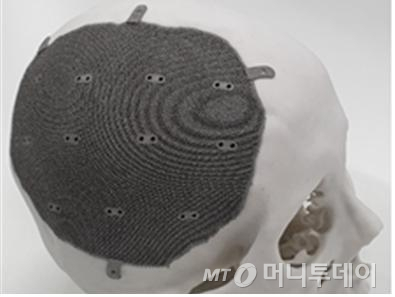
The limitations of maker spaces are closely tied to the limitations of 3D printers. While prototypes can be created with 3D printers and laser cutters, producing actual products for sale requires moving to the next stage: design validation, product certification, and process establishment. This is an area difficult to handle at the scale of neighborhood workshops. A Ministry of SMEs and Startups official also reflected that "there was little connection from prototypes to startups."
The gap between the number of prototypes produced annually and the number leading to actual new startups proves this. In 2019, the second year of the project, 165,78 prototypes were created, but there was not a single new startup. In 2023, when new maker space-related startups peaked, 164,82 prototypes were made, but only 519 led to startups, with a conversion rate of just 0.32%.
The manufacturing-specialized type introduced this year is an alternative to solve this. Applicants must secure at least 1,000㎡ of dedicated space and form a consortium with specialized companies that have initial design capabilities and possess professional equipment and personnel through selected institutional investors. The structure provides integrated support for design validation, process design, cost analysis, and manufacturing feasibility evaluation.
Cho Kyung-won, the Startup Policy Officer at the Ministry of SMEs and Startups, stated in January when recruiting the host institution for manufacturing-specialized maker spaces that "maker spaces will not be simple making spaces but will operate as manufacturing startup hubs responsible for productization and initial design alongside specialized companies."
Over the past eight years, what are the results of 'spreading maker culture'?
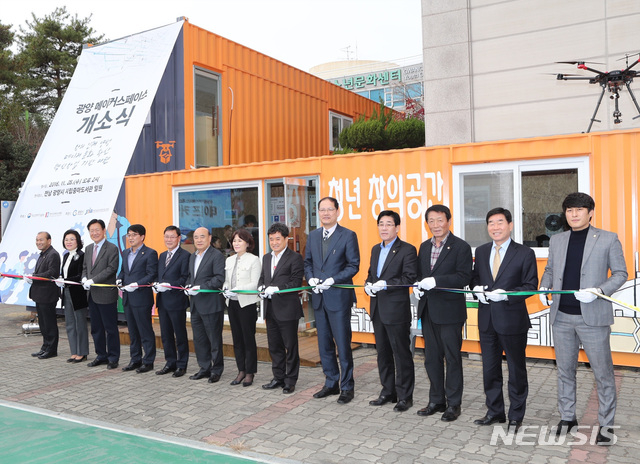
One of the purposes at the time of introducing maker spaces was to 'spread maker culture' to all citizens. Since there is no separate measurement indicator like the number of startups, quantitative evaluation is impossible.
There is also a view that the decline of maker spaces is due to the global decline of the 'maker movement.' The U.S.-based 'Make Magazine,' the birthplace of the maker movement, ceased operations and laid off all its employees in June 2019. In 2017, the cumulative number of visitors to worldwide Maker Faires peaked at 1.5 million, after which it began to gradually decline.
An industry official reflected that "the year the government started the maker space project, 2018, was already a period when the maker movement had peaked, so the subsequent reduction of projects was an inevitable result." They added, "Just as government projects launched during the sudden surge in metaverse fever a few years ago became meaningless as the trend quickly faded, policies driven by temporary trends inevitably have limitations."
[MoneyToday startup media platform Unicorn Factory]

 in FUTURE


