

[For more diverse corporate information on the startups mentioned in this article, please visit the Unicorn Factory big data platform 'Data Lab'.]
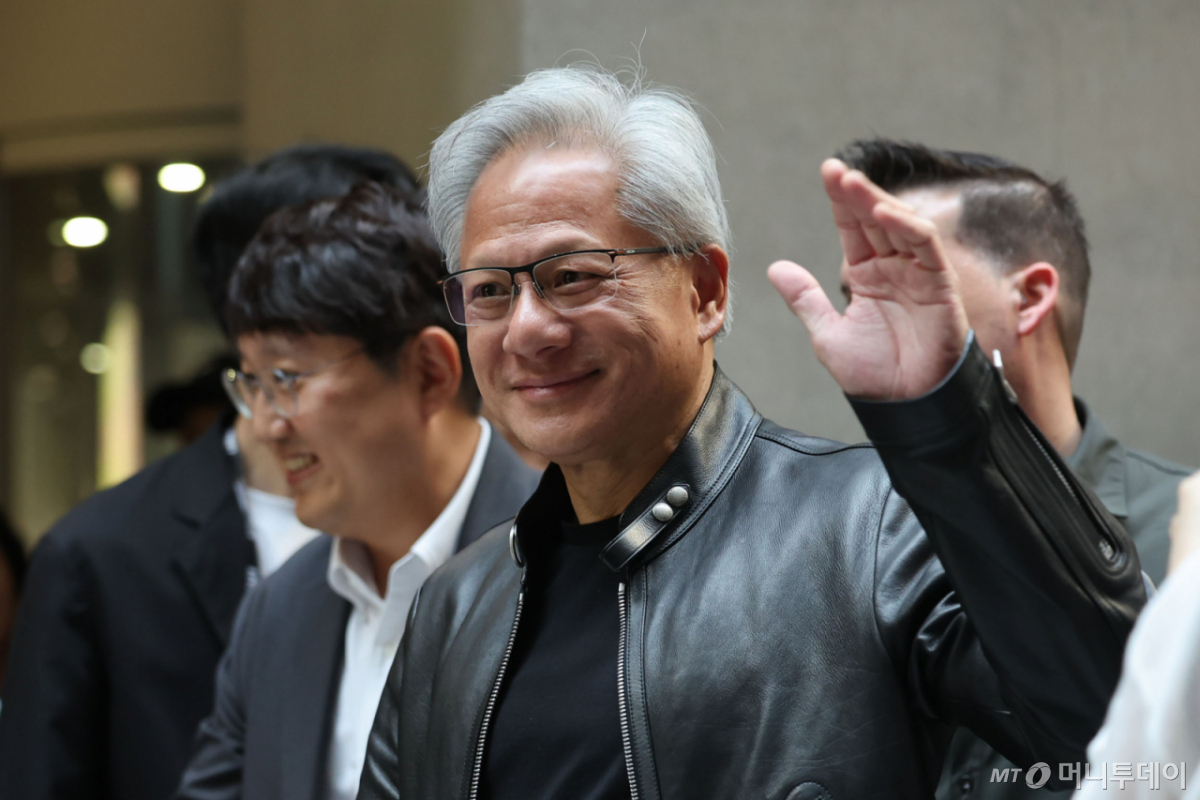
Last month, Jensen Huang, CEO of Nvidia, met with Park Sung-hyun, CEO of Rebellion. With various possibilities ranging from technical cooperation to investment and acquisition being raised, the details of the discussions remain entirely confidential. Domestic attention is focused on the impact this meeting will have on Rebellion. Some even argue prematurely whether it would be appropriate for Rebellion, which has grown with government support, to be acquired by Nvidia.
Most industry forecasts suggest that technical cooperation rather than acquisition or investment is more likely to proceed. While technical cooperation may have less impact compared to acquisition or investment, it is certainly not a minor event. Depending on the extent of technical cooperation, Rebellion's growth trajectory could change significantly.
Some in the semiconductor industry cautiously speculate that the recent meeting between Nvidia and Rebellion may be related to 'NVLink Fusion,' the protocol for internal server semiconductor communication technology (scale-up interconnect) announced by Nvidia last May. As 'Heterogeneous' computing, which mixes different types of semiconductors within a single data center, becomes the mainstream trend, Nvidia has opened its previously exclusive connection protocol, 'NVLink,' to external platforms.
Nvidia has recently been steadily increasing cooperation with other semiconductor companies regarding NVLink Fusion. It has brought in CPU manufacturers such as Qualcomm and Fujitsu as partners, and also included ASIC (Application-Specific Integrated Circuit) fabless companies like MediaTek and Marvell that design external semiconductors as partners. The investment of $3.5 billion (4.8 trillion won) in MediaTek earlier this month is interpreted as an effort to ensure these companies use NVLink Fusion when designing their semiconductors.
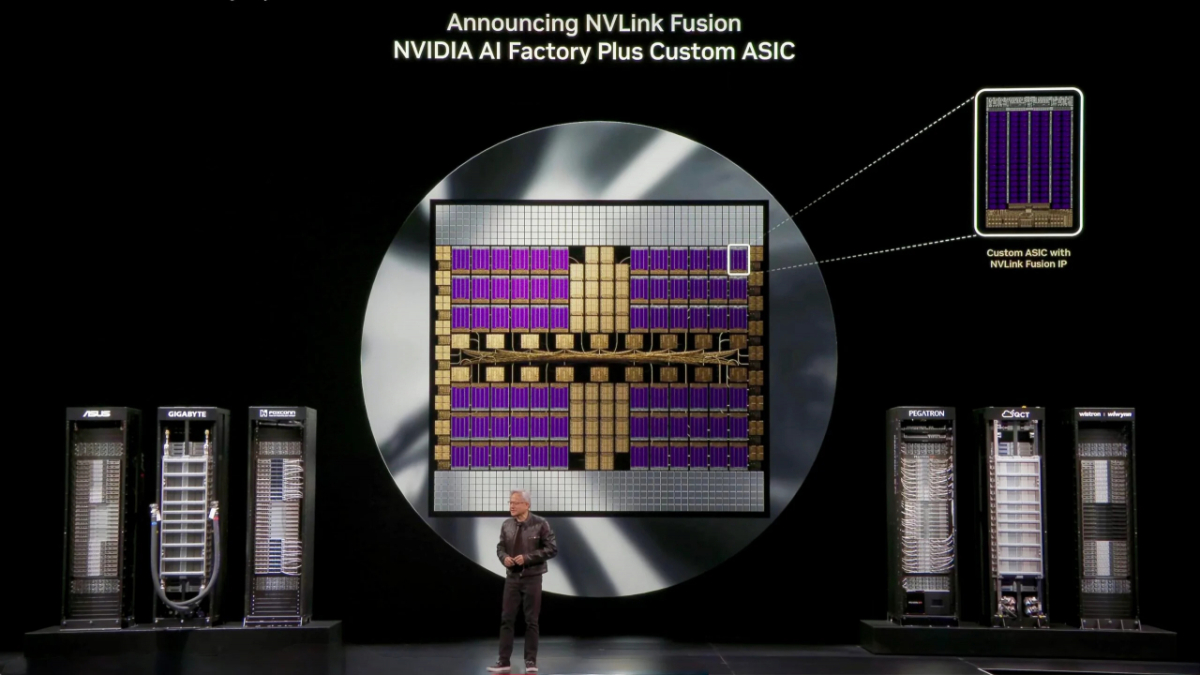
The industry views this as a strategy where Nvidia is leading the heterogeneous trend to build another moat. If NVLink Fusion becomes the standard protocol instead of existing interconnect standards like PCIe or UALink led by AMD and Intel, Nvidia semiconductors would inevitably be installed in heterogeneous servers. This means that even if rival semiconductors from Nvidia's competitors emerge, Nvidia will maintain its dominance over the ecosystem.
An industry insider stated, "Nvidia built a moat in the industry with the computing programming model CUDA, and this time it is building a moat in data center heterogeneous technology." Market research firm Counterpoint Research also said, "NVLink Fusion will particularly prevent the rise of UALink led by AMD and Intel."
It remains unknown whether the meeting and discussions between CEO Huang and Rebellion are actually related to NVLink Fusion. However, the industry speculates that Nvidia may be trying to bring Rebellion into the NVLink Fusion camp. Rebellion utilizes PCIe-based general-purpose protocols for its connection technology. From Nvidia's perspective, this means it needs to attract startups as well to build its NVLink moat.
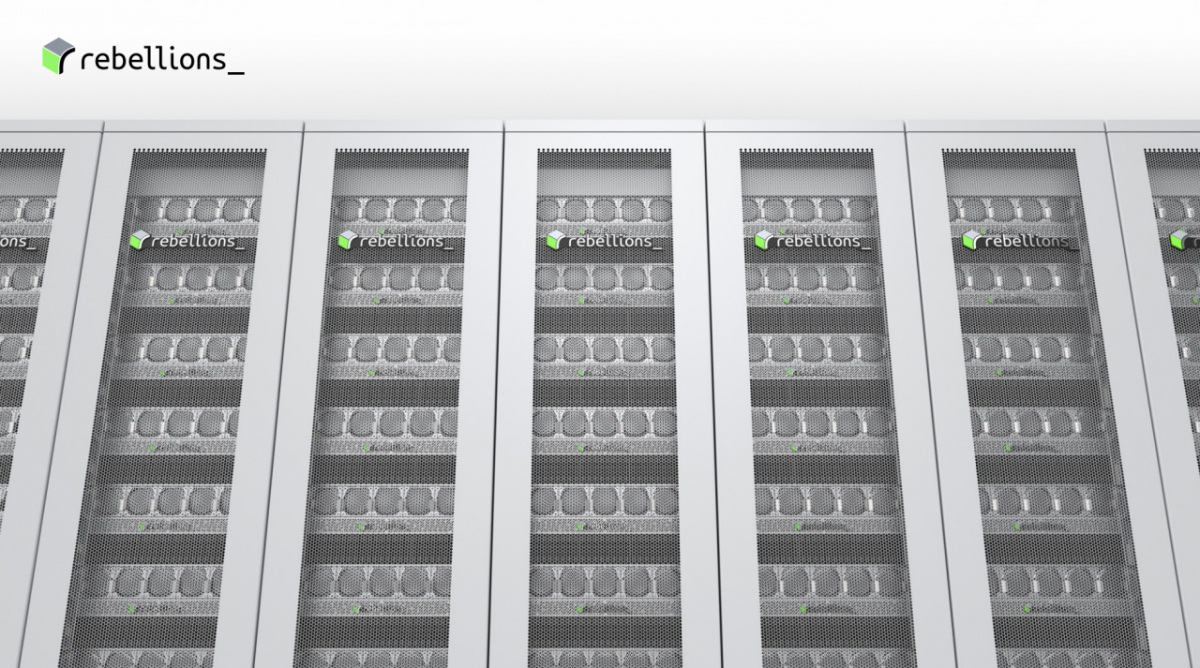
From Rebellion's perspective, if it has indeed received such a technical cooperation proposal from Nvidia, it must face significant dilemmas. Depending on the choice, the company's growth path could be altered.
An industry insider remarked, "For a startup, entering the Nvidia ecosystem itself can be an achievement; however, in this case, there may be limits to growth, such as losing technical independence or facing cost constraints." He continued, "On the other hand, if Rebellion chooses an independent path with the stance of 'replacing Nvidia,' it could achieve results amid the global sovereign AI infrastructure trend of moving away from Nvidia. However, there is no guarantee that this path will succeed."
He added, "Rebellion has just begun to show results in the sovereign AI infrastructure market where it has set its goal of moving away from Nvidia, so its concerns must be even greater." Rebellion has recently achieved results by securing contracts to export a total of over 200 server racks to the UK and Japan.
The industry also recalls the case of Furiors AI last year, which rejected Meta's acquisition proposal and chose an independent path. At that time, Furiors AI was also caught in the dilemma of where to stand between 'independence' and 'integration.' The semiconductor industry is still debating whether Furiors AI made the right choice. Rebellion's decision is expected to become a new milestone for the K-NPU camp.
[MoneyToday Startup Media Platform Unicorn Factory]

 in FUTURE


